About WW II Archive
WW II Archive is an independent historical platform dedicated to the in-depth study of the Second World War (1939–1945). Its primary aim is to move beyond surface-level narratives by presenting analytical, source-based, and contextualized examinations of major fronts, campaigns, strategic turning points, and decisive events of the war.
The site covers all principal theaters of conflict, including the Eastern Front, Western Front, the Battle of the Atlantic, the Mediterranean and Italian Fronts, North Africa, the Greek and Balkan Campaigns, and the Pacific Theater. Each subject is addressed with an emphasis on chronological coherence, military-strategic context, and historical accuracy.
Mission
The mission of WW II Archive is to present the Second World War through:
- Document-based research grounded in reliable and verifiable sources
- A balanced and non-propagandistic analytical perspective
- Integrated evaluation of strategy, logistics, technology, and the human dimension of war
- An academically rigorous approach expressed in a clear and accessible language
Rather than merely answering the question “what happened?”, WW II Archive seeks to address “why it happened, how it unfolded, and what it ultimately changed.”
Content Approach
All content published on WW II Archive is structured around:
- Major operations and turning points (e.g., Operation Barbarossa, Stalingrad, Normandy, Midway, El Alamein)
- Front-based and theater-level analyses (Eastern, Western, Atlantic, Mediterranean, Greek and Balkan Fronts, Pacific)
- Military doctrines and concepts (Blitzkrieg, submarine warfare, air superiority, amphibious operations)
- Technological developments (radar, cryptography, tank and aircraft evolution, submarine technology)
- Logistics, industrial capacity, and the wartime economy
Each article avoids a single-national or ideological viewpoint and instead incorporates multiple perspectives, including those of opposing forces, to provide a comprehensive historical analysis.
Sources and Referencing Policy
Historical accuracy is a core principle of WW II Archive. Accordingly, all research and analysis draw upon:
- Primary archival documents
- Official military reports and operational records
- Academic monographs and peer-reviewed studies
- Works by recognized military historians
- Publications from museums, universities, and national archive institutions
Whenever possible, sources are cited transparently, allowing readers to trace information back to its original documentation. Particular attention is given to source diversity in order to minimize interpretive bias.
Visual and Cartographic Materials
Visual materials used on WW II Archive consist of:
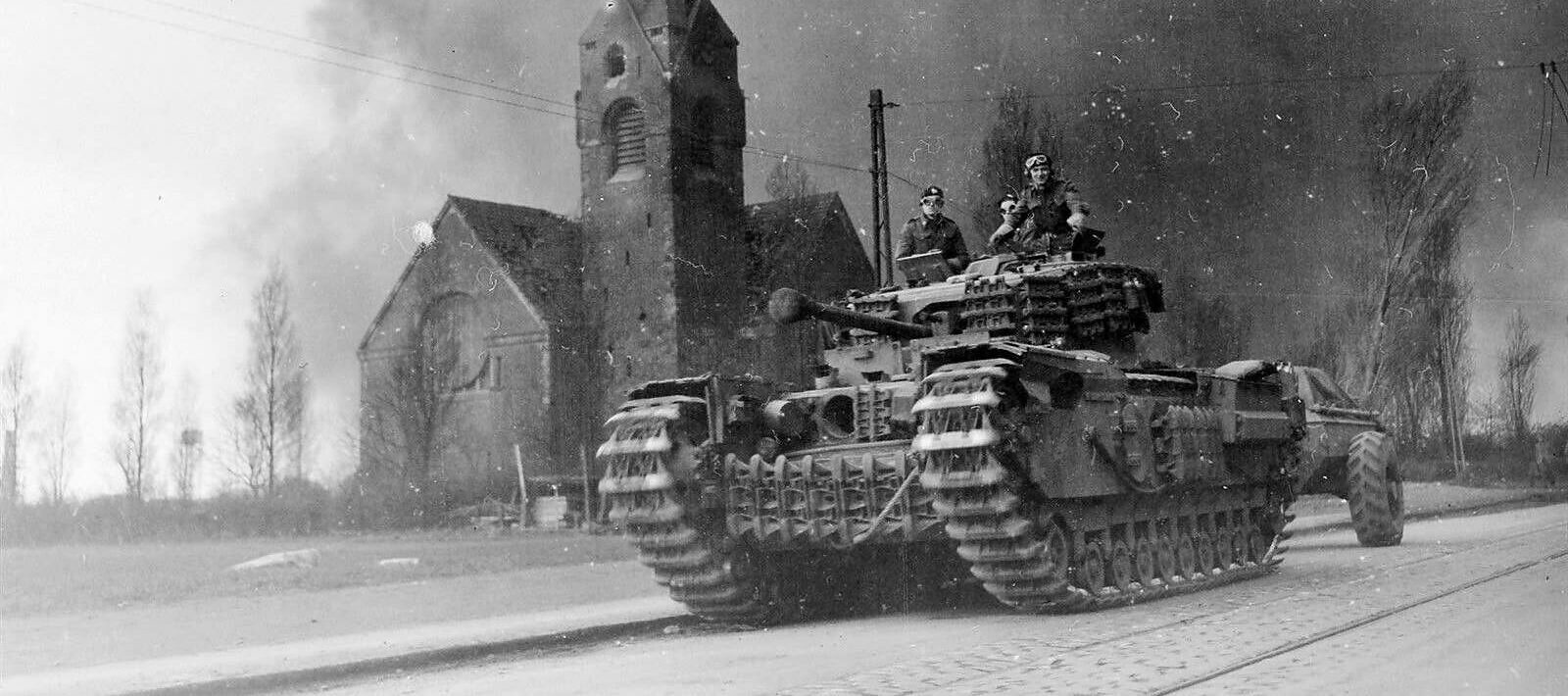
- Authentic historical photographs
- Period military and strategic maps
- Archival documents and technical diagrams
These materials are selected not merely for illustration, but as supporting historical evidence that reinforces analytical clarity. Artificially generated or historically unsupported visuals are deliberately excluded.
Neutrality and Ethical Framework
WW II Archive approaches the Second World War without ideological glorification or simplification. While military achievements and strategic decisions are examined in detail, equal attention is paid to the human cost of war, including civilian suffering, destruction, and ethical consequences.
The platform treats military history as inseparable from its broader social and humanitarian impact.
Intended Audience
WW II Archive is designed for:
- Readers with a serious interest in military and modern history
- University students and academic researchers
- Documentary, educational, and historical content creators
- Those seeking analytical depth beyond popular summaries
A Living Digital Archive
WW II Archive is not a static encyclopedia, but a continuously expanding digital archive. Content is regularly reviewed and updated in light of new research, newly released archival material, and ongoing developments in historical scholarship.
WW II Archive aims to serve as a reliable reference point for those seeking a rigorous, evidence-based understanding of the Second World War.
We believe that accurately understanding the past is essential to interpreting the present.