WW II Archive – Glossary
This glossary provides definitions and context for key military, strategic, and historical terms used throughout World War II. Each entry explains doctrines, operations, equipment, and concepts that shaped the war, helping readers understand articles, timelines, and analyses across the site.
Strategy, Doctrine & Warfare Theory
1. Grand Strategy – The coordination of military, economic, diplomatic, and political resources to achieve long-term national objectives during war. In WWII, grand strategies defined operational priorities across multiple theaters.
2. Total Mobilization – Organizing an entire society—including industry, labor, and population—for sustained warfare, ensuring armies and infrastructure could support prolonged conflict.
3. Defensive Depth – A layered defense system designed to absorb enemy attacks and delay breakthroughs. Used by the Soviets in Operation Barbarossa and partially in France (Maginot Line).
4. Mobile Defense – Defensive concept relying on counterattacks and maneuver rather than static fortifications, allowing forces to absorb attacks and strike decisively.
5. Shock and Awe (Proto-concept) – Overwhelming application of force intended to paralyze enemy decision-making. Early Blitzkrieg armored operations foreshadowed this approach.
6. Blitzkrieg – German doctrine of rapid, combined-arms warfare emphasizing speed, surprise, and coordination between armored units, infantry, and air power.
7. Deep Battle – Soviet operational theory focusing on simultaneous attacks across the depth of the enemy defense to disrupt command and logistics.
8. Operational Art – Planning and conduct of campaigns to achieve strategic objectives, bridging the gap between tactics and grand strategy.
9. Attrition Warfare – Strategy aimed at wearing down the enemy through sustained losses. Urban battles like Stalingrad exemplified this.
10. Combined Arms – Integrating infantry, armor, artillery, and air power to maximize combat effectiveness. Used extensively in Blitzkrieg operations.
11. Maneuver Warfare – Emphasizes mobility and positioning to disrupt the enemy, rather than frontal assaults, exemplified by German Panzer divisions.
12. Strategic Bombing – Aerial campaigns targeting enemy infrastructure and morale. Allied bombing of German cities is a prime example.
13. Theater of Operations – Defined geographic area for military campaigns. WWII theaters included Europe, North Africa, and the Pacific.
14. Campaign – A series of related operations aimed at achieving strategic objectives within a theater. Example: North African Campaign 1940–43.
15. Battle – A single large-scale engagement within a campaign. Example: Battle of Kursk, 1943.
16. Force Concentration – Massing military power at decisive points to achieve superiority.
17. Envelopment – Maneuvering forces to attack the enemy’s flanks or rear, often to encircle.
18. Breakthrough – Penetration of enemy defensive lines allowing operational exploitation. Ardennes offensive is an example.
19. Exploitation – Rapid advance following a breakthrough to seize terrain and disrupt enemy forces.
20. Defensive Line – Fortified positions intended to delay or prevent enemy advance.
21. Fortification – Permanent or semi-permanent defensive structures, including bunkers, trenches, and pillboxes.
22. Field Fortification – Temporary defenses like foxholes, wire obstacles, and trenches built during campaigns.
23. Logistics – Planning and management of troop and equipment movement, supply, and maintenance.
24. Supply Chain – Network ensuring the delivery of fuel, ammunition, and food to front-line units.
25. Transportation Corps – Military branch responsible for moving personnel, equipment, and supplies.
26. Rear Area Security – Protecting lines of communication, supply depots, and logistical hubs from enemy attack.
27. Combat Service Support – Providing essential services like medical care, engineering, and supply to operational units.
28. Military Doctrine – Fundamental principles guiding armed forces’ strategy, tactics, and operations.
29. Preemptive Strike – Attack launched to prevent an anticipated enemy offensive, aiming to seize initiative.
30. Strategic Initiative – Maintaining operational freedom and forcing the enemy to react, as Germany achieved early in WWII.
31. Tactical Flexibility – Ability of units to adapt plans in real time based on battlefield conditions.
32. Forward Observation – Reconnaissance to direct artillery fire and assess enemy movements.
33. Command and Control (C2) – Systems and structures enabling commanders to direct forces effectively.
34. Decisive Point – Key location or objective that determines the outcome of operations.
35. Reserve Forces – Troops held back to exploit opportunities or reinforce threatened sectors.
36. Shock Troops – Elite soldiers trained for rapid assaults and breakthrough operations.
37. Amphibious Assault – Coordinated attack from sea to land, exemplified by D-Day landings.
38. Beachhead – Secured area on a shoreline from which further operations are conducted.
39. Breakout Operation – Maneuver by encircled forces to escape enemy trapping.
40. Counteroffensive – Attack launched in response to enemy advances to regain territory or momentum.
41. Flanking Attack – Assault directed at the side of enemy formations to avoid their strongest defenses.
42. Pincer Movement – Encircling maneuver attacking both flanks simultaneously.
43. Siege Warfare – Encirclement and bombardment to force surrender of fortified positions.
44. Urban Combat – Warfare in cities involving street fighting, fortifications, and civilian considerations.
45. Mountain Warfare – Combat in high terrain requiring specialized training, equipment, and logistics.
46. Desert Warfare – Operations in arid regions, emphasizing mobility, supply, and adaptation to climate.
47. Jungle Warfare – Combat in dense vegetation, requiring stealth, small units, and disease management.
48. Amphibious Reconnaissance – Pre-invasion surveys of beaches and defenses to plan landings.
49. Sabotage Operations – Deliberate disruption of enemy supplies, transport, or communication.
50. Commando Operations – Small-unit raids conducted behind enemy lines for reconnaissance, sabotage, or disruption.
51. Paratrooper Deployment – Airborne insertion of troops behind enemy lines to seize key positions.
52. Glider Assault – Silent delivery of troops and equipment into hostile territory using engineless aircraft.
53. Artillery Barrage – Sustained bombardment to weaken defenses before an assault.
54. Counterbattery Fire – Targeting enemy artillery to neutralize their firepower.
55. Smoke Screen – Use of smoke to conceal movements or positions from enemy observation.
56. Night Operations – Military actions conducted under darkness to gain tactical advantage.
57. Camouflage Techniques – Concealment of troops, equipment, and positions to avoid detection.
58. Minefield Deployment – Planting explosive mines to restrict enemy movement.
59. Anti-Tank Measures – Weapons and tactics designed to neutralize enemy armor.
60. Tank Destroyer – Specialized vehicle or weapon for combating enemy tanks.
61. Armored Reconnaissance – Using armored vehicles to scout enemy positions and terrain.
62. Forward Air Controller (FAC) – Personnel directing air support from forward positions to assist ground forces.
63. Field Engineer – Soldier specialized in construction, demolition, and obstacle clearing.
64. Combat Engineer – Engineers engaged directly in battlefield tasks supporting offensive or defensive operations.
65. Bridgehead – Secured area across a river or obstacle allowing further advance.
66. River Crossing Operations – Planning and executing the movement of troops and vehicles across rivers under combat conditions.
67. Logistics Hub – Centralized location for supply collection, storage, and distribution to operational units.
68. Fuel Supply Chain – Management of petroleum products critical for mechanized and air forces.
69. Ammunition Stockpile – Reserve of munitions for sustained operations.
70. Forward Supply Depot – Storage area near the front lines for rapid resupply.
71. Medical Evacuation (MEDEVAC) – Transport of wounded personnel from combat zones to medical facilities.
72. Field Hospital – Mobile medical unit providing triage, surgery, and stabilization close to combat.
73. Casualty Clearing Station – Intermediate medical facility for initial treatment before evacuation.
74. Armored Train – Railway vehicle equipped with armor and weapons for support or transport.
75. Combat Patrol – Small-unit mission to engage or observe the enemy.
76. Recon Patrol – Non-contact scouting to gather intelligence on terrain or enemy activity.
77. Forward Operating Base (FOB) – Secure position established to support operations in hostile areas.
78. Defensive Sector – Area assigned to a unit for protection and control.
79. Encirclement (Kesselschlacht) – Maneuver aiming to trap enemy formations, cutting off supplies and escape routes.
80. Siege Artillery – Large-caliber guns used to destroy fortifications during prolonged sieges.
81. Mortar Platoon – Unit specializing in indirect fire to support infantry in both offense and defense.
82. Anti-Aircraft Unit – Troops or weapons systems designed to counter enemy aircraft.
83. Coastal Artillery – Guns positioned to defend shorelines against naval attacks.
84. Fire Support Coordination – Planning artillery, air, and naval fire to assist ground operations.
85. Close Air Support (CAS) – Aircraft attacks directly supporting ground troops.
86. Interdiction – Air or artillery attacks aimed at disrupting enemy supply and communication lines.
87. Air Reconnaissance – Use of aircraft to observe enemy positions and terrain.
88. Tactical Withdrawal – Deliberate retreat to avoid destruction and regroup.
89. Rearguard Action – Defensive action by a small force to protect retreating main forces.
90. Combat Fatigue – Physical and psychological exhaustion reducing combat effectiveness.
91. Morale – The confidence, spirit, and resilience of troops in combat situations.
92. Command Post (CP) – Headquarters where commanders direct operations.
93. Radio Communication – Primary method for coordinating units in the field.
94. Signal Corps – Military branch managing communications, codes, and transmissions.
95. Codebook – Manual of cryptographic codes used to secure messages.
96. Encryption – Encoding messages to prevent enemy interception.
97. Decryption – Process of decoding intercepted or encrypted messages.
98. Tactical Map – Detailed map used to plan and conduct military operations.
99. Operational Map – Map showing broader theater movements and campaign-level planning.
100. Strategic Map – High-level map used for planning long-term objectives across theaters.
Ground Warfare & Army Operations
101. Armored Warfare – Combat operations centered on tanks and mechanized units, combining mobility, firepower, and protection to break enemy lines and exploit weaknesses. Crucial in Blitzkrieg operations and Eastern Front campaigns.
102. Panzer Division – A German armored division integrating tanks, mechanized infantry, artillery, and reconnaissance units. Used for rapid breakthroughs and encirclements.
103. Infantry Division – The primary ground combat unit, composed of foot soldiers, artillery, and support elements. Essential for holding territory and participating in large-scale assaults.
104. Mechanized Infantry – Infantry transported by armored vehicles to operate alongside tanks, enhancing mobility and protection in combined arms operations.
105. Motorized Infantry – Infantry units equipped with trucks for faster redeployment than foot soldiers, providing operational flexibility.
106. Artillery Regiment – Unit providing fire support to infantry and armored units, softening enemy defenses and disrupting formations.
107. Field Artillery – Medium-range artillery supporting frontline operations, delivering accurate fire over a broad area.
108. Heavy Artillery – Large-caliber guns designed to destroy fortifications, enemy artillery, or infrastructure at long ranges.
109. Mortar Battery – Unit equipped with mortars to deliver indirect fire into enemy positions, effective in urban or mountainous terrain.
110. Assault Gun – Armored vehicle mounting a heavy gun to support infantry or attack fortifications directly.
111. Anti-Tank Unit – Specialized troops equipped with weapons such as guns or rockets to neutralize enemy armored vehicles.
112. Engineer Battalion – Unit responsible for fortifications, bridging, demolition, and obstacle clearing, ensuring operational mobility.
113. Sapper – Combat engineer trained to construct or destroy military obstacles, lay or clear mines, and perform field fortifications under combat conditions.
114. Forward Reconnaissance – Small teams probing enemy lines to gather intelligence on troop movements, positions, and defensive structures.
115. Cavalry Reconnaissance – Mounted or mechanized units scouting enemy positions quickly, providing intelligence and screening main forces.
116. Encirclement (Kesselschlacht) – Tactic of surrounding enemy forces to cut off supplies and retreat, often leading to surrender or destruction.
117. Breakout Operation – Effort by encircled forces to punch through enemy lines to restore mobility and link up with friendly forces.
118. Counterattack – Offensive response to an enemy assault intended to regain lost ground or disrupt their momentum.
119. Flanking Attack – Strike directed at the side of enemy positions, bypassing strong defenses and threatening encirclement.
120. Pincer Movement – Double envelopment maneuver where both flanks of the enemy are attacked simultaneously, cutting off retreat.
121. Shock Troops (Stoßtruppen) – Elite infantry trained for rapid assault operations and breakthroughs, often leading offensives.
122. Artillery Barrage – Concentrated artillery fire intended to weaken enemy positions before an assault.
123. Siege Artillery – Heavy guns designed to destroy fortifications or entrenched positions over extended periods.
124. Assault Engineer – Specialist soldier tasked with breaching enemy obstacles, clearing mines, and preparing routes for attacking forces.
125. Reconnaissance Patrol – Small teams tasked with gathering tactical intelligence behind enemy lines.
126. Cavalry Reconnaissance – Units using speed and mobility to scout and screen enemy movements.
127. Forward Operating Base (FOB) – Secured position near frontlines serving as a hub for logistics, command, and staging attacks.
128. Raiding Party – Small, mobile force conducting sudden attacks to disrupt enemy positions or logistics.
129. Ambush – Concealed attack designed to surprise and inflict damage on enemy units during movement.
130. Reserve Division – Units held back from the front to reinforce or exploit breakthroughs.
131. Bridgehead – A secure foothold across a river or obstacle enabling further offensive operations.
132. Counterbattery Fire – Artillery targeting enemy guns to neutralize them and protect friendly troops.
133. Suppressive Fire – Continuous fire meant to pin down enemy forces, preventing them from moving or firing effectively.
134. Infantry Assault – Coordinated attack by infantry on enemy positions to seize terrain.
135. Defensive Outpost – Forward position designed to observe and delay enemy advances.
136. Perimeter Defense – Defensive arrangement protecting all sides of a position against attack.
137. Trench Mortar – Short-range artillery firing explosive rounds into enemy trenches or fortifications.
138. Encircled Unit – Forces trapped by enemy maneuvers, requiring relief, breakout, or surrender.
139. Fire Support Coordination Center – Command post directing artillery, air, and naval fire to maximize battlefield effect.
140. Suppression Battalion – Unit tasked with maintaining suppressive fire to fix enemy positions while other units maneuver.
141. Infantry Regiment – Subdivision of a division forming the core infantry element, responsible for offensive and defensive tasks.
142. Mortar Platoon – Provides indirect fire support with small, portable mortars to disrupt enemy positions.
143. Urban Warfare Unit – Soldiers trained for combat in cities, focusing on building-to-building fighting.
144. Mountain Infantry – Troops specialized for rugged or mountainous terrain, using light artillery and pack animals.
145. Jungle Warfare Tactics – Techniques adapted for dense forests, emphasizing ambush, concealment, and limited mobility.
146. Amphibious Assault Unit – Forces trained to land on hostile shores, integrating naval and land combat.
147. Railway Defense Corps – Units assigned to protect critical rail networks used for troop and supply transport.
148. Forward Observer Team – Personnel directing artillery or air strikes from forward positions.
149. Breach Team – Soldiers specializing in clearing mines, obstacles, and fortifications for advancing troops.
150. Trench Warfare – Combat from dug-in positions, characterized by defensive lines and static engagements.
151. Reserve Artillery – Artillery held back to provide firepower at critical phases of a battle.
152. Field Artillery Regiment – Unit providing long-range fire support to shape the battlefield and support attacks.
153. Combat Engineer Company – Responsible for bridges, fortifications, and demolitions to facilitate operations.
154. Amphibious Landing Craft – Ships designed to transport troops and vehicles from sea to shore during landings.
155. Destroyer Escort – Small naval warship for convoy protection and anti-submarine warfare.
156. Fleet in Being – A naval force that influences enemy strategy without engaging directly, simply by existing as a threat.
157. Convoy Commodore – Officer responsible for directing and protecting merchant convoys during transit.
158. Submarine Patrol – Submarine operations to attack enemy shipping or gather intelligence.
159. Naval Intelligence – Collection and analysis of data regarding enemy naval movements and capabilities.
160. Sea Lane Security – Measures to protect vital maritime routes from enemy interference.
161. Coastal Defense Battery – Shore-based artillery designed to protect ports and critical coastal areas.
162. Naval Minefield – Strategically placed underwater mines to control or deny enemy movement.
163. Fleet Concentration – Massing of naval forces at decisive points to achieve local superiority.
164. Amphibious Task Force – Coordinated group of naval and landing units conducting large-scale amphibious operations.
165. Air Interdiction – Air attacks targeting enemy logistics, reinforcements, and supply lines behind the front.
166. Fighter Interceptor – Aircraft designed to engage enemy bombers and reconnaissance planes, maintaining air dominance.
167. Bomber Stream – Concentrated bomber formations used to overwhelm enemy air defenses.
168. Night Bombing – Air missions conducted at night to evade defenses and reduce losses.
169. Tactical Air Support – Air operations providing direct assistance to ground forces in combat.
170. Airborne Forces – Troops deployed by parachute or glider behind enemy lines for strategic operations.
171. Fighter Sweep – Offensive air missions to gain air superiority by engaging enemy aircraft.
172. Escort Fighters – Aircraft assigned to protect bombers on missions, reducing losses.
173. Radar-Guided Interception – Using radar to detect and direct fighters to enemy planes.
174. Dive Bomber – Aircraft designed to attack targets with steep dive-bombing for accuracy.
175. Ground Attack Aircraft – Planes specialized in targeting enemy ground forces and installations.
176. Air Superiority – Condition of controlling airspace, allowing freedom of action for friendly forces.
177. Air Transport Squadron – Units providing rapid transport of troops, equipment, and supplies by air.
178. Paratrooper Deployment – Insertion of troops behind enemy lines using parachutes for surprise operations.
179. Close Air Support (CAS) – Air attacks coordinated to directly assist ground troops during operations.
180. Interdiction Mission – Air operations targeting enemy reinforcements and supplies to weaken front-line capabilities.
181. Night Fighter – Aircraft specialized for combat during nighttime, using radar for detection.
182. Forward Air Controller – Personnel on the ground directing air strikes for accuracy.
183. Air Reconnaissance – Surveillance flights gathering intelligence on enemy positions, movements, and strengths.
184. Fighter-Bomber – Aircraft capable of both air-to-air and air-to-ground missions, offering versatility.
185. Heavy Bomber – Long-range aircraft designed to carry large payloads for strategic bombing.
186. Strategic Bombing Campaign – Coordinated effort to destroy the enemy’s war-making capability and morale.
187. Airfield Seizure – Capture of enemy air bases to facilitate friendly air operations and deny enemy access.
188. Close Reconnaissance – Short-range observation of enemy positions to guide immediate tactical actions.
189. Pathfinding Aircraft – Planes leading bomber formations to targets, marking them for accurate bombing.
190. Airbridge – Continuous air transport route to supply isolated units or besieged locations.
191. Fighter Command – Centralized organization controlling fighter operations in a given area.
192. Bomber Command – Centralized authority directing bomber operations and strategic missions.
193. Air Defense Network – Integrated system of radar, fighters, and anti-aircraft artillery to protect territory from air attacks.
194. Operational Range – Maximum distance a unit or aircraft can operate effectively without resupply.
195. Combat Radius – Distance an aircraft or vehicle can cover during a mission before returning to base.
196. Sortie – Single mission undertaken by an aircraft, ship, or unit during combat operations.
197. Turnaround Time – Time required to rearm, refuel, and prepare units for their next operation.
198. Forward Operating Airstrip – Temporary or captured airfield close to frontlines for rapid deployment of air units.
199. Strategic Reconnaissance – Long-range intelligence missions providing overview of enemy capabilities, movements, and infrastructure.
200. Tactical Reconnaissance – Short-range observation focusing on immediate battlefield intelligence for local commanders.
Intelligence, Espionage & Deception
201. Signals Intelligence (SIGINT) – Interception and analysis of enemy communications, including radio, telegraph, and coded messages. Crucial for codebreaking operations like Enigma.
202. Human Intelligence (HUMINT) – Intelligence gathered through spies, informants, resistance networks, and undercover agents in occupied territories.
203. Military Deception – Operations designed to mislead the enemy regarding intentions, strength, or location of forces. Examples include Operation Fortitude before D-Day.
204. Double Agent – A spy who pretends to work for one side while secretly reporting to the other, providing controlled misinformation.
205. Counterintelligence – Measures taken to detect and prevent enemy espionage activities within one’s own military or civilian structures.
206. Operational Security (OPSEC) – Practices to protect sensitive information from enemy intelligence, including troop movements and operational plans.
207. Clandestine Operation – Secret missions carried out without revealing the sponsor’s involvement. Often included sabotage or intelligence collection.
208. Codebook – A manual containing coded messages and their meanings, used for secure communication. Captured or decrypted codebooks could shift battle outcomes.
209. Cipher Machine – Mechanical or electromechanical device used to encrypt and decrypt messages. Famous example: the German Enigma machine.
210. Intercept Station – Facility where enemy communications are monitored and recorded for analysis.
211. Signal Corps – Military unit responsible for communications, cryptography, and electronic intelligence operations.
212. Sabotage – Deliberate damage to enemy infrastructure, supply lines, or equipment to disrupt operations.
213. Propaganda – Information spread to influence morale, perceptions, and behavior of enemy or civilian populations.
214. Psychological Warfare – Use of media, leaflets, and broadcasts to weaken enemy morale or support allied objectives.
215. Resistance Network – Organized civilian or partisan groups providing intelligence, sabotage, and support to Allied or local forces.
216. Partisan Operations – Guerrilla warfare conducted by irregular forces behind enemy lines to harass, sabotage, and gather intelligence.
217. Espionage Agent – Individual trained to gather secret information and report to a sponsoring organization.
218. Dead Drop – Concealed location for transferring messages or materials between agents without direct contact.
219. Wireless Telegraphy (W/T) – Radio-based communication method crucial for field intelligence and resistance coordination.
220. Enigma Decryption – Breaking of the German Enigma codes, a turning point in intelligence for the Allies.
221. Ultra Intelligence – Allied designation for intelligence derived from decrypted Axis communications, particularly Enigma and Lorenz ciphers.
222. Operations Research – Scientific analysis of military operations to improve efficiency, logistics, and strategy.
223. Reconnaissance Satellite (conceptual WWII precursor) – High-level observation methods, often aerial, to monitor enemy activity; early reconnaissance aircraft served this role.
224. Counter-Sabotage Unit – Specialized forces tasked with detecting and preventing enemy sabotage efforts.
225. Black Propaganda – Deceptive information presented as coming from a source other than the true sponsor to manipulate the enemy.
226. Dummy Equipment (Decoy) – Fake tanks, aircraft, or infrastructure used to mislead enemy reconnaissance and cause misallocation of forces.
227. Maskirovka – Russian term for military deception, including camouflage, decoys, and misinformation.
228. Recon Patrol – Small unit conducting forward surveillance to locate and report enemy positions.
229. Signal Interception Post – Facility dedicated to capturing enemy signals for analysis and decoding.
230. Codebreaker – Specialist who deciphers encrypted enemy communications to reveal strategic information.
Occupation, Resistance & Civilian War
231. Occupation Force – Military units assigned to control and administer conquered territories.
232. Collaborationist Regime – Local government cooperating with occupying forces, often implementing policies on behalf of the occupier.
233. Resistance Movement – Civilian or partisan groups conducting sabotage, intelligence gathering, and insurgent attacks against occupying forces.
234. Partisan Warfare – Irregular combat carried out by small, mobile units using ambushes, sabotage, and hit-and-run tactics.
235. Civilian Administration – Structures managing daily life under occupation, including policing, food distribution, and labor allocation.
236. Forced Labor – Compulsory employment of civilians to support military or industrial production under occupation.
237. Internment Camp – Facilities used to detain prisoners of war, political detainees, or civilians considered threats by occupying powers.
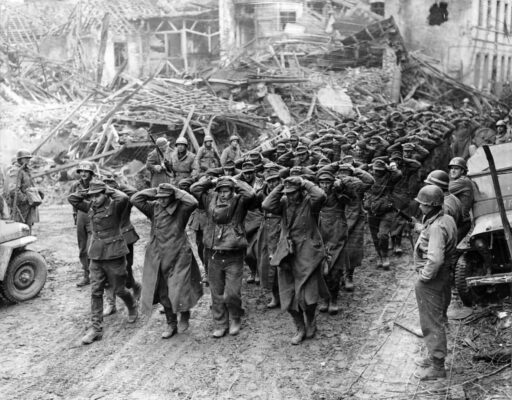
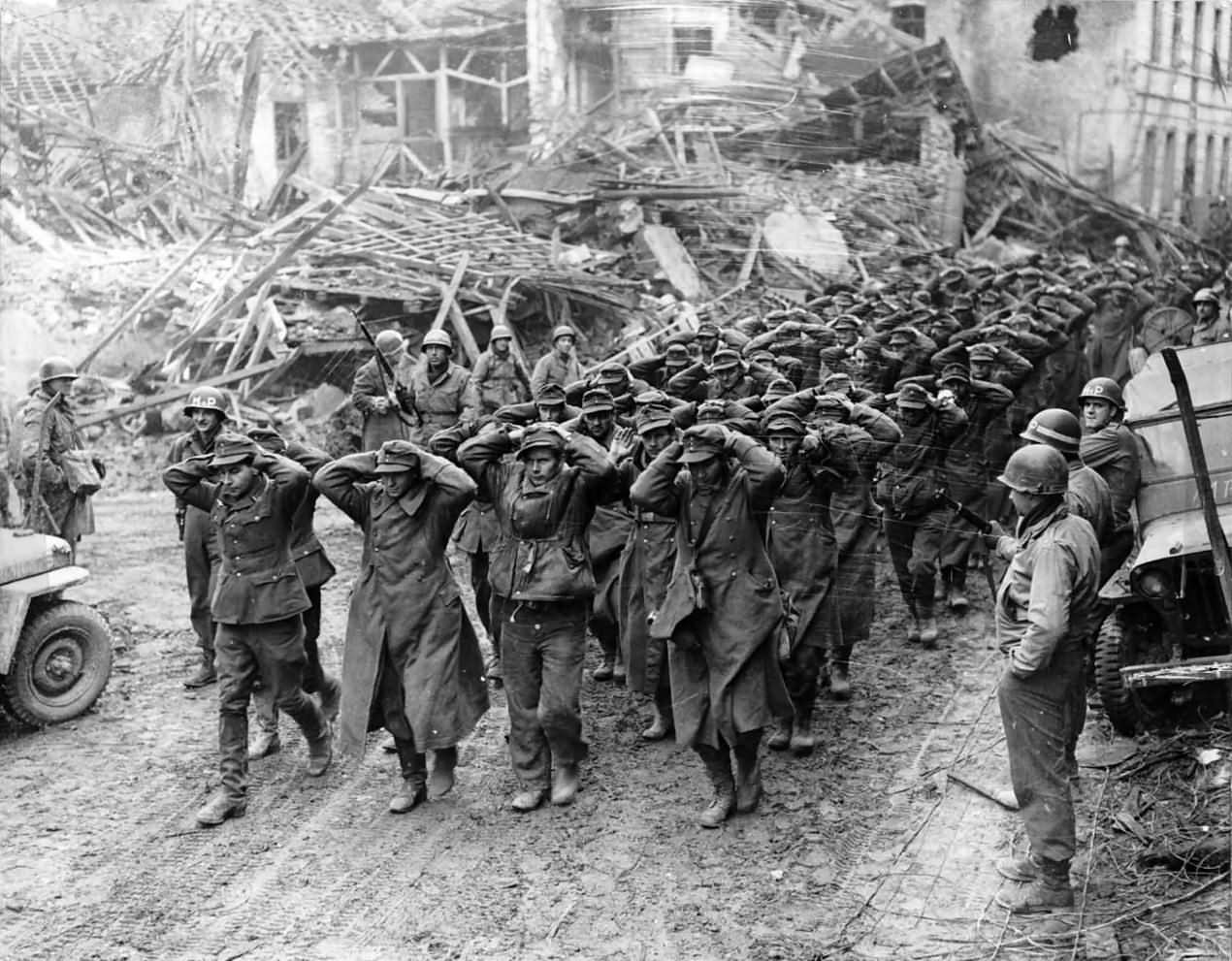
238. Prisoner of War (POW) – Military personnel captured by the enemy and held under the Geneva Conventions (although abuses were common).
239. Occupation Policy – Rules and directives governing conduct, administration, and security in occupied territories.
240. Civil Defense – Measures aimed at protecting civilian populations from air raids, bombardment, or other wartime hazards.
241. Rationing System – Distribution controls of food, fuel, and materials to conserve resources during war.
242. Black Market – Illicit trade of goods and resources restricted by wartime governments.
243. Underground Press – Clandestine publications promoting resistance or alternative information under censorship.
244. Propaganda Broadcast – Radio or media messages designed to influence occupied populations’ morale or allegiance.
245. Guerrilla Unit – Small armed groups conducting irregular operations against occupying forces.
246. Liberation Movement – Organized efforts to expel occupying forces and restore sovereignty.
247. Civilian Casualty – Non-combatant deaths or injuries caused by military operations, bombings, or occupation policies.
248. Evacuation Plan – Organized relocation of civilians or personnel from areas threatened by conflict.
249. Internally Displaced Person (IDP) – Civilians forced to move due to occupation, battle, or bombing.
250. Occupation Resistance Liaison – Individuals coordinating between local resistance groups and external Allied or partisan support.
251. Saboteur Network – Coordinated cells conducting sabotage against enemy infrastructure.
252. Underground Army – Armed organization operating covertly to prepare for or support liberation operations.
253. Concentration Camp – Facilities used by Nazis and others to detain, exploit, or exterminate perceived enemies.
254. Exile Government – Governments operating outside their occupied homeland to maintain legitimacy and coordinate with Allies.
255. Partisan Command – Leadership structure directing guerrilla units and sabotage operations.
256. Civilian Intelligence Collector – Non-military individuals gathering information on enemy movements and intentions.
257. Refugee Camp – Temporary housing for displaced civilians due to combat or occupation.
258. Sabotage Mission – Specific operation aimed at destroying enemy logistics, communication, or production.
259. Underground Supply Line – Covert route used to move weapons, food, or personnel to resistance units.
260. Resistance Courier – Individual transporting messages, orders, or supplies between cells.
Ideology, Politics & Power Blocs
261. Fascism – Authoritarian ideology emphasizing nationalism, militarism, and totalitarian control over society. Mussolini’s Italy exemplified this system.
262. Nazism – Radical form of fascism centered on racial ideology, expansionism, and absolute state control, as in Hitler’s Germany.
263. Imperialism – Extension of national power through territorial conquest or political dominance.
264. Appeasement – Policy of concessions to avoid conflict, notably by Britain and France toward Germany in the 1930s.
265. Neutrality – Decision of a state to avoid involvement in conflict, like Sweden or Switzerland during WWII.
266. Axis Powers – Coalition of Germany, Italy, Japan, and their allies fighting against the Allies.
267. Allied Powers – Coalition of nations opposing the Axis, including Britain, USSR, USA, France, and others.
268. Collaborationism – Cooperation with occupying enemy forces, politically or militarily.
269. Puppet State – Government controlled or heavily influenced by an occupying power. Examples: Vichy France, Manchukuo.
270. Reichskommissariat – German administrative regions in occupied territories to enforce control and resource exploitation.
271. Propaganda Ministry – Government office controlling media, art, and information to shape public opinion.
272. Censorship Bureau – Agency restricting news, publications, and communications to maintain regime control.
273. Political Commissar – Political officer embedded in military units to enforce ideology and loyalty.
274. Anti-Communism – Political movement opposing communist ideology; central to Axis propaganda.
275. Expansionist Policy – State strategy aimed at territorial acquisition or regional dominance.
276. Lebensraum – Nazi policy advocating territorial expansion in Eastern Europe for German settlement.
277. Greater East Asia Co-Prosperity Sphere – Japanese concept of regional domination under the guise of economic and political unity.
278. Puppet Army – Military forces organized under occupation authorities, often performing internal security duties.
279. Militarism – Ideology prioritizing military power and values within society and governance.
280. Totalitarian State – Government exercising complete control over politics, economy, and society.
281. War Council – High-level advisory group coordinating military strategy and national policy.
282. Cabinet of War – Executive body directing wartime governance, including production, mobilization, and diplomacy.
283. Occupation Government – Political administration imposed by occupying forces in conquered territories.
284. Puppet Regime – Subordinate government installed to enforce occupier’s objectives.
285. Diplomatic Isolation – Efforts to weaken or pressure a state by restricting its international relations.
286. Sanctions – Economic or political restrictions imposed to influence state behavior.
287. Neutrality Pact – Agreement between nations to avoid conflict and respect territorial boundaries.
288. Anti-Fascist Coalition – Alliance opposing fascist powers, often including communist and democratic states.
289. Axis Collaborationist Policy – Guidelines imposed on occupied territories for administration and resource extraction.
290. Resistance Coordination Council – Body overseeing cooperation among disparate resistance groups.
291. Home Front – Civilian and economic sector supporting military efforts during total war.
292. National Mobilization Office – Agency coordinating population, industry, and resources for wartime demands.
293. Civil Defense Directorate – Organization responsible for civilian protection from attacks.
294. Occupied Territory Administration – Bureau overseeing governance, taxation, and policing under occupation.
295. War Economy Board – Agency directing industrial output, rationing, and resource allocation for maximum war efficiency.
296. Collaborationist Police Force – Security units under occupation authority enforcing laws and suppressing resistance.
297. Secret Police – Intelligence and enforcement branch maintaining regime control and targeting dissidents.
298. Political Prisoner – Individual detained for beliefs, resistance, or opposition to occupying or ruling authorities.
299. Repatriation Program – Effort to return civilians, prisoners, or soldiers to their homeland after displacement.
300. National Resistance Symbol – Icon, flag, or emblem representing civilian or partisan opposition to occupation.
Naval Warfare & Maritime Strategy
301. Battleship Doctrine – Pre-war naval theory emphasizing heavily armored capital ships as decisive instruments of sea power. Battleships dominated early naval planning but became vulnerable to air power and submarines.
302. Aircraft Carrier – Warship designed to launch and recover aircraft, projecting air power over long distances. Carriers became central to naval operations in the Pacific.
303. Escort Carrier – Smaller carriers primarily used to protect convoys and support anti-submarine warfare operations.
304. Destroyer – Fast, maneuverable ship used to escort larger vessels and defend against submarines or aircraft.
305. Cruiser – Medium-sized warship used for scouting, raiding, and supporting larger fleets.
306. Submarine (U-Boat) – Underwater vessel capable of stealth attacks against surface ships. German U-boats threatened Allied supply lines in the Atlantic.
307. Wolfpack Tactics – Coordinated group of submarines attacking convoys to overwhelm defenses. A key German naval strategy early in the Battle of the Atlantic.
308. Mine Warfare – Deployment of naval mines to restrict enemy movement or protect strategic waterways.
309. Naval Blockade – The isolation of enemy ports to disrupt trade, supply, and military operations.
310. Sea Control – The ability to use maritime areas freely while denying them to the enemy.
311. Amphibious Assault – Coordinated landings from sea onto hostile shores. Examples include Normandy (D-Day) and Iwo Jima.
312. Convoy System – Grouping merchant ships with armed escorts to protect against submarine attacks. Critical in the Battle of the Atlantic.
313. Anti-Submarine Warfare (ASW) – Measures to detect, track, and destroy enemy submarines using sonar, depth charges, and aircraft.
314. Depth Charge – Anti-submarine explosive device dropped into water to damage or destroy submerged U-boats.
315. Torpedo – Self-propelled underwater missile used to sink ships or submarines.
316. Naval Aviation – Aircraft operations conducted from carriers or land bases to support fleet and strategic objectives.
317. Coastal Defense Battery – Shore-based artillery designed to defend harbors, ports, and coastlines against naval attack.
318. Convoy Escort Group – Naval formation assigned to protect merchant ships from submarine and air threats.
319. Patrol Boat – Small naval craft used for coastal defense, convoy escort, and reconnaissance missions.
320. Amphibious Tank – Armored vehicle capable of operating in water and on land, used in river crossings or beach assaults.
321. Mine Sweeper – Vessel designed to detect and remove naval mines, ensuring safe passage for fleets and convoys.
322. Naval Logistics – Supply, repair, and coordination of naval operations to sustain combat effectiveness over long distances.
323. Fleet-in-Being – Strategy where a naval force’s mere presence influences enemy action, without engaging directly.
324. Coastal Submarine Base – Facility used to repair, resupply, and command submarines near operational theaters.
325. Torpedo Bomber – Aircraft designed to attack ships with torpedoes from the air.
326. Naval Gunfire Support – Shore bombardment by ships to support ground operations during amphibious campaigns.
327. Signal Flare – Pyrotechnic device used for communication, target marking, or emergency signaling at sea.
328. Convoy Assembly Point – Location where merchant vessels gather before embarking on protected voyages across contested waters.
329. Shipyard Production – Industrial capacity for building warships, critical to sustaining naval power.
330. Maritime Reconnaissance – Use of aircraft, ships, and radar to detect enemy naval movements and positions.
331. Anti-Aircraft Artillery (Naval) – Shipboard guns designed to defend against aircraft attacks.
332. Fleet Engagement – Large-scale naval battle between opposing fleets, such as the Battle of Midway.
333. Commerce Raiding – Attacks on enemy shipping to disrupt trade and supply lines.
334. Coastal Fortifications – Permanent defenses including bunkers, artillery, and observation posts to protect strategic harbors.
335. Naval Minefield – Area of water seeded with mines to hinder enemy movement.
336. Convoy Escort Carrier – Small carrier accompanying convoys to provide air cover and ASW capability.
337. Submarine Wolfpack Coordination – Tactical synchronization of multiple submarines using radio and intelligence to maximize impact on convoys.
338. Amphibious Landing Craft – Specialized boats designed to carry troops and vehicles from ship to shore in combat operations.
339. Naval Interdiction – Operations aimed at preventing enemy use of sea lines of communication.
340. Coastal Recon Patrol – Naval units conducting surveillance of enemy beaches, ports, and movements.
Air Power & Aerial Doctrine
341. Air Interdiction – Attacks designed to disrupt enemy supply lines, reinforcements, and communications behind the front.
342. Fighter Interceptor – Aircraft specifically designed to engage and destroy enemy bombers or reconnaissance planes.
343. Bomber Stream – Coordinated flow of bombers to overwhelm enemy air defenses.
344. Night Bombing – Air operations conducted under cover of darkness to reduce losses and evade defenses.
345. Strategic Air Offensive – Campaigns targeting enemy infrastructure, industry, and morale through sustained aerial bombardment.
346. Tactical Air Support – Aircraft operations directly assisting ground forces in combat.
347. Dive Bomber – Aircraft designed to dive directly onto targets to release bombs with precision.
348. Close Air Support (CAS) – Air missions delivering firepower in direct coordination with ground units.
349. Air Superiority – Dominance of one side’s air forces over another to prevent interference with operations.
350. Fighter Sweep – Mission aimed at seeking out and destroying enemy aircraft over a battlefield.
351. Interception – Engaging enemy aircraft attempting bombing or reconnaissance missions.
352. Escort Fighter – Aircraft accompanying bombers to protect them from enemy interceptors.
353. Radar Guidance – Use of radar to direct aircraft and improve targeting for bombing or interception.
354. Bomber Formation – Grouping bombers to maximize defensive firepower and effectiveness.
355. Airborne Forces – Troops deployed by parachute or glider behind enemy lines for surprise operations.
356. Glider Infantry – Troops delivered by unpowered gliders for silent insertion into combat zones.
357. Tactical Bombing – Strikes aimed at military targets close to the front lines.
358. Long-Range Bomber – Aircraft capable of deep penetration into enemy territory, often carrying heavy payloads.
359. Medium Bomber – Aircraft with moderate range and payload, balancing speed and versatility.
360. Reconnaissance Aircraft – Planes designed for intelligence gathering and battlefield observation.
361. Night Fighter – Aircraft equipped for combat during nighttime operations.
362. Ground Attack Aircraft – Planes optimized for striking tanks, artillery, and troop concentrations.
363. Jet Fighter – Early jet-powered aircraft providing higher speed and performance than propeller-driven planes.
364. Close-Range Air Reconnaissance – Low-altitude scouting for tactical battlefield intelligence.
365. Airfield Seizure – Operation capturing enemy air bases to enable forward air operations.
366. Anti-Submarine Aircraft – Planes equipped to detect and attack submarines.
367. Air Drop Supply – Delivery of provisions, ammunition, or equipment via aircraft to front lines or resistance forces.
368. Aerial Mining – Dropping naval mines from aircraft to deny enemy access to waterways.
369. Signal Flare (Airborne) – Used to mark landing zones, targets, or communicate with ground forces.
370. Paratrooper Insertion – Deployment of airborne infantry behind enemy lines for strategic objectives.
371. Forward Air Controller – Personnel coordinating airstrikes from forward positions with ground units.
372. Pathfinding Unit – Aircraft unit marking target zones with flares or lights for bomber formations.
373. Strategic Recon – Long-range aerial intelligence gathering to inform high-level operational decisions.
374. Electronic Countermeasures (ECM) – Techniques used to jam or deceive enemy radar and communications.
375. Air Combat Maneuvering – Tactical dogfighting skills employed by fighter pilots.
376. Close Escort – Fighter planes assigned to stay near bombers to provide protection.
377. Radar Bombing – Use of radar to target bombing runs under poor visibility conditions.
378. Bomber Command – Organizational unit directing strategic bombing campaigns, such as RAF Bomber Command.
379. Tactical Air Command – Unit directing short-range, front-line air operations.
380. Fighter Command – Military branch or unit responsible for air defense and offensive fighter operations.
381. Airbase Defense – Anti-aircraft and patrol measures to protect airfields from attack.
382. Night Navigation – Techniques and instrumentation enabling aircraft to operate after dark.
383. Bombing Accuracy – The effectiveness of hitting intended targets, influenced by altitude, speed, and weather.
384. Interdiction Sortie – Mission to disrupt enemy movements or supplies behind the front.
385. Airborne Assault Coordination – Synchronizing paratrooper drops with ground and air support.
386. Long-Range Reconnaissance – Deep-penetration missions to gather strategic intelligence on enemy positions.
387. Flak (Fliegerabwehrkanone) – Anti-aircraft artillery firing explosive shells at attacking aircraft.
388. Combat Air Patrol (CAP) – Aircraft patrolling designated areas to intercept enemy planes.
389. Fighter-Bomber – Aircraft capable of both air-to-air combat and ground attack missions.
390. Dive-Bombing Accuracy – Precision bombing technique allowing closer target engagement.
391. Pathfinding Navigator – Specialist guiding bombers to targets using visual or electronic markers.
392. Bomber Loss Rate – Percentage of aircraft lost during missions, critical for operational planning.
393. Airfield Construction – Rapid building of runways, hangars, and support facilities in forward zones.
394. Glider Assault Coordination – Planning and timing of glider-borne troop insertions.
395. Tactical Reconnaissance – Short-range intelligence gathering directly supporting ground operations.
396. Strategic Air Campaign Planning – Coordinated long-term bombing plans to weaken enemy war capabilities.
397. Air Superiority Fighter – Plane specifically designed to dominate enemy airspace.
398. Night Bombing Formation – Grouping of bombers for night missions to maintain mutual support.
399. Long-Range Escort – Fighters accompanying bombers deep into enemy territory to ensure protection.
400. Radar Picket – Forward radar installation or aircraft used to detect incoming enemy air attacks.
Intelligence, Occupation & Civilian War
401. Signals Intelligence (SIGINT) – The interception and analysis of enemy communications to gain actionable intelligence. Crucial for codebreaking efforts like Enigma and Purple.
402. Human Intelligence (HUMINT) – Information collected through spies, informants, and resistance networks. Played a major role in Allied operations in occupied Europe.
403. Military Deception – Operations intended to mislead the enemy regarding intentions, timing, or location of attacks. Examples include Operation Fortitude before D-Day.
404. Double Agent – A spy who secretly works for one side while pretending loyalty to another, feeding controlled information to manipulate enemy strategy.
405. Operational Security (OPSEC) – Measures to prevent sensitive information from reaching enemy intelligence, including code use, censorship, and secure communication.
406. Resistance Movement – Organized civilian or partisan groups opposing occupation forces, conducting sabotage, intelligence gathering, and guerrilla warfare.
407. Collaborationist Regime – Local governments cooperating with occupying powers, often providing administrative support or recruiting forces.
408. Guerrilla Warfare – Irregular combat conducted by small, mobile units using ambushes, sabotage, and hit-and-run tactics.
409. Civil Defense – Measures to protect civilian populations from air raids, artillery, and other wartime threats, including shelters and evacuation procedures.
410. Forced Labor – Compulsory civilian labor employed to support military production or infrastructure under occupation.
411. Counterintelligence – Efforts to detect and thwart enemy espionage and sabotage operations.
412. Sabotage – Deliberate destruction or disruption of enemy equipment, supplies, or infrastructure.
413. Codebreaking – The process of decrypting enemy communications, vital for successes such as the Battle of the Atlantic.
414. Resistance Radio – Secret communication networks used by partisans to transmit intelligence to Allies.
415. Espionage Network – Structured group of agents collecting intelligence behind enemy lines.
416. Occupation Administration – Governance imposed by occupying forces to control territory, manage resources, and enforce law.
417. Internment Camp – Detention facilities for civilians considered security risks, including enemy nationals or political prisoners.
418. Civilian Casualty Mitigation – Measures to reduce non-combatant deaths, including evacuation, shelters, and medical services.
419. Propaganda – Use of media, posters, films, and radio to influence public perception and morale.
420. Black Propaganda – Misleading information designed to appear as coming from a different source, often enemy-controlled.
421. Psychological Operations (PSYOP) – Operations aimed at influencing the attitudes and behaviors of enemy forces and civilians.
422. Partisan Warfare – Resistance fighters operating within occupied territories to disrupt enemy operations and gather intelligence.
423. Underground Press – Secret publications produced by resistance movements to inform and mobilize populations.
424. Saboteur Training – Instruction in demolition, espionage, and covert operations for resistance fighters.
425. Evacuation Planning – Organizing civilian or military withdrawal from threatened areas to reduce casualties.
426. Hostage Taking – Capturing civilians or prisoners to leverage compliance or deter resistance.
427. Escape and Evasion – Tactics enabling personnel to avoid capture or escape from enemy-controlled areas.
428. Occupation Economy – The exploitation of occupied territories’ resources to support the occupying power’s war effort.
429. Civilian Internment – Detaining non-combatants for political or security reasons during occupation.
430. Resistance Supply Drops – Allied air missions delivering arms, equipment, and provisions to partisan groups.
Ideology, Politics & Power Blocs
431. Fascism – An authoritarian political ideology emphasizing nationalism, militarism, and state control over society. Central to Italy’s wartime policies.
432. Nazism – A radical form of fascism with racial ideology, expansionism, and totalitarian control. Nazi Germany implemented this ideology across occupied Europe.
433. Imperialism – Expansion of national power through conquest or political dominance. Japan and European powers pursued imperial ambitions during WWII.
434. Appeasement – Diplomatic policy aimed at avoiding conflict through concessions, exemplified by Britain and France toward Germany pre-1939.
435. Neutrality – The stance of a state choosing not to participate in conflict; e.g., Switzerland and Sweden during WWII.
436. Axis Powers – The coalition of Germany, Italy, Japan, and their allies. Coordinated military and political strategies shaped global conflict.
437. Allied Powers – Coalition opposing the Axis, including Britain, France, the Soviet Union, and later the United States.
438. Puppet State – A nominally independent government controlled by a foreign power, such as Vichy France.
439. Collaborationist Government – Local authorities cooperating with occupying forces for political or military gain.
440. Resistance Governance – Temporary civilian or military structures established by partisans or liberated areas.
441. Ideological Indoctrination – Systematic teaching of political or racial ideology to military or civilian populations.
442. Propaganda Ministry – Government body managing mass media and information for wartime messaging.
443. Totalitarianism – Political system with centralized control, suppressing dissent and dominating all aspects of life.
444. Militarism – Ideology prioritizing military strength and readiness as a primary national value.
445. Expansionist Policy – Pursuit of territorial growth for strategic, economic, or ideological reasons.
446. Colonial Administration – Management of overseas territories to exploit resources and support war efforts.
447. Economic Sanctions – Trade or financial restrictions applied to weaken enemy nations before or during conflict.
448. Diplomatic Coercion – Using political or economic pressure to influence another nation’s decisions.
449. Neutrality Patrols – Naval or air operations ensuring neutral territories were not violated by belligerents.
450. International Treaties – Agreements regulating warfare, territorial disputes, or arms limitations, some violated during WWII.
Technology, Industry & Economy
451. War Economy – An economic system entirely structured around military production, logistics, and resource allocation.
452. Mass Production – Industrial manufacturing techniques enabling rapid and large-scale weapon and vehicle production.
453. Synthetic Fuel – Artificial fuel produced from coal or other resources, extensively used by Germany due to oil shortages.
454. Standardization – Uniform design of weapons and equipment to simplify production, maintenance, and logistics.
455. Lend-Lease – U.S. program supplying military aid and resources to Allies before direct involvement in combat.
456. Armaments Industry – Factories and infrastructure producing weapons, vehicles, and ammunition for the war effort.
457. War Bonds – Government-issued debt instruments allowing civilians to financially support military operations.
458. Strategic Materials – Critical resources, such as rubber, oil, and steel, necessary for sustaining war production.
459. Industrial Mobilization – Rapid conversion of peacetime industry to military production.
460. Labor Allocation – Assigning workforce to essential military production or support tasks, often including conscription of women and occupied populations.
461. Mechanized Production – Use of machinery to increase efficiency and output of war materiel.
462. Military R&D – Research and development of new weapons, vehicles, and tactics to gain technological superiority.
463. Code Machinery – Mechanical or electrical devices used for encryption, such as the German Enigma.
464. Ballistic Technology – Development of rockets, artillery, and missiles, exemplified by V-1 and V-2 programs.
465. Radar Technology – Detection systems for aircraft, ships, and artillery targeting, revolutionizing air and naval warfare.
466. Sonar Technology – Submarine detection systems, critical for anti-submarine campaigns in the Atlantic.
467. Communication Networks – Lines of telegraph, radio, and telephone used to coordinate military and industrial operations.
468. Logistics Planning – Coordinating supply chains to ensure troops, fuel, and equipment reach operational theaters.
469. Transportation Infrastructure – Railways, roads, ports, and airfields essential for moving troops and materials.
470. Civilian Manufacturing Support – Non-military factories adapted to produce war materials under government direction.
471. Industrial Espionage – Spying on enemy production and technology to replicate or counter innovations.
472. Cryptanalysis – Breaking enemy codes to gain strategic intelligence.
473. Strategic Bombing Industry Targeting – Planning aerial attacks on factories, rail hubs, and refineries to disrupt enemy production.
474. Fuel Refinery Bombing – Targeting critical fuel production facilities to limit enemy mobility.
475. Synthetic Rubber Production – Artificial replacement for natural rubber, vital for tires and military vehicles.
476. Aircraft Production Line – Assembly of military aircraft using standardized techniques for rapid deployment.
477. Tank Manufacturing – Design and production of armored vehicles critical for Blitzkrieg and defense operations.
478. Munitions Stockpile – Reserves of ammunition, explosives, and weaponry maintained for sustained operations.
479. Industrial Vulnerability – Strategic weakness in production or supply that could be exploited by enemy attacks.
480. Workforce Mobilization – Recruiting and deploying civilian labor to maximize industrial output for the war effort.
Late War & Post-War Concepts
481. Strategic Collapse – Breakdown of a nation’s ability to continue organized resistance, as seen in Germany in 1945.
482. Liberation – The removal of occupying forces from conquered territories, restoring sovereignty.
483. Demilitarization – Dismantling of a nation’s military capabilities following defeat.
484. War Crimes – Violations of international laws governing conduct during war, including targeting civilians.
485. Nuremberg Trials – Post-war judicial proceedings holding Nazi leaders accountable for crimes against humanity.
486. Post-War Settlement – Political, territorial, and economic arrangements established after hostilities ended.
487. Cold War Origins – Geopolitical tensions between former Allies, particularly the U.S. and the USSR, following WWII.
488. Occupation Governance – Administration of defeated nations under Allied control to restore order and implement reforms.
489. Reconstruction – Post-war rebuilding of infrastructure, cities, and economies devastated by conflict.
490. War Reparations – Compensation demanded from defeated nations to offset war damages.
491. Disarmament – Reduction or elimination of military forces and weapons to prevent future conflict.
492. Refugee Crisis – Mass displacement of civilians due to occupation, bombings, and border changes.
493. Demobilization – Process of returning soldiers to civilian life after hostilities end.
494. Internment Review – Post-war assessment of internment camps, treatment, and policies.
495. Post-War Trials – Legal processes addressing war crimes beyond Nuremberg, including in Japan and occupied territories.
496. De-Nazification – Allied program to remove Nazi influence from German society, politics, and education.
497. Denazification Courts – Judicial bodies determining culpability and administering penalties for former Nazis.
498. Transitional Justice – Legal and political mechanisms addressing crimes and human rights abuses after conflict.
499. Memory and Commemoration – Preservation of history, memorials, and educational initiatives about WWII.
500. Historical Scholarship – Academic research and analysis forming the basis for accurate understanding and interpretation of WWII events.
All definitions in this glossary are based on historical research, archival sources, and widely accepted military scholarship. For further study, consult related sections such as Timeline, Campaigns, Battles, and Strategy & Doctrine, which provide contextual applications of these terms. Some entries may overlap across categories to reflect their interconnected nature within military operations. This glossary is continuously updated as new research and articles are added. All content is intended for educational and research purposes and should be cited appropriately. If you have suggestions for additional terms or corrections, please contact us via the About page. Definitions are written in accordance with consensus historiography and peer-reviewed research to maintain accuracy and reliability.