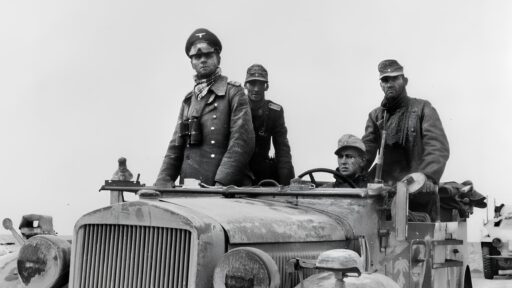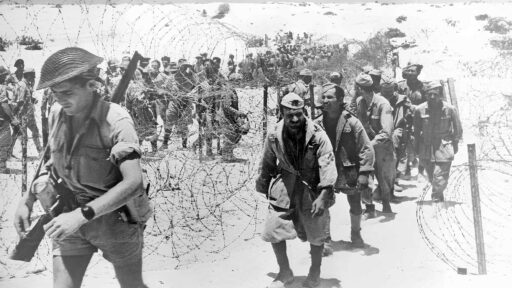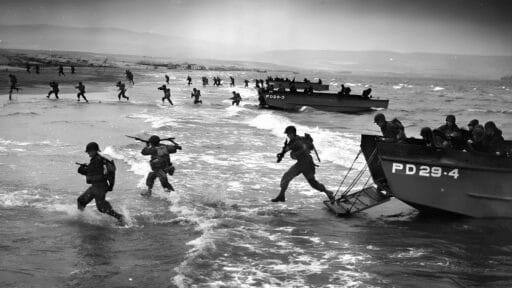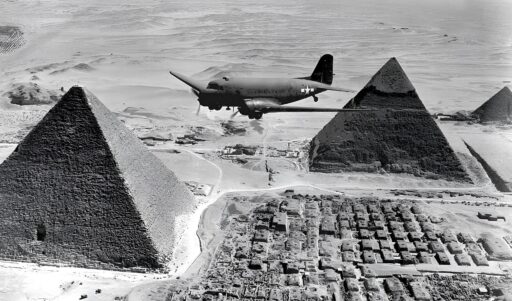

The War of the Tether: Logistics, Mobility, and Operational Limits in North Africa, 1940–1943
Executive Summary
The North African Campaign (1940–1943) represents a unique case study in military history where operational success was dictated almost exclusively by logistical capacity and environmental engineering rather than tactical doctrine. Unlike the European theater, where armies could rely on established road networks, rail infrastructure, and local foraging, the North African theater was a “tactical vacuum.” It forced mechanized armies to operate as self-contained “ships at sea,” carrying every liter of water, fuel, and round of ammunition across a hostile substrate.
This analysis deconstructs the campaign through the lens of logistical physics. It argues that the Axis defeat was not primarily a failure of generalship, but a failure of industrial adaptation and supply chain mathematics. Part I examines the geomorphological constraints of the terrain, the tribological effects of sand on internal combustion engines, and the “Elastic Tether” calculation that doomed Erwin Rommel’s advance on the Suez Canal.
1. The Geographic Determinants: The Corridor of War
The operational area was defined by a stark geological dualism: the “Green Mountain” (Jebel Akhdar) of the coast and the hyper-arid Sahara of the interior.
1.1. The Morphological Constraint
The battlefield was effectively a linear corridor, varying in width from 40 miles (at El Alamein) to several hundred miles (in Cyrenaica).
-
The Northern Boundary: The Mediterranean Sea provided the sole avenue for bulk resupply but also exposed the flank to naval bombardment.
-
The Southern Boundary: The Qattara Depression (70 meters below sea level) and the Great Sand Sea created an impassable barrier for heavy vehicles. The Qattara Depression consists of salt marshes (sabkhas) covered by a thin crust of sand; a tank driving onto it would break the crust and sink into the brine.
-
Operational Impact: This geography forced all strategic movement to funnel through specific “choke points” along the coast, most notably the Via Balbia. This single paved highway was the spinal cord of the war. Controlling it meant controlling the pace of logistics.
1.2. The Surface Geology (“The Going”)
Military planners categorized the desert floor into distinct classes of mobility, known as “The Going.”
-
Good Going: Hard-packed gravel plains (serir) allowed vehicles to travel at speeds of 30–40 mph, enabling the sweeping flank maneuvers famous in the campaign.
-
Bad Going: Soft dune sand (erg) or sharp limestone ridges required vehicles to shift into low gear, increasing fuel consumption by a factor of 3 to 4.
-
The Escarpments: The coastal plateau was broken by steep cliffs (escarpments). Operations often hinged on controlling the few passes (e.g., Halfaya Pass, the “Hellfire Pass”) that allowed heavy armor to ascend or descend the plateau.
IMAGE SUGGESTION 1
Subject: Halfaya Pass Topography
Description: A historical photo or topographic map showing the steep, winding switchbacks of the Halfaya Pass, illustrating it as a bottleneck.
Caption: “Geological Choke Points: The Halfaya Pass was one of the few locations where heavy armor could ascend the coastal escarpment, making it a critical strategic objective.”
2. The Engineering of Attrition: Tribology and Thermal Stress
The primary enemy of the mechanized army was not the opposing force, but the environment itself. The interaction between sand and machinery—tribology—caused equipment attrition rates that far exceeded combat losses.
2.1. The Abrasive Environment (Sand Ingestion)
Desert sand is composed of silica crystals with a hardness of 7 on the Mohs scale—hard enough to abrade steel.
-
Air Filtration Failure: Standard European air filters (oil-bath type) were designed for road dust, not silica storms. A German Panzer III engine, rated for 3,000 km of service life in Europe, often failed after 500 km in Africa. The sand would bypass the rings, enter the cylinders, and grind the cylinder walls, causing a catastrophic loss of compression.
-
The “Volkes” Solution: The British eventually adapted by fitting massive external “Volkes” air filters to their tanks. The Germans were slower to adapt, often relying on improvised modifications that restricted airflow and reduced engine power.
2.2. Thermal Management and Cooling
Ambient temperatures often exceeded 45°C (113°F).
-
The Condenser Problem: German tanks used water-cooled engines with sealed systems. If a radiator hose burst or water boiled over, the tank was immobilized. Water was too precious to waste on radiators.
-
British Radial Engines: Many British and American tanks (like the M3 Grant and M4 Sherman) utilized air-cooled radial aircraft engines. While they had a high silhouette, they eliminated the vulnerability of the water radiator entirely, proving far more robust in the desert heat.
IMAGE SUGGESTION 2
Subject: Volkes Air Filter on a Crusader Tank
Description: A close-up technical photo showing the large, boxy external air filters attached to the rear of a British Crusader tank.
Caption: “The Lungs of the Tank: Specialized tropical filters were essential to prevent silica dust from destroying engines within 500 kilometers.”
3. The Mathematics of Supply: The Elastic Tether
The central strategic dilemma of the campaign was the Logistical Tether. As an army advanced away from its base, its strength decreased linearly due to the consumption of supplies by the supply column itself.
3.1. The Distance-Consumption Integral
The operational limit was determined by the point where a supply truck consumed its entire payload in fuel just to make the round trip.
-
The Calculation: A standard 3-ton truck carried a payload of roughly 3,000 kg. It consumed roughly 30 liters of fuel per 100 km.
-
The 1,000-Mile Penalty: The distance from the primary Axis port (Tripoli) to the front line at El Alamein was roughly 1,200 miles (2,000 km). A round trip was 4,000 km. A single truck would consume 1,200 liters of fuel just to drive the route. To deliver fuel to the front, the Axis had to dispatch convoys of trucks carrying nothing but fuel for the other trucks.
-
The Culminating Point: German logisticians calculated that at a distance of 1,000 km from the base, the “useful load” of a supply column dropped to 50%. Beyond this point, the logistical effort yielded diminishing returns. Rommel’s advance to Alamein violated this mathematical constant.
3.2. The Railway Advantage
The British possessed a decisive advantage: the Western Desert Railway.
-
Infrastructure: The British extended a rail line from Alexandria to Tobruk.
-
Efficiency: One train could haul the equivalent tonnage of 1,500 trucks and required a fraction of the fuel and crew. This allowed the British Eighth Army to build up supplies at the front (El Alamein) exponentially faster than the Axis, who relied entirely on the single-lane Via Balbia road.
IMAGE SUGGESTION 3
Subject: Western Desert Railway Construction
Description: A photo of British engineers laying track in the desert sands, extending the supply line westward.
Caption: “The Steel Spine: The extension of the railway from Alexandria allowed the British to move bulk tonnage far more efficiently than Axis truck convoys.”
4. The Material Science of Fuel: The Canister War
In a theater where fuel was the blood of the army, the vessel used to transport it became a strategic weapon.
4.1. The Failure of the British “Flimsy”
The British supply system relied on a 4-gallon (18-liter) tin container made of thin tinplate, nicknamed the “Flimsy.”
-
Structural Flaw: The seams were crimped and lightly soldered. The severe vibrations of driving over “corrugated” desert tracks caused these seams to split.
-
The Wastage Rate: Official reports indicate that 25% to 30% of all fuel sent to the front in Flimsies was lost to leakage before it ever reached a tank.
-
Hazard: Leaking fuel turned transport trucks into mobile firebombs. Crews were forced to discard leaking tins, creating a trail of waste across the desert.
4.2. The German Wehrmacht-Einheitskanister (Jerrycan)
The Germans deployed the 20-liter Kanister, a masterpiece of industrial design.
-
Engineering: It was composed of two stamped steel halves welded at the seam (invulnerable to splitting).
-
Ergonomics: It featured three handles: a single soldier could carry two full cans (using the outer handles) or two empty cans in each hand (using the center handles), or pass them bucket-brigade style.
-
The Breather Tube: An internal breather tube allowed smooth pouring without “glugging,” preventing spillage during rapid refueling.
-
Strategic Impact: The British prized captured Jerrycans above almost all other loot. General Auchinleck eventually issued an order to collect captured German cans for use by the Eighth Army, acknowledging their superiority.
IMAGE SUGGESTION 4
Subject: Jerrycan Cross-Section Diagram
Description: A technical drawing showing the internal breather tube and the welded seam construction of the German Jerrycan.
Caption: “Industrial Superiority: The internal breather tube and triple-handle design of the Jerrycan made it the most efficient liquid container of the war.”
5. Strategic Interdiction: The Role of Ultra and Malta
While trucks struggled on land, the supply war was ultimately decided at sea. The British island of Malta acted as an “unsinkable aircraft carrier” sitting astride the Axis supply routes from Italy to Libya.
5.1. The Intelligence War (Ultra)
The British ability to decrypt German Enigma signals meant they knew the exact departure times and routes of Axis supply convoys.
-
Targeting: This intelligence was passed to RAF bombers and Royal Navy submarines based in Malta.
-
The Statistics: In the critical months before the Battle of El Alamein (August–October 1942), Axis fuel losses at sea rose to 40-60%. Rommel often received only 10% of his requested fuel.
5.2. The Tanker Crisis
The campaign hinged on specialized tanker ships.
-
The Proserpina: On October 26, 1942, the Italian tanker Proserpina, carrying the last major fuel reserve for the Afrika Korps, was sunk by British torpedo bombers. This event effectively immobilized the Panzer divisions during the decisive phase of the battle.
-
Operational Paralysis: Without fuel, the superior German tanks became static pillboxes, easily flanked and destroyed by the numerically superior British forces.
6. The Port Capacity Crisis: The Arithmetic of Starvation
While the “Elastic Tether” of road transport restricted movement, the absolute limit of Axis potential was defined by Port Capacity. A tank on the dock in Naples was useless; it had to cross the sea and be offloaded in Africa.
6.1. The Tonnage Deficit
German logistical staff calculated that to sustain a defensive posture, the Panzer Army Africa needed 30,000 tons of supplies per month. To launch an offensive to the Suez, it needed 70,000 tons.
-
Tripoli: The primary port. Its theoretical maximum discharge rate was 45,000 tons/month. However, it was constantly degraded by RAF bombing and was 1,000 miles from the front.
-
Benghazi: Capacity 15,000 tons/month. Useful, but often blocked by sunken ships during retreats.
-
Tobruk: The strategic prize. Capacity 20,000 tons/month.
-
The Math of Failure: Even if the Royal Navy did not sink a single ship, the combined capacity of these ports (roughly 80,000 tons under ideal conditions) barely met the offensive requirement. In reality, due to friction and interdiction, Rommel rarely received more than 40,000 tons. He was fighting a rich man’s war on a pauper’s budget.
6.2. The Failure of Coastal Shipping (Cabotage)
The most efficient way to move supplies from Tripoli to the front was not by truck, but by small coastal steamers (coasters).
-
The Italian Failure: The Italian Navy failed to organize a robust coastal convoy system. They feared British submarines and aircraft.
-
The Consequence: Supplies were offloaded in Tripoli and loaded onto trucks. A truck engine burns fuel to move cargo; a ship engine is exponentially more efficient per ton-mile. This reliance on road transport for the “long haul” (Tripoli to Alamein) bled the Axis fuel reserves dry before the tanks even started their engines.
IMAGE SUGGESTION 5
Subject: The Port of Tripoli Under Attack
Description: A historical photo showing sunken ships blocking the quay and cranes destroyed by RAF bombing in Tripoli harbor.
Caption: “The Choke Point: The limited and damaged facilities at Tripoli created a bottleneck that no amount of tactical brilliance could overcome.”
7. The Maintenance War: Recovery and Cannibalization
In a theater where replacements were scarce, the ability to repair damaged equipment on the battlefield became a decisive strategic factor.
7.1. The British Recovery System
The British Army institutionalized vehicle recovery. They deployed specialized heavy recovery vehicles like the Scammell Pioneer.
-
The Cycle: A British tank hit by a shell was often not destroyed, but merely immobilized. Recovery crews would tow it to field workshops (LADs – Light Aid Detachments).
-
Efficiency: During Operation Crusader, many British tanks were “knocked out” two or three times, repaired overnight, and returned to battle. This created a “Zombie Tank” phenomenon where British armor strength remained surprisingly resilient.
7.2. German Cannibalization
The Afrika Korps possessed excellent field mechanics but lacked heavy recovery prime movers.
-
Battlefield Loss: When the Germans retreated (as they often did after 1941), they were forced to blow up (scuttle) repairable tanks because they could not tow them.
-
The “Beutewagen” (Captured Vehicle): To solve their transport shortage, the Germans systematically cannibalized captured British trucks. At the height of the campaign, 85% of Rommel’s transport fleet consisted of captured British or Canadian vehicles.
-
The Spare Parts Nightmare: While this provided immediate mobility, it created a logistical nightmare. German mechanics needed British spare parts (Imperial measurements) rather than German parts (Metric), leading to a breakdown in standardized maintenance.
IMAGE SUGGESTION 6
Subject: Scammell Pioneer Recovery Vehicle
Description: A photo of the massive Scammell Pioneer 6×4 tractor towing a disabled Crusader tank using its heavy winch.
Caption: “The Regeneration of Force: British recovery doctrine allowed them to recycle damaged armor, maintaining combat strength despite heavy losses.”
8. Biological Logistics: The Limits of Human Endurance
The desert environment imposed strict physiological limits on the soldiers. Logistics had to account for the biological machine as well as the internal combustion engine.
8.1. The Water Ration
Standard doctrine allotted 4 liters (approx 1 gallon) of water per man per day.
-
Usage: This single gallon covered drinking, cooking, washing, and—crucially—radiator coolant replenishment.
-
Brackish Water: Coastal wells often produced saline (salty) water. Drinking this caused diarrhea and accelerated dehydration. Using it in engines caused salt scaling and overheating.
-
The Tea Ritual: The British soldier’s “Benghazi Cooker” (a tin can filled with sand and gasoline) was a masterpiece of improvisation, allowing tea to be brewed in minutes. This tea provided essential hydration and Vitamin C (if lime was added), sustaining morale.
8.2. Disease Vectors
Dysentery and “Desert Sores” (septic ulcers) caused more casualties than enemy fire.
-
The Fly: Millions of flies, bred in the unburied waste of the armies, swarmed over food.
-
Sanitation: The hard rocky ground made digging deep latrines difficult.
-
Dietary Logistics: The lack of fresh vegetables led to vitamin deficiencies. The British reliance on canned “Bully Beef” and hardtack biscuits provided calories but resulted in widespread constipation and digestive failure among the troops.
IMAGE SUGGESTION 7
Subject: The “Benghazi Cooker”
Description: A photo of British soldiers huddled around a small fire made from a fuel tin, brewing tea in the desert.
Caption: “The Morale Booster: The improvised ‘Benghazi Cooker’ allowed British troops to sterilize water and maintain hydration through tea.”
9. The American Industrial Avalanche (1942–1943)
The entry of the United States via Operation Torch (November 1942) fundamentally altered the logistical equation. The US did not just bring men; they brought a standardized industrial system.
9.1. Standardization as a Weapon
Unlike the Axis, who fielded a menagerie of German, Italian, and captured French/British vehicles, the US Army standardized on a few robust platforms.
-
The GMC CCKW (Deuce and a Half): This 2.5-ton truck became the universal logistical carrier. Its parts were interchangeable. If one broke down, it could be fixed with parts from any other.
-
The Red Ball Concept: The Americans established high-speed express loops for supply. They treated logistics as a flow rate problem, flooding Tunisia with material.
9.2. The Sherman Tank Delivery
The most decisive logistical act of 1942 was the emergency shipment of 300 M4 Sherman tanks to Egypt before the Battle of El Alamein.
-
Operational Readiness: Unlike British tanks which often required extensive tuning upon arrival, Shermans arrived ready to fight. Their reliability meant that a higher percentage of tanks arrived at the battlefield after the long road march from the ports.
IMAGE SUGGESTION 8
Subject: US Liberty Ship Unloading
Description: A photo of a Liberty ship disgorging hundreds of crates and trucks at a North African port (Casablanca or Oran).
Caption: “The Industrial Tsunami: The US Liberty Ship program ensured that Allied supplies arrived faster than they could be consumed.”
10. Strategic Conclusion: The Quartermaster’s Victory
The defeat of the Axis in North Africa was a foregone conclusion not because of the Battle of El Alamein, but because of the logistical ratio.
-
The Ratio: By 1943, for every ton of supply the Axis could land in Tunisia, the Allies could land 20.
-
The Verdict: The campaign proved that in modern mechanized warfare, tactical brilliance (Rommel) cannot overcome logistical strangulation. The desert was a harsh auditor; it relentlessly exposed every inefficiency in the supply chain. The British, learning from early failures, built a railway and a recovery system. The Germans, reliant on a long road tether and captured trucks, simply ran out of energy. The war ended when the fuel gauge hit empty.
IMAGE SUGGESTION 9
Subject: The Tank Graveyard
Description: A desolate photo of abandoned German and Italian tanks scattered across the desert, intact but out of fuel.
Caption: “Defeated by Physics: Many Axis tanks were abandoned not because they were destroyed, but because they simply ran dry.”
IMAGE SUGGESTION 10
Subject: General Montgomery with Logistics Staff
Description: A photo of Bernard Montgomery conferring with his administrative staff officers, pointing at supply maps.
Caption: “The Professional: Montgomery famously refused to attack until his logistics were mathematically perfect, ensuring victory through supply.”
References and Further Reading
-
Definitive Logistics History: Van Creveld, Martin. Supplying War: Logistics from Wallenstein to Patton. Cambridge University Press. (The standard text on military logistics).
-
Comprehensive Campaign History: Atkinson, Rick. An Army at Dawn: The War in North Africa, 1942-1943. Henry Holt.
-
Rommel’s Papers: Rommel, Erwin. The Rommel Papers. Da Capo Press. (Primary source on his supply complaints).
-
The Jerrycan: ASME. The Little Can That Could. (Engineering history of the Jerrycan).
-
Malta’s Role: Holland, James. Fortress Malta: An Island Under Siege. Orion.
-
Naval Interdiction: O’Hara, Vincent. Struggle for the Middle Sea: The Great Navies at War in the Mediterranean Theater. Naval Institute Press.
-
Medical History: Harrison, Mark. Medicine and Victory: British Military Medicine in the Second World War. Oxford University Press. (Details desert diseases).
-
Tank Recovery: The Tank Museum. Tank Recovery in WWII.
-
Geography of War: US Army Center of Military History. Terrain Factors in the North African Campaign.
-
Operation Crusader: Ford, Ken. Operation Crusader 1941. Osprey.
-
German Logistics: Macksey, Kenneth. Rommel: Battles and Campaigns. Da Capo.
-
The Via Balbia: Britannica. North Africa Campaign.
-
Article: Imperial War Museums. Life in the Desert.
-
Port Capacity: Naval War College Review. The Logistics of the North African Campaign.
-
US Logistics: Leighton, Richard. Global Logistics and Strategy, 1940–1943. US Army CMH.