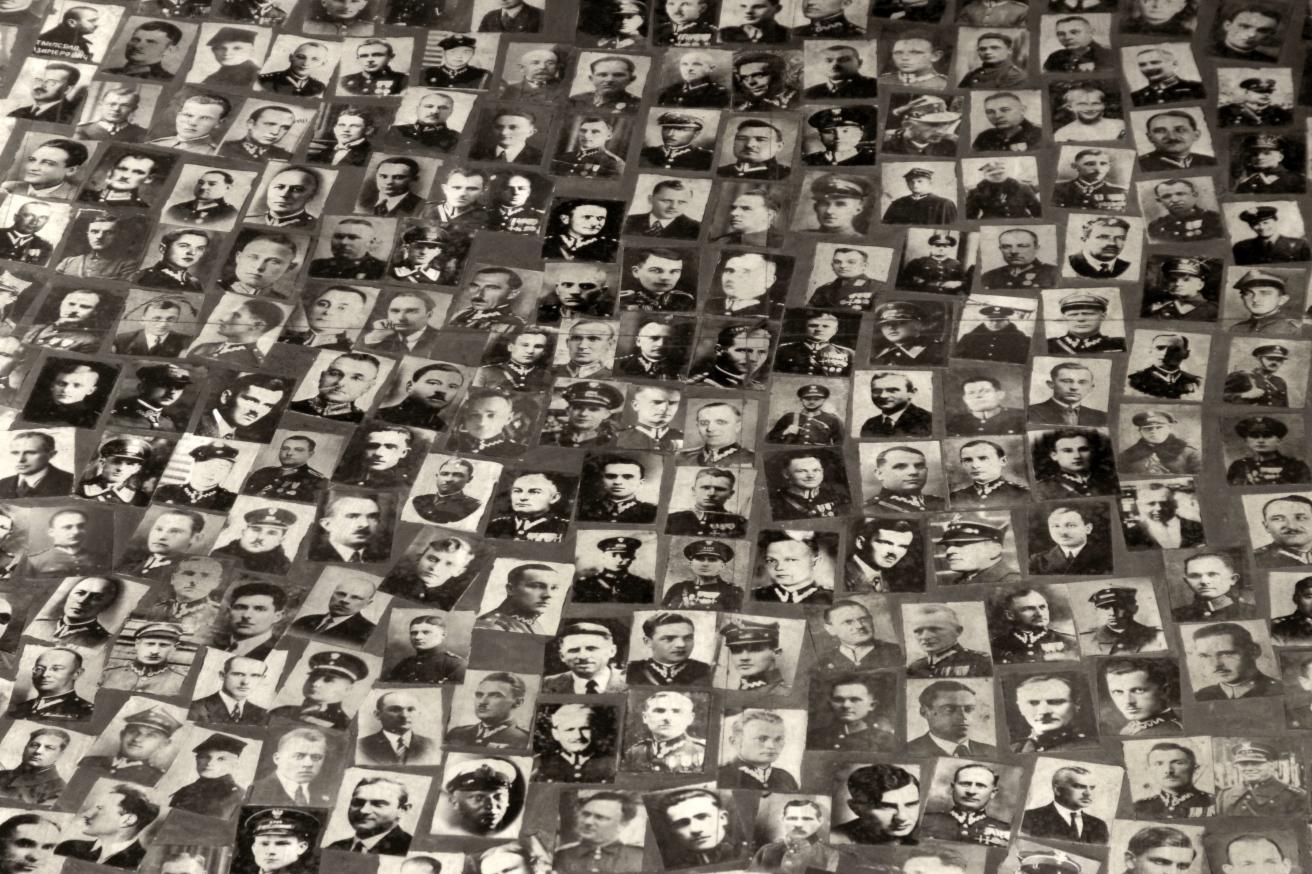

The Katyn Massacre: A Crime Without Precedent – Anatomy of an Elitocide
Executive Summary
In the spring of 1940, the Soviet secret police (NKVD) systematically executed approximately 22,000 Polish military officers, police officials, and intellectuals. Known collectively as the Katyn Massacre, this event was not merely a war crime born of battlefield rage, but a coldly calculated act of “elitocide”—a decapitation strike designed to permanently cripple the Polish nation by physically eliminating its leadership class. For fifty years, this crime was shrouded in one of history’s most elaborate webs of lies, with the Soviet Union blaming Nazi Germany and the Western Allies remaining complicit in their silence for the sake of geopolitical expediency. This article dissects the bureaucratic machinery of the killings, the forensic evidence that exposed the truth, and the half-century diplomatic struggle for acknowledgment.
1. Introduction: The Decapitation Strategy
Following the Soviet invasion of Poland on September 17, 1939, the Red Army captured roughly 250,000 Polish soldiers. While the rank-and-file were largely released or sent to labor camps, the officer corps was segregated.
To the Soviet leadership, these men represented a dual threat. First, they were military professionals capable of leading an insurgency. Second, and more importantly to the Marxist-Leninist worldview, they were “class enemies.” The Polish officer corps was unique; a significant percentage were reservists—university professors, doctors, lawyers, engineers, and landowners mobilized for the war. By targeting them, Stalin was not just disarming an army; he was lobotomizing a nation.
The decision to liquidate them was unrelated to any specific judicial process. It was an administrative procedure, signed into effect by the Politburo, treating human beings as bureaucratic waste to be disposed of to facilitate the Sovietization of Eastern Europe.
2. The Camps: Kozelsk, Starobelsk, and Ostashkov
By late 1939, the prisoners were consolidated into three “special camps” run by the NKVD’s Directorate for Prisoners of War, headed by Pyotr Soprunenko.
2.1. Kozelsk (The Officers)
Located in a former monastery near Smolensk, Kozelsk held approximately 4,500 prisoners, mostly army officers including generals (e.g., Bronisław Bohaterewicz, Mieczysław Smorawiński). It was the largest concentration of the Polish military elite. The inmates here maintained military discipline, organized secret lectures, and believed they would eventually be handed over to the Allies.
2.2. Starobelsk (The Intelligentsia)
Situated near Kharkiv in Ukraine, Starobelsk held nearly 4,000 men. This camp had a high concentration of reservists—the intellectual flower of the Second Republic. The conditions were squalid, but the prisoners organized a “Free University,” conducting academic seminars to maintain morale.
2.3. Ostashkov (The Enforcers)
Located on Stolobny Island on Lake Seliger, Ostashkov was the largest and most socially homogeneous camp, holding over 6,000 prisoners. Unlike the others, these were primarily police officers, gendarmes, border guards (KOP), and prison guards. In the eyes of the NKVD, these men were the “watchdogs of the bourgeois state” and were treated with particular harshness.
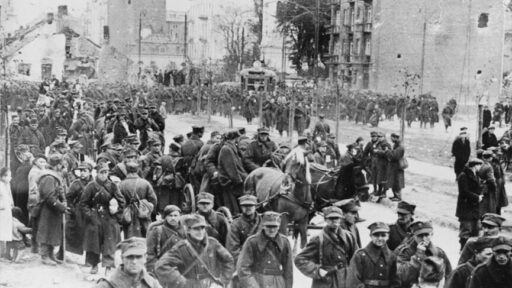
IMAGE SUGGESTION 1
Subject: Polish Prisoners in Kozelsk (1939-1940)
Description: A rare photograph showing Polish officers in the courtyard of the Kozelsk monastery (optina Pustyn). They are wearing greatcoats, some looking apprehensive, others defiant. The architecture of the orthodox monastery is visible in the background.
Caption: “The Last Winter: Polish officers at Kozelsk monastery, months before their execution. Most believed they would be repatriated.”
Between October 1939 and February 1940, these prisoners were subjected to lengthy interrogations. These were not seeking military intelligence, but political profiling. The NKVD compiled dossiers determining whether a prisoner could be “re-educated” into a communist asset. The overwhelming verdict was negative: these men were “hardened and uncompromising enemies of Soviet authority.”
3. The Decision: Proposal No. 794/B
The fate of the prisoners was sealed on March 5, 1940. Lavrentiy Beria, the People’s Commissar for Internal Affairs (head of the NKVD), submitted a top-secret memorandum (No. 794/B) to Joseph Stalin.
3.1. The Death Warrant
Beria’s note is a chilling masterpiece of totalitarian bureaucracy. He argued that the camps were filled with “former Polish officers, officials, landowners, police, intelligence agents, gendarmes, settlers, and jailers,” all of whom were “waiting for their release to actively join the struggle against Soviet power.”
Beria proposed that the NKVD be authorized to apply “the supreme penalty: shooting” to 14,700 POWs and 11,000 prisoners in prisons in Western Ukraine and Belarus, “without summoning the detainees, without presenting charges, and without a statement of the conclusion of the investigation.”
3.2. The Signatures
Stalin signed the document in bold blue pencil: “IN FAVOR” (Za). He was joined by the signatures of Voroshilov, Molotov, and Mikoyan. Kalinin and Kaganovich also endorsed it. With these scrawls, the collective leadership of the USSR condemned 22,000 men to death without trial.
IMAGE SUGGESTION 2
Subject: The Beria Note (March 5, 1940)
Description: A high-resolution scan of the original document. Specifically, the first page showing Beria’s typed proposal and Stalin’s large, bold signature across the top, along with the signatures of other Politburo members.
Caption: “The Smoking Gun: Beria’s proposal No. 794/B, signed by Stalin, authorizing the mass execution without trial.”
4. The Execution Process: “Bloody April”
The operation began in early April 1940 and continued for six weeks. It was a logistical undertaking of industrial slaughter, yet it was carried out personally, bullet by bullet.
4.1. The Logistics of Death
The prisoners were transported from the camps by train in small batches to avoid panic. They believed they were being repatriated.
-
Kozelsk prisoners were taken to the Katyn Forest (near Smolensk).
-
Starobelsk prisoners were taken to the NKVD prison in Kharkiv (Piatykhatky).
-
Ostashkov prisoners were taken to the NKVD headquarters in Kalinin (now Tver) and buried in Mednoye.
4.2. The Methodology
The execution method was standardized but varied slightly by location.
In Kalinin, the chief executioner was [şüpheli bağlantı kaldırıldı], arguably the most prolific executioner in history. He set up a soundproofed basement room. Prisoners were brought in individually, their identity checked, and then handcuffed. They were led to the “Lenin Room” (red corner), forced to their knees, and shot once in the back of the head.
-
The Weapon: The NKVD used German Walther Model 2 .25 ACP pistols. The standard Soviet Tokarev TT-30 had too much recoil for hundreds of nightly executions and was prone to overheating. The German pistols were reliable and, conveniently, used ammunition that could later be blamed on the Nazis.
IMAGE SUGGESTION 3
Subject: The Walther Model 2 Pistol
Description: A studio photo of a Walther Model 2 pistol next to a box of Geco 7.65mm ammunition.
Caption: “The Tool of the Crime: The NKVD preferred reliable German Walther pistols, a fact later used to frame the Nazis.”
In Katyn Forest, many executions took place directly over the open pits. Prisoners had their coats pulled over their heads, their hands tied behind their backs with distinct “Russian rope” (cut to equal lengths), and were shot. The bodies were stacked in layers, covered with sand, and compacted.
IMAGE SUGGESTION 4
Subject: Vasily Blokhin
Description: A portrait of Vasily Blokhin in his NKVD uniform. He personally shot thousands of Ostashkov prisoners, wearing a butcher’s leather apron to protect his uniform from blood.
Caption: “Stalin’s Executioner: Vasily Blokhin personally carried out thousands of executions in the Kalinin basement.”
5. Discovery and Propaganda: The Graves Open (1943)
For three years, the families of the victims received no mail. The Polish government-in-exile made frantic inquiries, only to be met with Soviet stonewalling. Stalin cynically told General Sikorski in 1941 that the officers had “escaped to Manchuria.”
5.1. The Wolfzeile Discovery
In February 1943, German Wehrmacht signals intelligence units stationed in Katyn Forest discovered bones. By April, they realized the magnitude of the find. Nazi Propaganda Minister Joseph Goebbels saw a golden opportunity to shatter the unnatural alliance between the Western Allies and the Soviets.
On April 13, 1943, Radio Berlin announced to the world that “a pit … 28 meters long and 16 meters wide, filled with twelve layers of bodies of Polish officers” had been found.
5.2. The International Medical Commission
To gain credibility, Germany invited an International Medical Commission consisting of forensic experts from 12 occupied or neutral countries (including Switzerland). They were given freedom to exhume and autopsy.
-
Forensic Evidence: The commission found that the bodies were in winter clothing (indicating death in spring 1940, when the Soviets held the territory). They found letters, diaries, and newspapers on the bodies, none dated later than May 1940. This irrefutably pointed to Soviet guilt, as the Germans did not invade until June 1941.
IMAGE SUGGESTION 5
Subject: 1943 Exhumation
Description: A graphic black and white photo showing the opened mass graves in Katyn Forest. Rows of bodies are visible, stacked densely. Forensic doctors in white coats are seen examining a corpse in the foreground.
Caption: “The Earth Speaks: The 1943 exhumation revealed bodies stacked like cordwood, preserving the timeline of the crime.”
6. The Diplomatic Crisis: Realpolitik over Justice
The revelation caused a rupture in the Allied camp. The Polish Government-in-Exile requested an investigation by the International Red Cross (IRC).
-
Stalin’s Reaction: He accused the Polish government of collaborating with Hitler and used the IRC request as a pretext to sever diplomatic relations with Poland on April 25, 1943.
-
Churchill and Roosevelt: Desperate to keep the Red Army fighting Germany, the Western leaders chose to ignore the evidence. Churchill privately admitted to the Polish ambassador, “The Bolsheviks can be very cruel,” but publicly suppressed the issue. The US government suppressed reports by its own diplomats (like the Van Vliet report) that confirmed Soviet guilt.
IMAGE SUGGESTION 6
Subject: Personal Effects of Victims
Description: A photo of items recovered from the graves: a Polish officer’s eagle cap badge, a corroded pocket watch, a pair of glasses, and a diary.
Caption: “Frozen in Time: Diaries found on the bodies stopped abruptly in April/May 1940, disproving the Soviet lie.”
7. The Soviet Lie: The Burdenko Commission
When the Red Army retook the Smolensk area in late 1943, the NKVD immediately went to work to falsify history. They bulldozed parts of the graves and planted false evidence (letters dated 1941) on bodies.
In January 1944, the Soviets formed the “Special Commission… for Investigating the Shooting of Polish Officers by German-Fascist Invaders,” known as the Burdenko Commission.
-
The Fabrication: The commission concluded—based on forced testimonies and planted evidence—that the Poles were building roads in 1941, were captured by the Germans, and shot in autumn 1941.
-
The Geco Ammunition: The Soviets claimed the use of German Geco ammo proved German guilt. They ignored the fact (which they knew) that the Weimar Republic had exported millions of rounds to the USSR in the 1920s.
IMAGE SUGGESTION 7
Subject: Burdenko Commission at Work
Description: A staged photo taken by Soviet press showing Soviet doctors examining the bodies in 1944. Western journalists (specifically invited) stand nearby, looking skeptical.
Caption: “The Falsification: The Soviet Burdenko Commission destroyed evidence and planted documents to frame the Germans.”
8. Nuremberg and the Long Silence
The Soviet prosecution attempted to include the Katyn Massacre in the indictment against Hermann Göring at the Nuremberg Trials (Count Three-C-2).
-
The Failure: The Western judges, aware of the ambiguity and uncomfortable with the evidence, allowed the Soviet prosecutor to present his case but also allowed the German defense to present the 1943 forensic findings. The evidence against Germany was so weak that the Katyn charge was quietly dropped from the final verdict. It was not mentioned in the judgment, a tacit admission that the Soviets were the likely perpetrators.
For the next 45 years, mentioning Katyn as a Soviet crime was a criminal offense in the Polish People’s Republic (PRL). It became the “founding lie” of communist Poland. Families of victims were barred from good jobs; the graves were erased from maps.
IMAGE SUGGESTION 8
Subject: The Madden Committee (1951)
Description: A photo of the US Congressional hearings (Madden Committee) in session. A witness with a bag over his head (to protect his identity from Soviet reprisals) is testifying about what he saw.
Caption: “The Hooded Witness: The US Madden Committee (1951) finally investigated the crime, concluding Soviet guilt, but the Cold War prevented action.”
9. Uncovering the Truth: 1989–2010
The “Katyn Lie” finally collapsed with the Soviet Union itself.
-
Gorbachev’s Admission: On April 13, 1990, Mikhail Gorbachev officially admitted that the NKVD was responsible, calling it “one of the heinous crimes of Stalinism.”
-
Yeltsin’s Release: In 1992, Russian President Boris Yeltsin released “Package No. 1″—the top-secret file containing the original Beria note with Stalin’s signature—to Polish President Lech Wałęsa.
9.1. The Tragic Irony of 2010
In April 2010, a Polish government delegation, including President Lech Kaczyński, flew to Russia to commemorate the 70th anniversary of the massacre. Their plane crashed on approach to Smolensk, killing everyone on board (96 people).
-
Symbolism: The crash killed the modern elite of Poland (military chiefs, politicians, activists) near the very forest where the elite of 1940 were murdered. This “second Katyn” traumatized the nation and reignited conspiracy theories, though official investigations cited pilot error and weather.
IMAGE SUGGESTION 9
Subject: Yeltsin and Wałęsa
Description: Boris Yeltsin handing over the black dossier (Package No. 1) to Lech Wałęsa in Warsaw, 1992. Wałęsa looks visibly moved/shocked.
Caption: “The Truth Revealed: In 1992, Russia finally handed over the execution orders signed by Stalin.”
10. Conclusion: A Wound Unhealed
The Katyn Massacre stands as a crime without precedent not just because of its scale, but because of its intent. It was not a crime of passion, but a crime of logic—the logic of totalitarianism which dictates that for a new society to be built, the guardians of the old one must be biologically extinguished.
While the truth is known, legal closure remains elusive. Russia currently refuses to classify the crime as “genocide” (preferring “abuse of power”) and has closed the investigation, keeping many files classified. For Poland, Katyn remains the central scar of the 20th century, a symbol of martyrdom and the fragility of truth in the face of power.
IMAGE SUGGESTION 10
Subject: The Katyn Memorial
Description: A photo of the modern Polish War Cemetery in Katyn. The altar and the wall of names, surrounded by the silent forest.
Caption: “Sacred Ground: The Katyn War Cemetery serves as a permanent reminder of the 22,000 lives extinguished by the NKVD.”
Revised References and Further Reading
-
Academic History: Sanford, George. Katyn and the Soviet Massacre of 1940: Truth, Justice and Memory. Routledge. (A comprehensive political and historical analysis).
-
Primary Documents: Yale University (The Avalon Project). Nazi-Soviet Relations 1939-1941. (Contextual documents regarding the alliance that facilitated the crime).
-
Forensic Analysis: Paul, Allen. Katyn: Stalin’s Massacre and the Triumph of Truth. Northern Illinois University Press. (Focuses on the families and the forensic discovery).
-
Official Investigation: Institute of National Remembrance (IPN). The Katyn Massacre – Basic Facts. (Official Polish government historical record).
-
Intelligence Reports: CIA FOIA Reading Room. The Katyn Massacre: An OSS Perspective. (Declassified documents showing what US intelligence knew).
-
Diplomatic History: Cienciala, Anna M. Katyn: A Crime Without Punishment. Yale University Press. (Detailed compilation of documents translated into English).
-
US Inquiry: US Government Printing Office. Select Committee to Conduct an Investigation of the Facts, Evidence, and Circumstances of the Katyn Forest Massacre (Madden Committee). (The full 1952 hearings transcripts).
-
Biography: Rayfield, Donald. Stalin and His Hangmen: The Tyrant and Those Who Killed for Him. Random House. (Profiles of Beria and Blokhin).
-
Soviet Archives: Wilson Center Digital Archive. Katyn Massacre Documents. (Translated Politburo documents).
-
Modern Context: BBC News. Smolensk: The crash that killed a president. (Analysis of the 2010 tragedy linked to Katyn).