
Strategic Paralysis on the Western Front: The Doctrinal Suicide of the Allies (1939–1940)
Executive Summary
When Britain and France declared war on Nazi Germany on September 3, 1939, they possessed a decisive numerical and material advantage on the Western Front. While the Wehrmacht committed the entirety of its mechanized strength to the invasion of Poland, the German western border was defended by a skeleton force, protected by the unfinished and undermanned “Westwall.” Yet, instead of a decisive strike that could have ended the war in weeks, the Allies froze. This article examines the phenomenon of “Strategic Paralysis”—a systemic failure born not of cowardice, but of flawed military doctrine (Bataille Méthodique), the psychological trauma of WWI, and a catastrophic intelligence failure that overestimated German strength. This paralysis allowed the Third Reich to conquer Poland, regroup, and prepare the logistical execution of the Manstein Plan, turning a vulnerable gamble into a conquering machine.
1. Introduction: The Great Missed Opportunity
General Alfred Jodl, Chief of the Operations Staff of the German Armed Forces High Command (OKW), stated during the Nuremberg Trials: “If we did not collapse already in the year 1939 that was due only to the fact that during the Polish campaign, the approximately 110 French and British divisions in the West were held completely inactive against the 23 German divisions.”
This quote encapsulates the tragedy of the Western Front in 1939. The strategic paralysis was not an accident; it was a choice. The Allied High Command, led by General Maurice Gamelin, deliberately chose a strategy of containment over confrontation. They viewed the war through the lens of 1918—a conflict of industrial attrition, fixed fortifications, and slow, methodical advances. They failed to grasp that the geopolitical landscape required immediate, high-tempo intervention to save their eastern ally, Poland. By the time they realized the nature of modern warfare, the initiative had been irretrievably lost.
2. The Ghost of Verdun: The Psychological Roots of Inaction
2.1. The Demographic Trauma
To understand the paralysis of 1939, one must understand the butchery of 1916. France emerged from the First World War as a victor but was biologically devastated.
-
Casualties: France lost 1.3 million soldiers and saw 4.2 million wounded.
-
Demographics: The “Hollow Years” (Les Années Creuses) referred to the drastic drop in birth rates during WWI. By 1939, the class of conscripts available for draft was significantly smaller than in Germany.
-
The Doctrine of Blood Conservation: The French political and military leadership was united by a single, overriding imperative: France cannot survive another Verdun. This fear dictated a strategy that prioritized the preservation of manpower (firepower over shock action) and the reliance on concrete fortifications.
IMAGE SUGGESTION 1
Subject: The Verdun Ossuary / WWI Graves
Description: A somber photo of the endless crosses at the Douaumont Ossuary or a similar WWI cemetery. The sheer scale of the graves symbolizes the trauma hanging over the French decision-makers in 1939.
Caption: “The Shadow of the Dead: The demographic catastrophe of WWI paralyzed the French High Command, leading to a strategy of extreme caution.”
2.2. The Maginot Mentality
This trauma manifested physically in the Maginot Line. While technically a brilliant fortification system, psychologically it was a sedative. It encouraged a “siege mentality.” The French public and the average poilu (soldier) believed that as long as they stayed behind the concrete, they were safe. Venturing out of the Line to attack the Siegfried Line seemed like madness—a repetition of the futile offensives of the Somme.12
3. The Doctrine of Stagnation: La Bata3ille Méthodiq4ue
3.1. Methodical Battle Defined
The French Army was not unprepared; it was prepared for the wrong war. Its doctrine, known as Bataille Méthodique (Methodical Battle), was the antithesis of the German Bewegungskrieg (Maneuver Warfare).
-
Centralization: All decisions had to flow up to the highest command levels. Initiative by junior officers was discouraged as it disrupted the “grand plan.”
-
Firepower: The artillery was the “Queen of Battle.” Tanks were seen as infantry support vehicles, designed to move at the speed of a walking soldier, destroying machine-gun nests.
-
Logistics: Advances were strictly limited by artillery range and logistical timetables. A standard French attack required days of planning and stockpiling artillery shells.
3.2. Command and Control Failure
The embodiment of this paralysis was General Gamelin’s headquarters at the Château de Vincennes.
-
The Radio Silence: Gamelin refused to have radio transmitters or teleprinters in his HQ, fearing interception and distraction. All orders were dispatched by motorcycle couriers. In an era of mechanized warfare where hours mattered, the Allied command loop operated on a delay of 48 hours.
-
The Result: When the situation changed rapidly (as it did in Poland), the French command could not react. They were structurally incapable of launching a hasty offensive.
IMAGE SUGGESTION 2
Subject: General Maurice Gamelin at HQ
Description: A photo of General Gamelin studying a map in his office at Vincennes. The setting should look antiquated—plenty of paper maps, no telephones or radios visible, highlighting the disconnect from the front.
Caption: “Command by Courier: General Gamelin’s refusal to use modern communications meant the Allied armies were structurally incapable of rapid reaction.”
4. The Siegfried Line (Westwall): Myth vs. Reality
4.1. The German Bluff
While the Allies cowered behind the Maginot Line, they gazed fearfully at the German counterpart: the Westwall (Siegfried Line). Nazi propaganda portrayed this as an impenetrable wall of steel and concrete, deeper and stronger than the Maginot.
-
The Reality: In September 1939, the Westwall was a construction site. Many bunkers lacked doors, weapons, or ventilation. The concrete was often still wet.
-
The Defenders: The German Army Group C, commanded by Wilhelm Ritter von Leeb, had no Panzer divisions. It consisted of reservists, older men, and units stripped of their transport to support the invasion of Poland. They had virtually no air cover, as the Luftwaffe was in the East.
4.2. The Allied Intelligence Failure
The French Deuxième Bureau (Military Intelligence) massively overestimated German strength. They estimated nearly 100 German divisions in the West. In reality, there were barely 30, and only about 11 were combat-ready regular divisions. A determined French offensive, supported by their heavy Char B1 bis tanks (which were impervious to existing German anti-tank guns), could have breached the Rhine within two weeks.
IMAGE SUGGESTION 3
Subject: German Soldiers Staging Defenses
Description: A photo of German soldiers at the Westwall in late 1939. They might be digging earthworks or moving light guns. The fortifications should look incomplete or less imposing than the Maginot Line, illustrating the “bluff.”
Caption: “The Paper Tiger: In 1939, the formidable ‘Westwall’ was largely a construction site defending by second-rate troops.”
5. The Lost Opportunity: The Politics of the Saar
5.1. The Saar Offensive (Recap)
As detailed in the previous analysis of the Phoney War, the French launched a token offensive into the Saarland on September 7. However, the strategic decision-making behind the withdrawal is crucial to understanding the paralysis.
-
The Abbeville Conference: On September 12, 1939, the Anglo-French Supreme War Council met in Abbeville. Chamberlain and Daladier agreed that time was on their side. They decided that since Poland was “already lost” (a premature assessment), risking the French army in an offensive against the Siegfried Line was futile.
-
The Halt Order: Gamelin ordered the troops to stop, not because they were beaten, but because he feared a German counter-attack through Belgium. He preferred to fight on defensive ground of his own choosing.
5.2. Abandoning the Initiative
By retreating to the Maginot Line in October, the Allies voluntarily surrendered the strategic initiative. They handed Hitler the greatest gift a commander can receive: the ability to choose the time and place of the next battle. This allowed the Wehrmacht to transport its elite Panzer divisions from Poland to the West by rail, undisturbed by Allied air interdiction.
IMAGE SUGGESTION 4
Subject: French Heavy Artillery
Description: A photo of massive French railway guns or heavy siege howitzers (like the 280mm mortar) sitting idle or being transported slowly. Symbols of static, defensive power.
Caption: “Guns of August: The massive French artillery park was designed for a static war of attrition, not a rapid rescue offensive.”
6. The Air Power Paradox: Fear of the Luftwaffe
6.1. The Bomber Will Always Get Through
Interwar air theory, dominated by Stanley Baldwin’s phrase “The bomber will always get through,” paralyzed Allied air strategy. British planners estimated that a German bombing campaign would cause 600,000 casualties in the first few months.
-
Restraint: Consequently, the Royal Air Force (RAF) and French Air Force were strictly forbidden from bombing industrial targets in Germany (like the Ruhr factories). The Allied governments feared that bombing the Ruhr would trigger immediate Luftwaffe retaliation against Paris and London.
6.2. The Absurdity of Rules
This led to absurd situations where RAF pilots flying over Germany saw columns of German troops on the roads but were forbidden to bomb them because they were on “private property.” Instead, they dropped propaganda leaflets.
-
French Weakness: The French Air Force was in a state of chaotic modernization. While they had excellent designs (like the Dewoitine D.520), production was plagued by strikes and bureaucratic inefficiency. They were terrified of provoking the Luftwaffe while their own squadrons were still transitioning to monoplanes.
IMAGE SUGGESTION 5
Subject: Civilian Gas Mask Drills
Description: A photo of civilians in London or Paris wearing gas masks during a drill. It captures the pervasive fear of aerial chemical bombardment that constrained Allied decision-making.
Caption: “Terror from the Skies: The exaggerated fear of the Luftwaffe led Allied leaders to forbid strategic bombing of German industry.”
7. The British Expeditionary Force (BEF): A Junior Partner
7.1. Small and Subservient
In 1939, Britain was primarily a naval power. The British Expeditionary Force (BEF) sent to France consisted of only 4 divisions initially, growing to 10 by May 1940. Compared to the nearly 100 French divisions, the British were a junior partner.
-
Lord Gort: The commander of the BEF, Lord Gort, was placed under French command. He had little say in the overall strategy. If Gamelin said “wait,” the BEF waited.
7.2. The “Digger” Mentality
The BEF spent the winter of 1939-1940 digging. They constructed miles of anti-tank ditches and pillboxes along the Belgian border.
-
Training Deficit: While the digging improved defenses, it degraded offensive capability. British troops were not training for mobile warfare or combined arms operations; they were training for trench warfare. They were repeating the routine of 1914, completely oblivious to the armored revolution happening across the border.
IMAGE SUGGESTION 6
Subject: BEF Soldiers Digging Trenches
Description: British soldiers in 1939/40 battle dress digging elaborate trench systems in the mud of Northern France. It emphasizes the return to WWI static warfare.
Caption: “Digging for Victory? The BEF spent the winter constructing earthworks, preparing for a repeat of 1914 rather than the mechanized war to come.”
8. Intelligence Failures and the Overestimation of Germany
8.1. The Tank Myth
Allied intelligence believed Germany possessed thousands of heavy tanks. In reality, the Panzer divisions of 1939 were composed mainly of Panzer I and Panzer II—light tanks armed only with machine guns or 20mm cannons.
-
The Matchup: The standard French anti-tank gun (47mm) and the armor of the French SOMUA S35 were superior to almost everything the Germans had. But because intelligence reported a “massive mechanized juggernaut,” Allied commanders were afraid to engage them in open battle.
8.2. Economic Miscalculation
The British Ministry of Economic Warfare believed Germany was on the brink of economic collapse. They argued that Germany lacked the raw materials (oil, rubber, rare metals) to sustain a long war.
-
The Error: They underestimated the ruthless efficiency of the Nazi plunder economy and, crucially, the supplies flowing from the Soviet Union. This belief reinforced the strategy of “Paralysis”—why fight and die if Germany will bankrupt itself in a year?
IMAGE SUGGESTION 7
Subject: Allied Intelligence Maps/Charts
Description: A recreated or historical image of a French intelligence map showing exaggerated German troop concentrations. Or a graph showing the flawed economic projections.
Caption: “The Fog of War: Allied intelligence inflated German strength, convincing commanders that a defensive posture was the only viable option.”
9. Political Decay: “Why Die for Danzig?”
9.1. French Morale and Pacifism
The paralysis was not just military; it was societal. France was deeply divided politically between the Right (some of whom admired Hitler or feared Stalin more) and the Left (who were confused by the Molotov-Ribbentrop Pact).
-
Marcel Déat: The French socialist politician famously wrote an article headlined “Mourir pour Dantzig?” (Why Die for Danzig?). This sentiment permeated the ranks. French soldiers, sitting in the mud during the Phoney War, questioned why they were mobilized to save a country (Poland) that had already fallen.
9.2. Communist Sabotage
Following the instructions of the Comintern (due to the Nazi-Soviet Pact), the French Communist Party (PCF) actively sabotaged the war effort.
-
Sabotage: There were acts of sabotage in French aircraft factories (e.g., Farman and Potez), delaying the production of vital fighters. The morale of the industrial workforce was fractured, unlike the unified patriotic front of 1914.
IMAGE SUGGESTION 8
Subject: French Anti-War Graffiti/Propaganda
Description: A photo of a leaflet or graffiti from the era (or a newspaper headline “Mourir pour Dantzig?”) showing the pacifist or defeatist sentiment in France.
Caption: “Why Die for Danzig? Political polarization and pacifism sapped the French will to fight before the first shot was fired.”
10. The German Perspective: The Gamble
10.1. Hitler’s Nervousness
It is often forgotten that the German High Command was terrified of a Western offensive in 1939. General Wilhelm Keitel later admitted that a French attack would have encountered only a “screen” of German forces.
-
The Gamble: Hitler gambled everything on the assumption that the “decadent” democracies would not attack. His intuition proved superior to the professional caution of his generals.
10.2. The Miracle of Time (Zeitgewinn)
The paralysis gave the Wehrmacht the one thing it desperately needed: time.
-
Refit: Tanks damaged in Poland were repaired.
-
Training: Infantry units were drilled in combined arms tactics.
-
Logistics: Ammunition stockpiles, dangerously low in October 1939, were replenished.
-
Planning: Most importantly, it allowed Manstein to convince Hitler to adopt the Ardennes offensive plan. Without the eight-month delay, the Manstein Plan would never have been implemented.
IMAGE SUGGESTION 9
Subject: Hitler at the Westwall
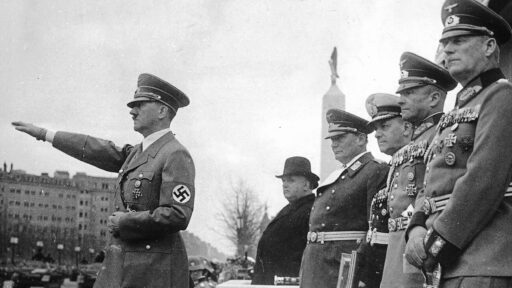
Description: A propaganda photo of Hitler visiting the Siegfried Line fortifications, looking through binoculars or talking to soldiers. It symbolizes his successful bluff.
Caption: “The Winning Gamble: Hitler correctly predicted Allied inaction, using the delay to turn the Wehrmacht into an unstoppable force.”
11. Conclusion: The Suicide of a Strategy
The strategic paralysis of 1939–1940 was a self-inflicted defeat. It was not a result of inferior equipment—French tanks were better, and Allied artillery was more numerous. It was a failure of the mind.
By choosing not to fight when the odds were in their favor, the Allies allowed Germany to dictate the terms of the war. They traded the possibility of a messy, bloody victory in the Saarland in 1939 for the certainty of a catastrophic defeat in May 1940. The paralysis on the Western Front serves as a grim historical lesson: in war, the refusal to take risks is often the greatest risk of all.
IMAGE SUGGESTION 10
Subject: The Fall of France (1940)
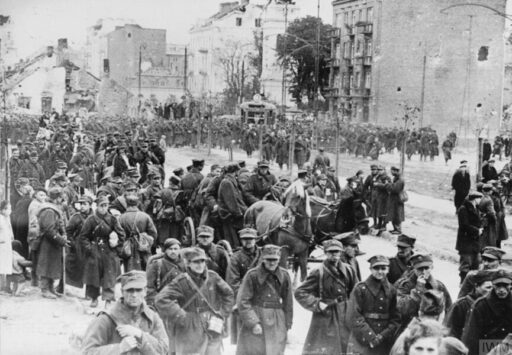
Description: A poignant photo of French prisoners of war marching past a German column, or German troops parading down the Champs-Élysées. The ultimate consequence of the paralysis.
Caption: “The Price of Paralysis: The refusal to act in 1939 led directly to the collapse of the French Republic in June 1940.”
References and Further Reading
-
Classic History: Bloch, Marc. Strange Defeat: A Statement of Evidence Written in 1940. W.W. Norton & Company. (A primary account by a French historian/officer analyzing the structural failure).
-
Military Analysis: Doughty, Robert A. The Seeds of Disaster: The Development of French Army Doctrine, 1919-1939. Stackpole Books. (The definitive technical analysis of “Methodical Battle”).
-
German Operations: Frieser, Karl-Heinz. The Blitzkrieg Legend: The 1940 Campaign in the West. Naval Institute Press. (German official history exposing the weakness of the Westwall).
-
Strategic History: May, Ernest R. Strange Victory: Hitler’s Conquest of France. Hill and Wang. (Analyzes the intelligence failures).
-
Biography: Alexander, Martin S. The Republic in Danger: General Maurice Gamelin and the Politics of French Defence, 1933–1940. Cambridge University Press.
-
Economic History: Tooze, Adam. The Wages of Destruction: The Making and Breaking of the Nazi Economy. Penguin Books. (Details the German ammunition crisis of 1939).
-
Maginot Line: Kaufmann, J.E. The Maginot Line: History and Guide. Pen & Sword.
-
Diplomatic History: Carley, Michael Jabara. 1939: The Alliance That Never Was. Rowman & Littlefield.
-
Museum Resource: Musée de l’Armée (Invalides). The 1940 Campaign.
-
Technical Encyclopedia: Tank Museum (Bovington). Char B1 bis Technical Data.