
Churchill’s Metaphor and the Brutal Truth of War
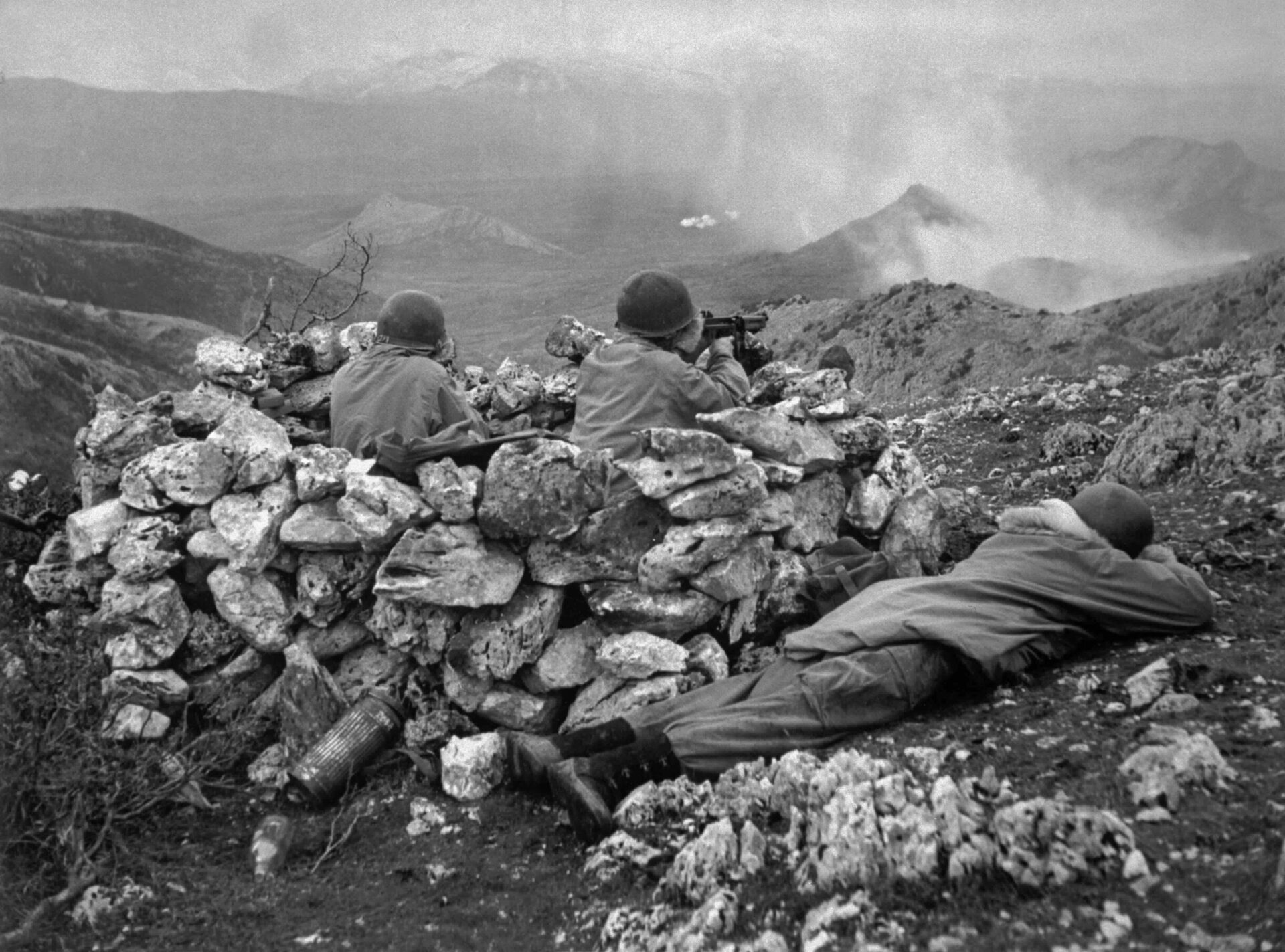
When the turning points of the Second World War are discussed, history books often focus on the frozen steppes of Stalingrad or the beaches of Normandy (D-Day). Yet, between 1943 and 1945, across the south of Europe—from the sun-baked hills of Sicily to the unforgiving Apennine Mountains and the muddy plains of Rome—another ruthless campaign was being waged. This was the Mediterranean and Italian Front.
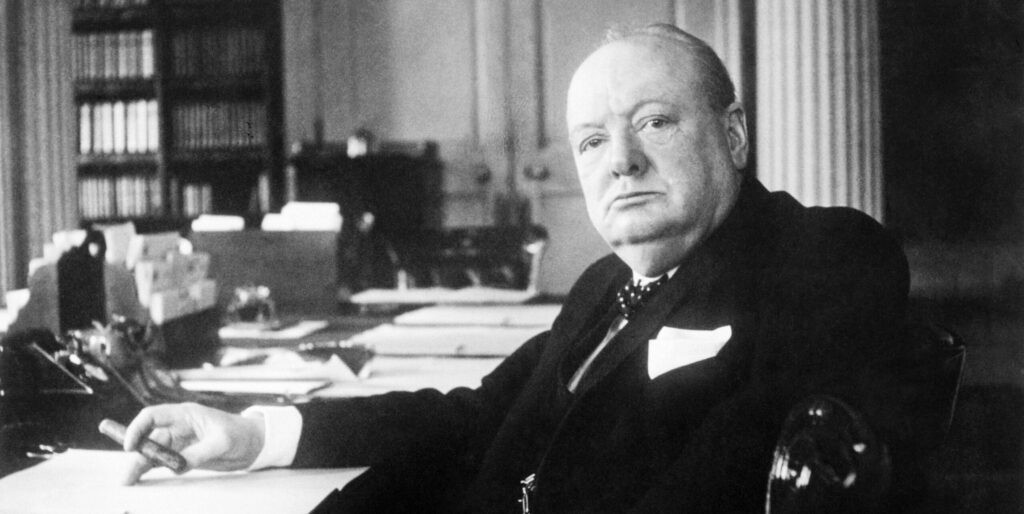
British Prime Minister Winston Churchill famously likened Axis-controlled Europe (Nazi Germany and Fascist Italy) to a crocodile. To him, the Eastern and Western fronts were the crocodile’s hard snout and scaly back, but the Mediterranean—and specifically Italy—was its “soft underbelly.” Churchill argued that a dagger thrust into this belly would break Axis resistance, draw German troops away from other fronts, and shorten the war.
However, in the summer of 1943, as the dust settled over North Africa and Allied eyes turned toward the European mainland, it would quickly become apparent that this “belly” was anything but soft. The Italian campaign turned into one of the longest, most grueling land campaigns of the war, a collision of rugged geography, stubborn German defense, and complex political maneuvering. For Allied soldiers, the promise of “Sunny Italy” soon gave way to mud, blood, and endless mountain ranges.
This article will provide an in-depth examination of the strategic significance of the Mediterranean and Italian theater, the ferocious battles fought there, and a historical accounting of the “soft underbelly” theory, spanning from the invasion of Sicily in 1943 to final victory in 1945.
Strategic Crossroads and the Casablanca Decision
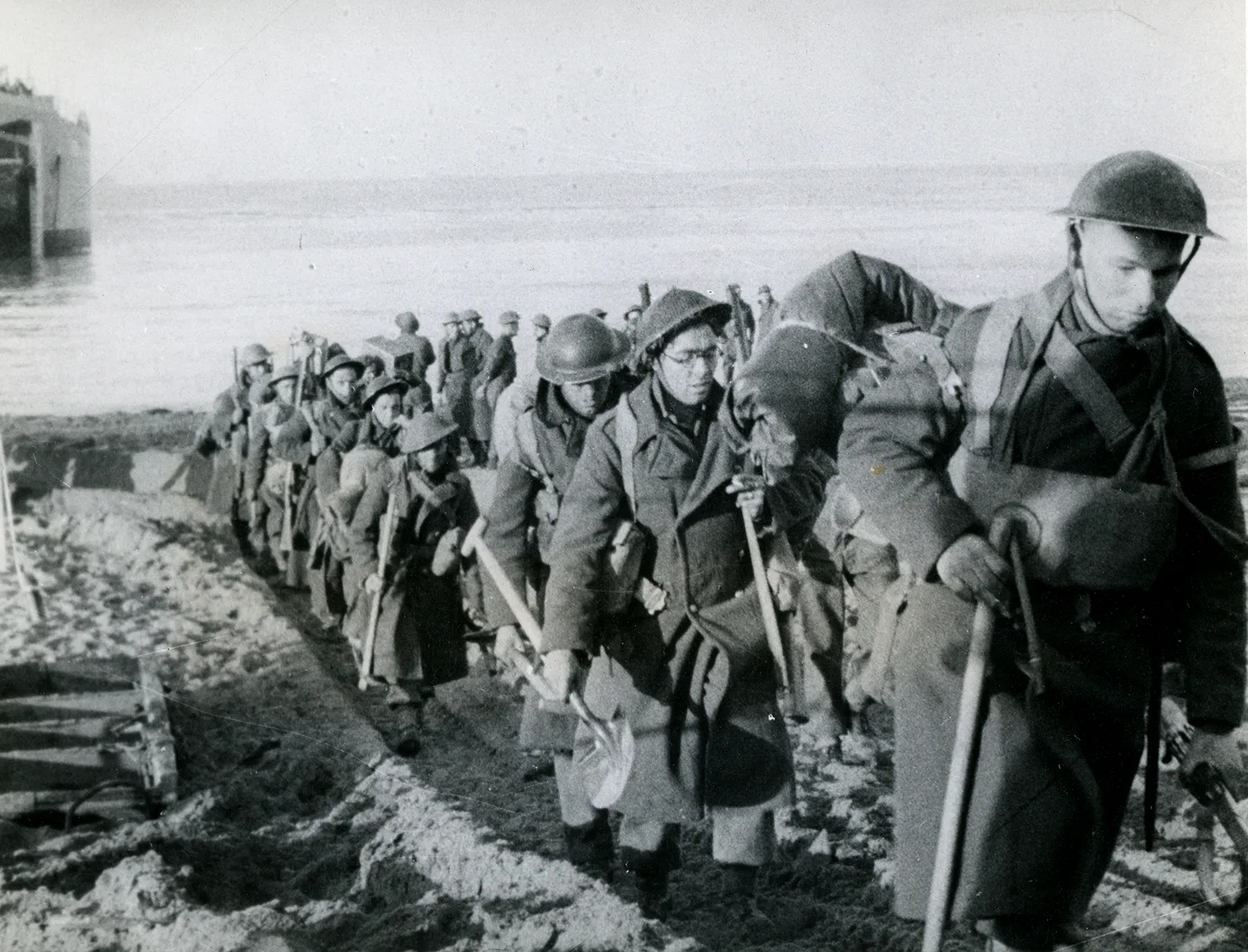
At the beginning of 1943, the situation for the Allies was promising but complex. Axis presence in North Africa was nearing its end (they would surrender in Tunisia in May 1943). The Soviet Union had stopped the Germans at Stalingrad, and Stalin was urgently demanding that his Western allies open a “Second Front” in Europe. The question was: Where?
The Americans wanted to take the shortest route to the heart of Germany; this meant crossing the English Channel to attack Northern France (the future Normandy invasion). The British, particularly Churchill, were more cautious. Carrying the trauma of trench warfare from World War I, the British wanted to avoid a direct and premature confrontation with the main German army. Churchill was a fiery advocate for the Mediterranean strategy.
Churchill’s arguments were:
-
Logistics: Control of the Mediterranean would secure the vital supply line through the Suez Canal to the Far East.
-
Knocking Out Italy: Italy was the weak link of the Axis. An attack could demoralize the Italian populace and force Mussolini out of the war.
-
Dispersing the Germans: A front in Italy would force Hitler to divert divisions from the Eastern Front and the potential French front, lightening the Soviet burden.
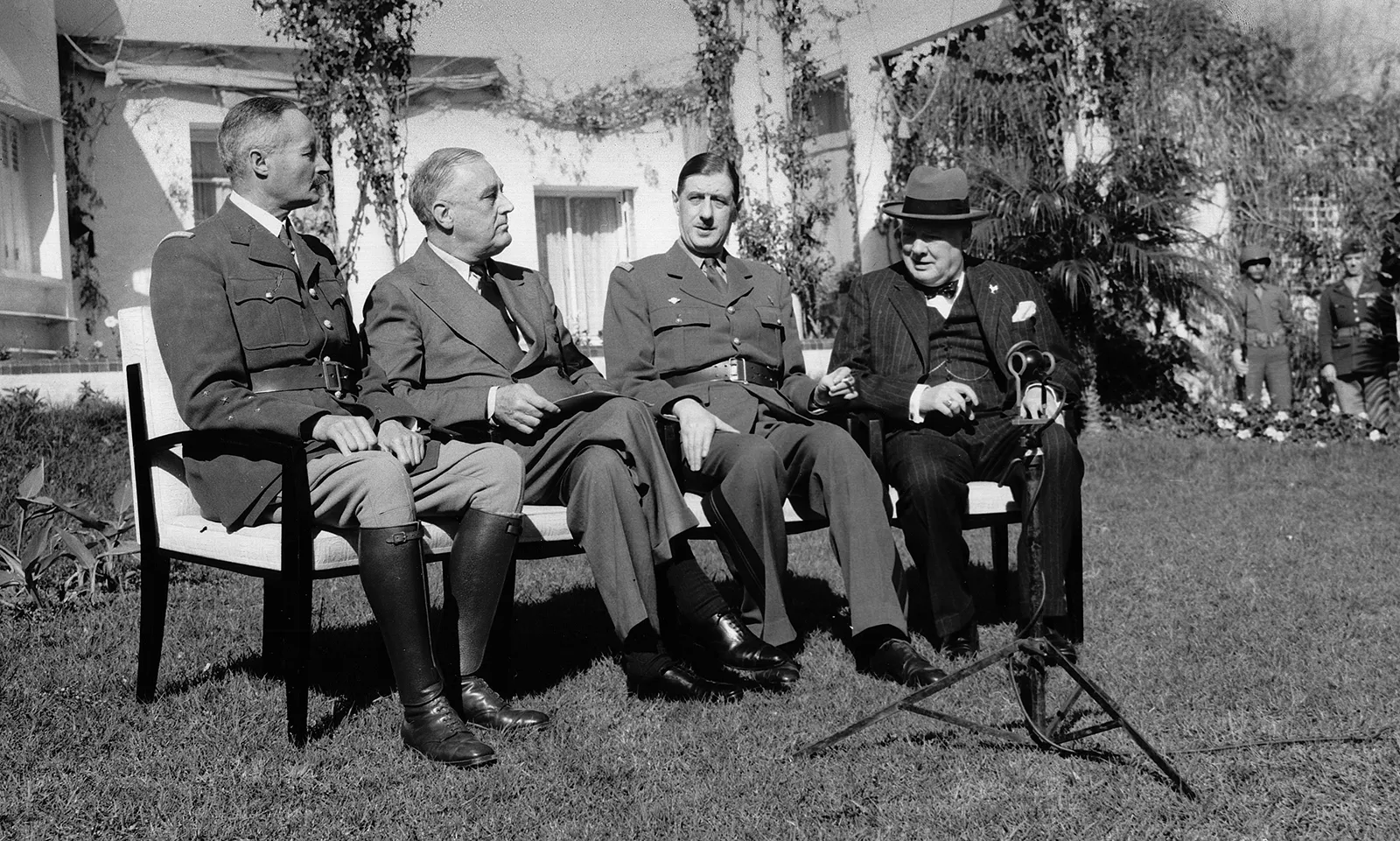
Roosevelt and Churchill met at the Casablanca Conference in January 1943. The Americans, albeit reluctantly, agreed to maintain momentum in the Mediterranean in 1943, while preparations for the major cross-Channel invasion of France (Operation Overlord) were deferred until 1944. The target was set: Sicily.
Operation Husky – The Invasion of Sicily (July–August 1943)
The invasion of Sicily, “Operation Husky,” was the largest amphibious landing operation history had seen up to that point (more troops landed on the first day than on D-Day). However, an immense intelligence game preceded the operation. Through a brilliant British plan called “Operation Mincemeat,” a corpse dressed as an officer was set adrift off the coast of Spain. False documents on the body gave the impression that the Allies would attack Greece and Sardinia instead of Sicily. Hitler swallowed the bait and dispersed his defensive troops.
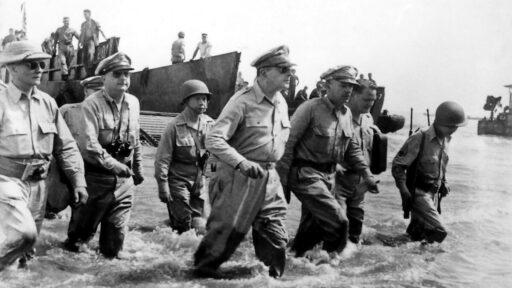
On the night of July 9-10, 1943, the British 8th Army (commanded by General Bernard Montgomery) and the US 7th Army (commanded by General George S. Patton) landed on the southern and southeastern coasts of Sicily. Italian coastal defenses collapsed rapidly, but elite German units on the island (particularly the Hermann Göring Panzer Division) put up stiff resistance.
The Sicily campaign also witnessed a clash of egos between Allied commanders. Impatient with Montgomery’s cautious advance, Patton drove his army westward across the island, then along the northern coast to Palermo, and finally toward Messina at incredibly speed. This “race” allowed the Allies to capture the island faster than expected (38 days).
Political Earthquake
The Fall of Mussolini The military disaster in Sicily and the Allied bombing of Rome triggered a political earthquake in Italy. On July 25, 1943, the Fascist Grand Council voted against Mussolini. King Victor Emmanuel III had Il Duce arrested and replaced him with Marshal Pietro Badoglio. The 21-year fascist regime collapsed overnight.
However, militarily, Sicily was not a complete success. Despite Allied air and naval superiority, the Germans managed to evacuate over 100,000 troops and most of their equipment across the Straits of Messina to the Italian mainland. These experienced soldiers would face the Allies again up the Italian boot.
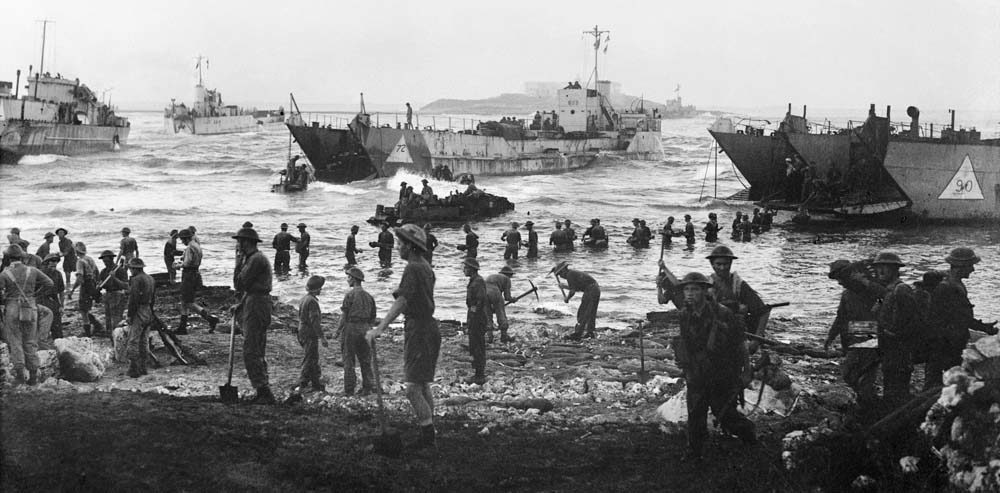
The Leap to the Boot and Italy’s Chaos (September 1943)
With the fall of Sicily, Churchill’s “soft underbelly” theory bore its first major fruit: Italy wanted out of the war. The Badoglio government began secret armistice negotiations with the Allies. A secret armistice was signed on September 3, 1943, but it was not announced until September 8.
Meanwhile, the Allies planned attacks on the mainland at three points:
-
Operation Baytown: Montgomery’s troops crossing the Straits of Messina into Calabria (“the toe of the boot”).
-
Operation Slapstick: British airborne division seizing the port of Taranto (“the heel of the boot”).
-
Operation Avalanche: The main attack; an amphibious landing by the US 5th Army under General Mark Clark at Salerno, south of Naples.
The German Countermove
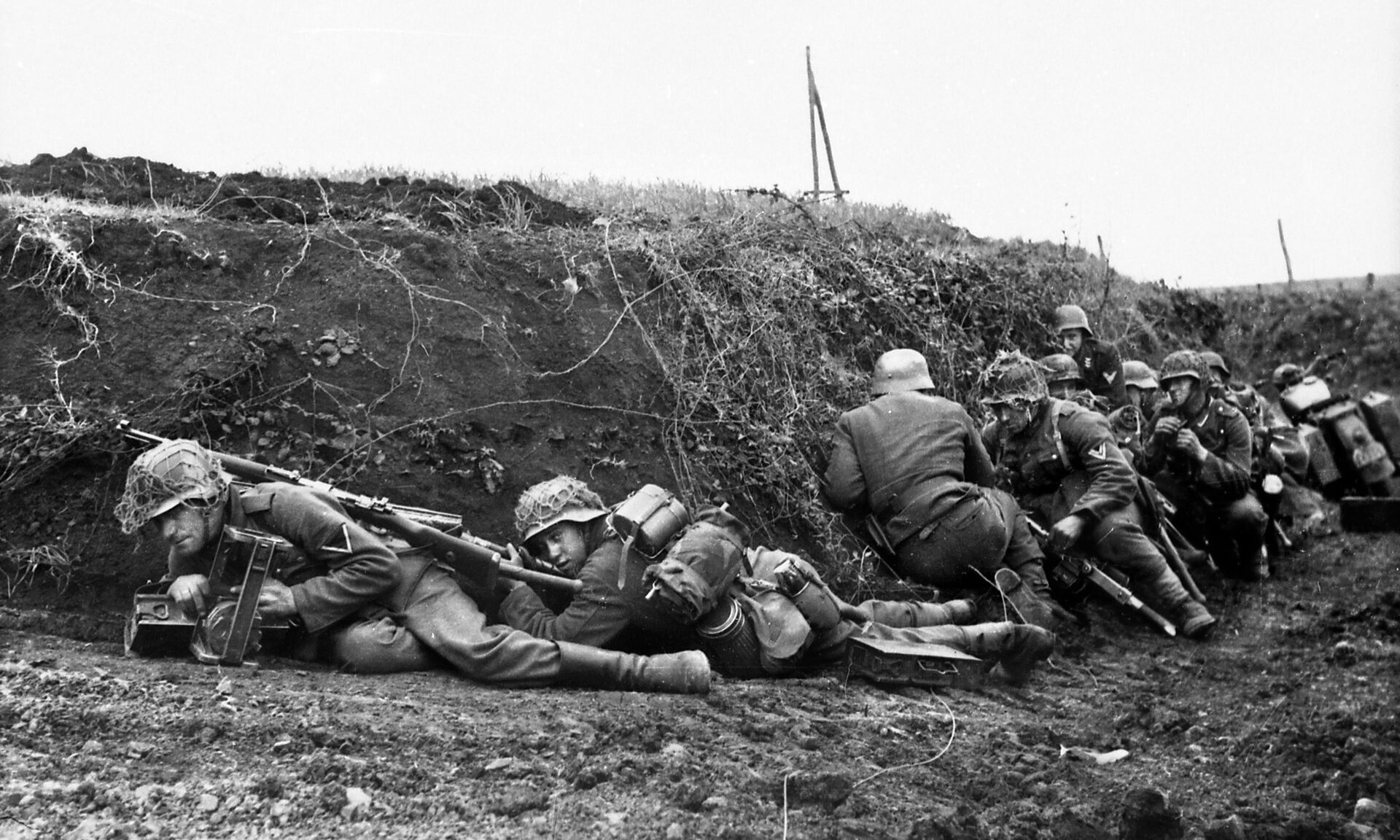
Operation Achse When Italy’s defection was announced on September 8, Hitler was prepared. “Operation Achse” (Axis) was activated. German troops moved with incredible speed to disarm their former allies, occupy Rome, and seize control of the Italian peninsula. The Italian army, leaderless and without orders, dissolved. The Allies, hoping to find an Italian army ready to cooperate, instead encountered hostile territory completely under German control.
The Salerno Crisis
The Salerno landing on September 9 nearly ended in disaster. German Field Marshal Albert Kesselring held the high ground dominating the beaches and came very close to driving the Allies back into the sea. General Mark Clark even considered evacuation, but the beachhead was held with the support of intense naval and air bombardment.
By October, the Allies had captured Naples, but the Germans had mastered delaying tactics. They blew up bridges, mined roads, and turned every hilltop into a fortress. “Sunny Italy” gave way to autumn rains, knee-deep mud, and swollen rivers. Kesselring utilized Italy’s geography—narrow coastal plains and the rugged Apennine Mountains forming the country’s spine—perfectly for defense. South of Rome, he established a series of seemingly formidable defensive lines known as the “Gustav Line.”

The Bloody Winter – Monte Cassino and Anzio (Early 1944)
The winter of 1943-44 was the darkest period of the Italian campaign. Allied advancement ground to a complete halt at the Gustav Line, shadowed by the imposing historic monastery of Monte Cassino perched high atop a mountain overlooking the main road to Rome (Via Casilina).
The Battles of Monte Cassino was not just a military obstacle, but a psychological barrier. German paratroopers (Fallschirmjäger) had fortified the town at the mountain’s base and the slopes. The Allies (Americans, British, French, Indians, New Zealanders, and Poles) launched four major assaults against this line.
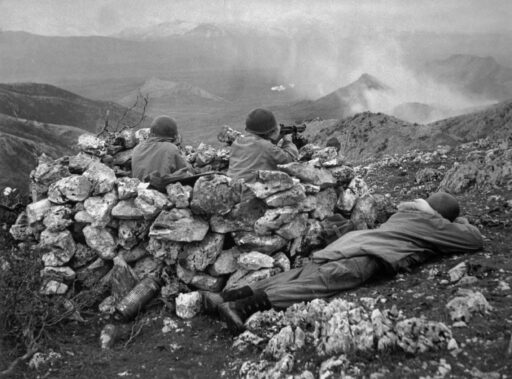
Initial attacks resulted in failure and heavy casualties. Soldiers lived in freezing cold, mud-filled trenches, under constant artillery fire. Scenes reminiscent of the WWI battles of Verdun or the Somme played out.
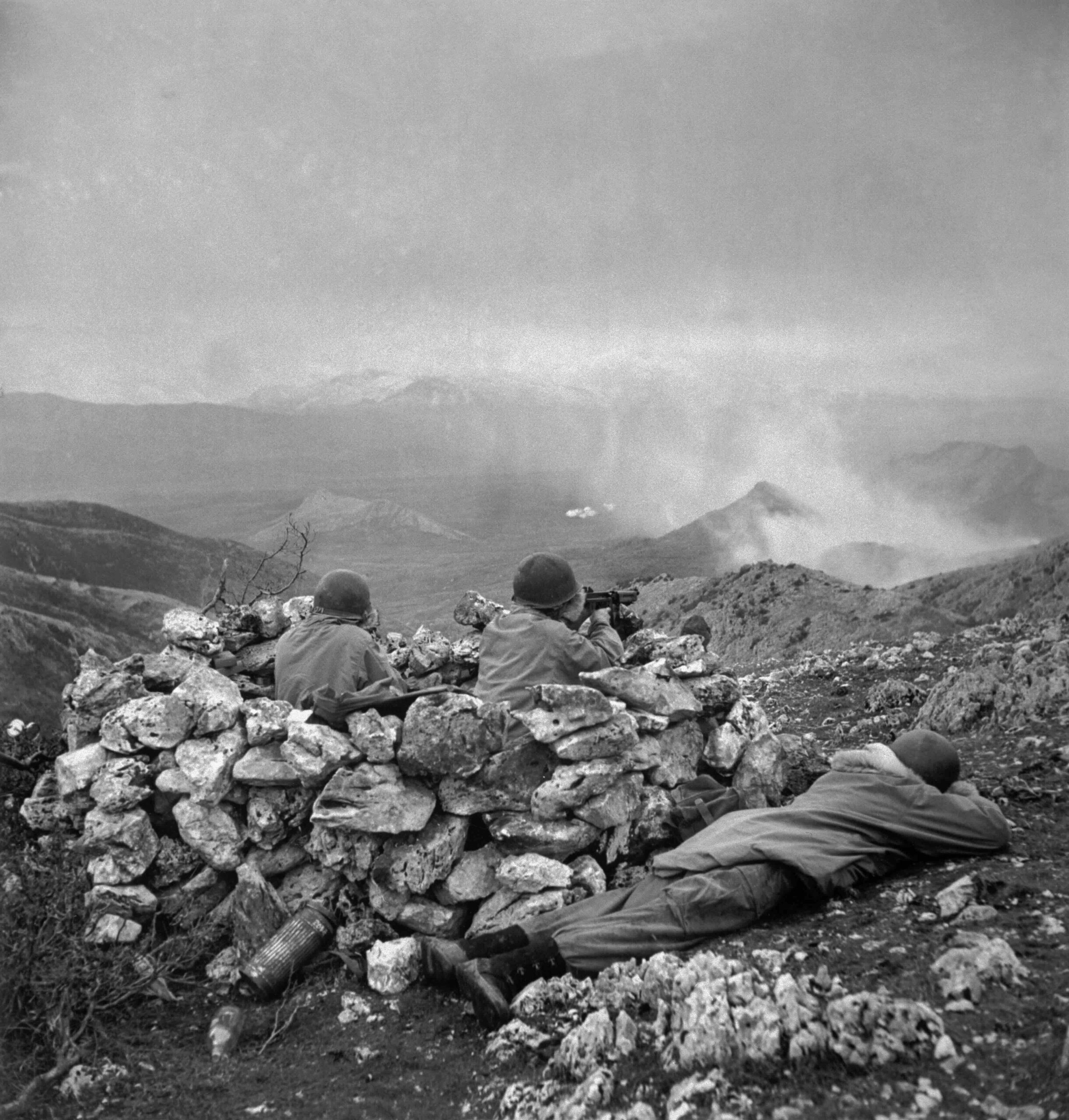
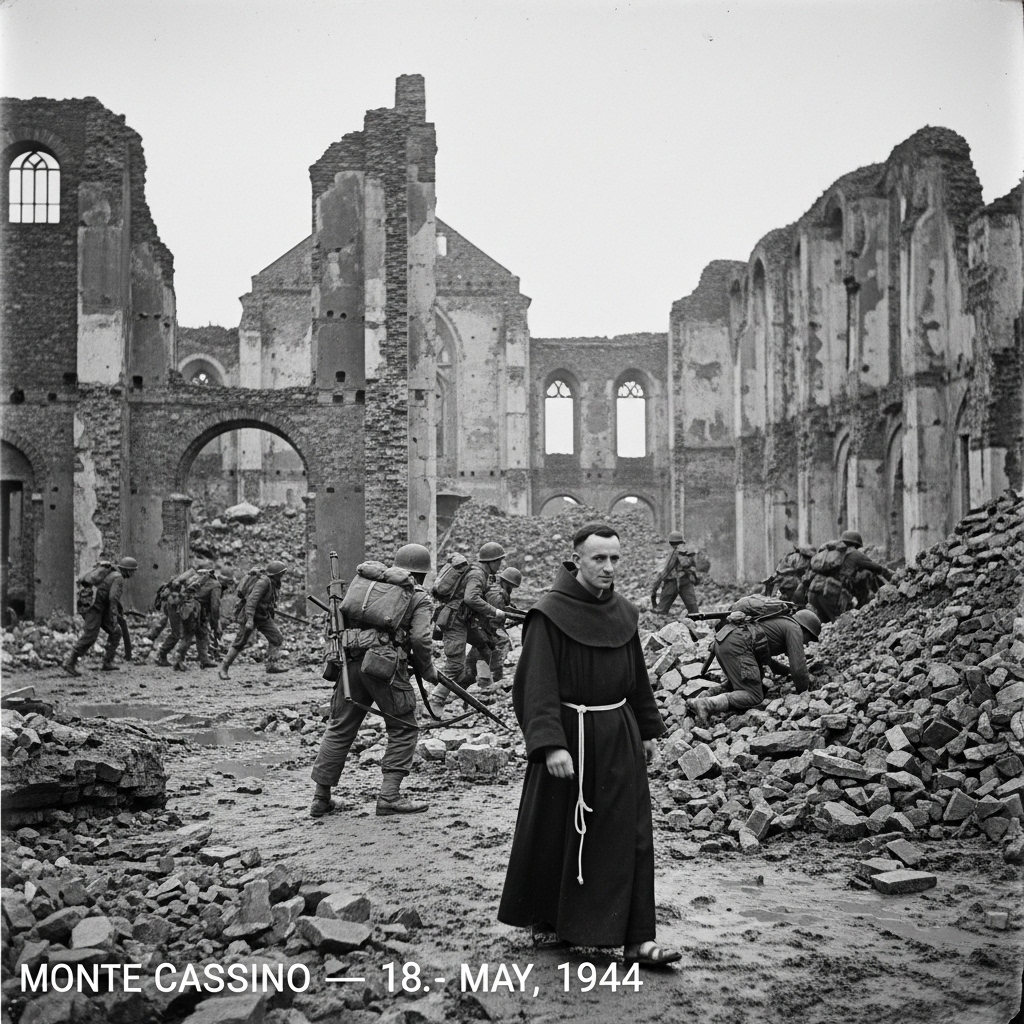
In February 1944, a controversial decision was made. Allied commanders believed the Germans were using the monastery as an observation post (the Germans denied this, though defensive positions around the monastery were real). Hundreds of heavy bombers leveled the historic monastery. However, the rubble provided even better hiding places for the German defenders, and resistance stiffened further. Cassino would only be overcome in May, through the incredible sacrifice of the Polish Corps.
The Anzio Gamble
Operation Shingle To break the deadlock at Cassino, Churchill proposed another amphibious landing idea: landing troops behind the Gustav Line on the beaches of Anzio and Nettuno, just 60 km south of Rome.
“Operation Shingle,” launched in January 1944, initially caught the Germans completely off guard. However, the US General leading the landing, John P. Lucas, chose to consolidate the beachhead rather than rapidly advance inland to cut German supply lines. This hesitation gave Kesselring time to react. The Germans quickly encircled Anzio, trapping Allied soldiers in hellish trench warfare that lasted for months. Instead of being a springboard for attack, Anzio was dubbed “the world’s largest self-supporting prisoner-of-war camp.”
The Liberation of Rome and the “Forgotten Front” (Summer 1944)
In May 1944, the Allies finally succeeded in breaking the Gustav Line with “Operation Diadem.” Troops on both the Cassino front and the besieged forces at Anzio attacked simultaneously. The German 10th Army was forced to retreat.
At this point, General Mark Clark made a decision that is still criticized by military historians today. Instead of directing his troops breaking out from Anzio eastward to cut off the retreating German army and trap them, he turned them towards the prestige objective of Rome. Clark wanted to go down in history as the first commander to conquer Rome.
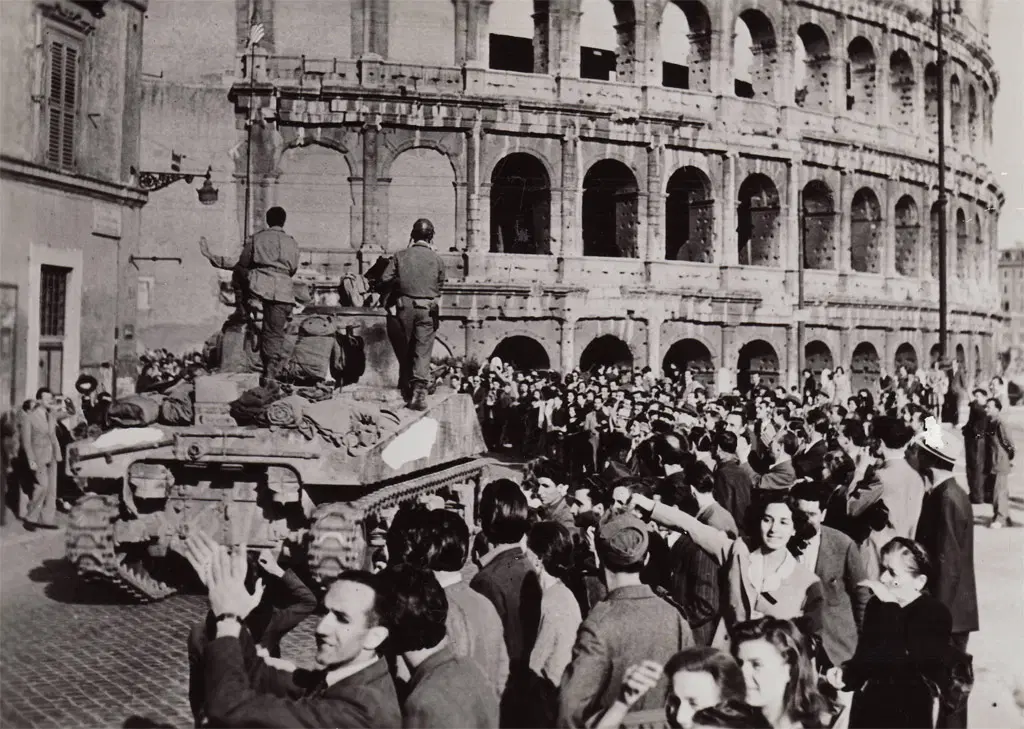
American soldiers entered Rome on June 4, 1944. Rome was the first Axis capital liberated by the Allies during the war. It was a major propaganda victory. However, thanks to Clark’s decision, the bulk of the German army managed to escape north and live to fight another day.
In the Shadow of Normandy
The joy created by the liberation of Rome lasted only two days. On June 6, 1944, the Allies landed in Normandy (D-Day). The world’s entire attention shifted to France. The troops in Italy suddenly found themselves in a sideshow. Some of the best divisions and vitally needed landing craft were withdrawn from Italy for the upcoming invasion of Southern France (Operation Dragoon).
Soldiers fighting in Italy began referring to themselves as “D-Day Dodgers”; a bitter joke implying their own arduous war was unappreciated back home. Italy was now the “Forgotten Front.”
The Gothic Line and the Long Road to Victory (Late 1944–1945)
The Germans had prepared a new and more formidable defensive line north of Rome, in the Apennine Mountains between Florence and Bologna: the “Gothic Line” (later renamed the Green Line).
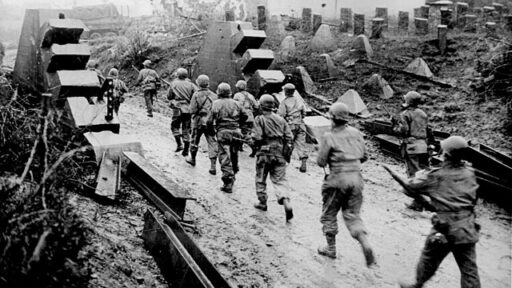
In the autumn of 1944, the Allies attacked this line. Once again, bloody battles and hand-to-hand combat in mountain passes ensued. Although the Allies made some breaches, the onset of winter brought operations to a halt yet again. Soldiers were forced to spend another miserable winter in the Italian mountains.
During this period, the Italian partisan movement (Resistenza) became increasingly effective in Northern Italy. Partisans sabotaged German supply lines, provided intelligence, and sometimes engaged in open combat, providing significant support to the Allies.
Final Offensive and Surrender
In the spring of 1945, Germany was collapsing on every front. The Allies in Italy launched their final major offensive in April (Operation Grapeshot). The weakened German defense was finally breached. Allied armored units fanned out into the Po Valley.
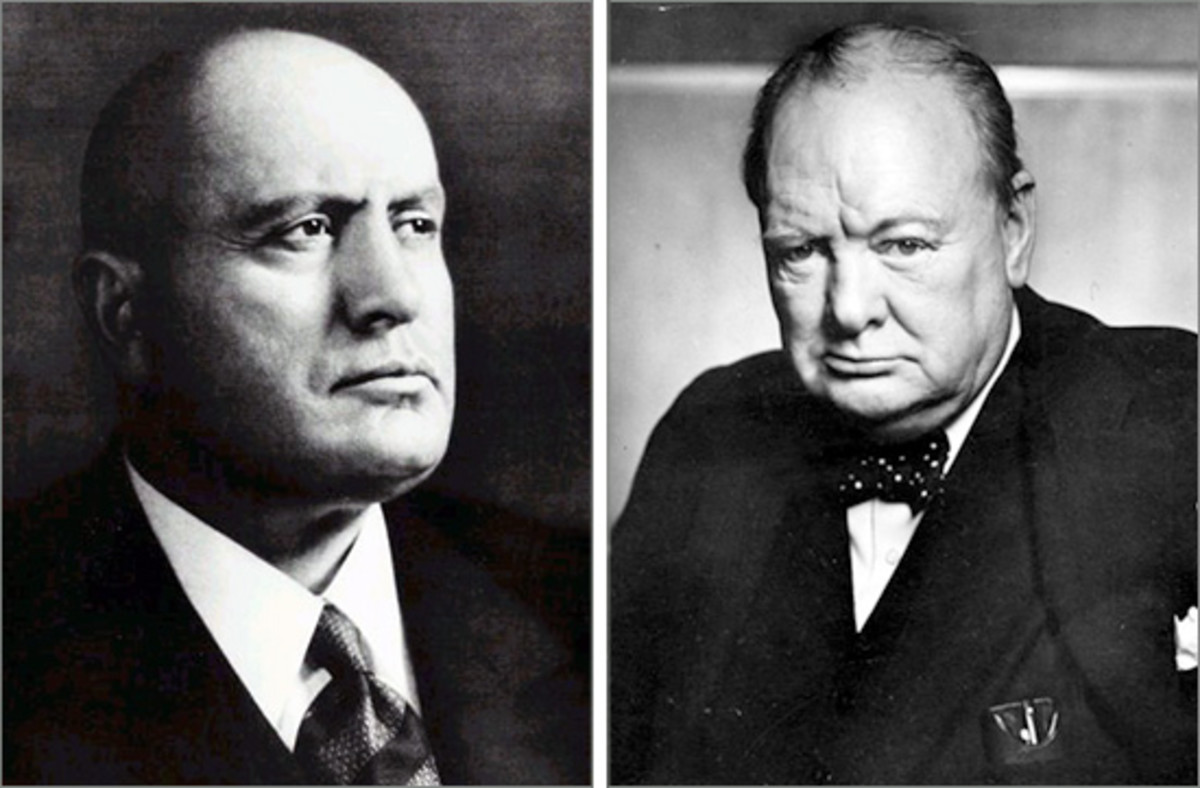
On April 25, 1945, a general partisan uprising began throughout Northern Italy. Mussolini, attempting to escape to Switzerland with his mistress Clara Petacci, was captured by communist partisans and executed on April 28. Their bodies were displayed at a gas station in Milan.
On May 2, 1945, nearly a week before Germany’s official surrender, German forces in Italy surrendered unconditionally. The long and brutal war in the Mediterranean had come to an end.
Not Just on Land – The Naval and Air War
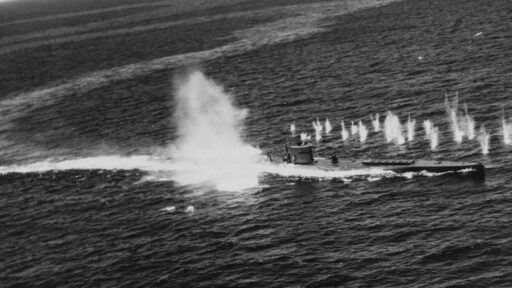
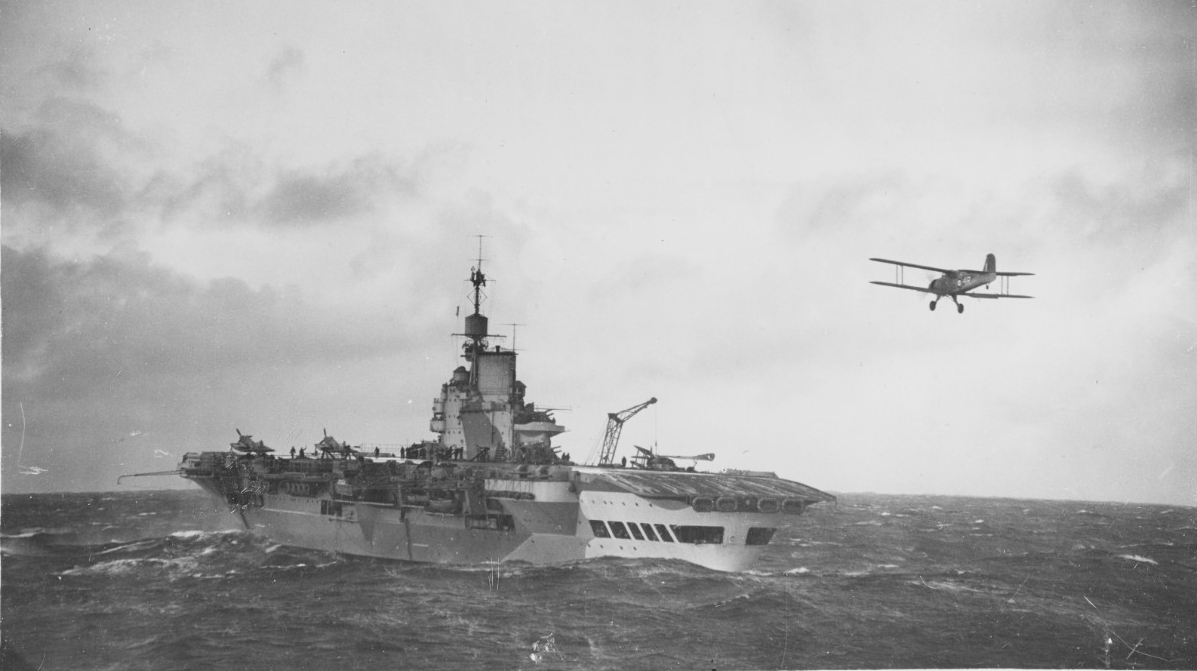
The Mediterranean campaign was not solely a land war. The Royal Navy and the US Navy fought a relentless struggle to turn the Mediterranean into an “Allied Lake.” The heroic defense of Malta, the sinking of Axis supply convoys, and the support of massive amphibious landings demonstrated the critical role of naval power in victory.
Air power was equally important. Allied air forces not only provided close support to ground troops but, after capturing bases in Italy, gained the ability to conduct strategic bombing of southern Germany, Austria, and vital oil fields in Romania (Ploiești). This created immense pressure on Germany’s war industry.
Conclusion: The Accounting of the “Soft Underbelly”
When the Second World War ended, the cost of the Italian campaign was horrific. The Allies had suffered over 300,000 casualties (killed, wounded, missing). German losses were at a similar level, and hundreds of thousands of Italian civilians had lost their lives. The country was ruined from end to end.
So, was Churchill’s “soft underbelly” strategy successful? Historians remain divided on this issue.
The Criticisms:
-
Too Slow: Italy’s geography was suited for defense, not offense. This made the campaign much longer and costlier than expected.
-
Strategic Dead End: Once north of Rome, the presence of the Alps made it difficult to pose a direct threat to the heart of Germany from Italy.
-
Waste of Resources: Some argue that the troops and equipment used in Italy could have been used on the Western Front (France) for an earlier and more decisive victory.
The Defenses:
-
Dividing the Axis: The campaign forced Italy out of the war. Most importantly, it kept approximately 20-25 well-trained German divisions tied down in Italy during critical periods (especially during D-Day and major Soviet offensives on the Eastern Front), preventing them from being used elsewhere. This was the campaign’s greatest strategic contribution.
-
Air Bases: The capture of air bases in areas like Foggia significantly expanded the range of Allied strategic bombing.
-
No Other Option: A landing in France was not yet logistically feasible in 1943. Instead of letting massive Allied armies sit idle in England, engaging the enemy in the Mediterranean was a political and military necessity.
In conclusion, Italy was not as “soft” as Churchill had hoped; on the contrary, it was one of the hardest, most grueling fronts of the war. Yet, the attack on this “tough underbelly” took its place in history as a vital, painful subsidiary front that drained the blood of the Nazi war machine and hastened its final collapse. For the soldiers who fought there, it was an unforgettable epic written in mud and blood.
References and Recommended Sources
The following key historical sources and academic works were utilized in the preparation of this article. These works are recommended for readers wishing to conduct deeper research on the subject.
-
Atkinson, Rick. The Day of Battle: The War in Sicily and Italy, 1943–1944 (The Liberation Trilogy, Vol. 2). Henry Holt and Co., 2007. (One of the most comprehensive modern works detailing the human and strategic scope of the Italian campaign).
-
Churchill, Winston S. The Second World War, Volume V: Closing the Ring. Houghton Mifflin, 1951. (Firsthand account from the architect of the strategy, particularly his defense of the “soft underbelly” thesis).
-
D’Este, Carlo. Fatal Decision: Anzio and the Battle for Rome. Harper Collins, 1991. (Detailed analysis of the Anzio landing and the mistakes on the road to Rome).
-
Holland, James. Italy’s Sorrow: A Year of War, 1944–1945. St. Martin’s Press, 2008. (A study focusing on the devastating impact of the war on the Italian people and its final year).
-
Kesselring, Albert. The Memoirs of Field-Marshal Kesselring. Presidio Press, 1989 (Reprint). (The perspective of the commander heading the German defense).
-
Clark, Mark W. Calculated Risk. Harper & Brothers, 1950. (The controversial memoirs of the US 5th Army commander).
-
Imperial War Museums (IWM). “The Italian Campaign”. (Online resource and photo archive).
-
U.S. Army Center of Military History (CMH). World War II Campaigns: Sicily, Naples-Foggia, Anzio, Rome-Arno, North Apennines, Po Valley. (Official US military operations reports).