
The Blue Water War
The European theater of World War II was defined by tank treads, mud, and city sieges. The Pacific Theater, however, was a war of distances. It was fought over the largest body of water on Earth, a battlefield covering 63 million square miles. In this vast expanse, the rules of naval warfare that had stood for centuries were rewritten overnight.
Before 1941, the battleship was the undisputed king of the sea. Naval doctrine held that wars would be decided by “crossing the T,” where massive dreadnoughts would exchange broadsides until one fleet sank. But by 1945, the battleship had been relegated to a floating artillery platform. The new monarch of the seas was the Aircraft Carrier.
The Pacific War was the “Age of Carriers.” It was a conflict where opposing fleets often fought without ever seeing each other, hurling death from over the horizon. It was a war of logistics, industrial capacity, and the sheer bravery of young pilots flying alone over an endless, unforgiving ocean.
This article explores the transformation of naval warfare, the cataclysmic duels between the United States Navy (USN) and the Imperial Japanese Navy (IJN), and the relentless island-hopping campaign that led to the shores of Japan.
The Day of Infamy and the Strategic Blunder (1941)
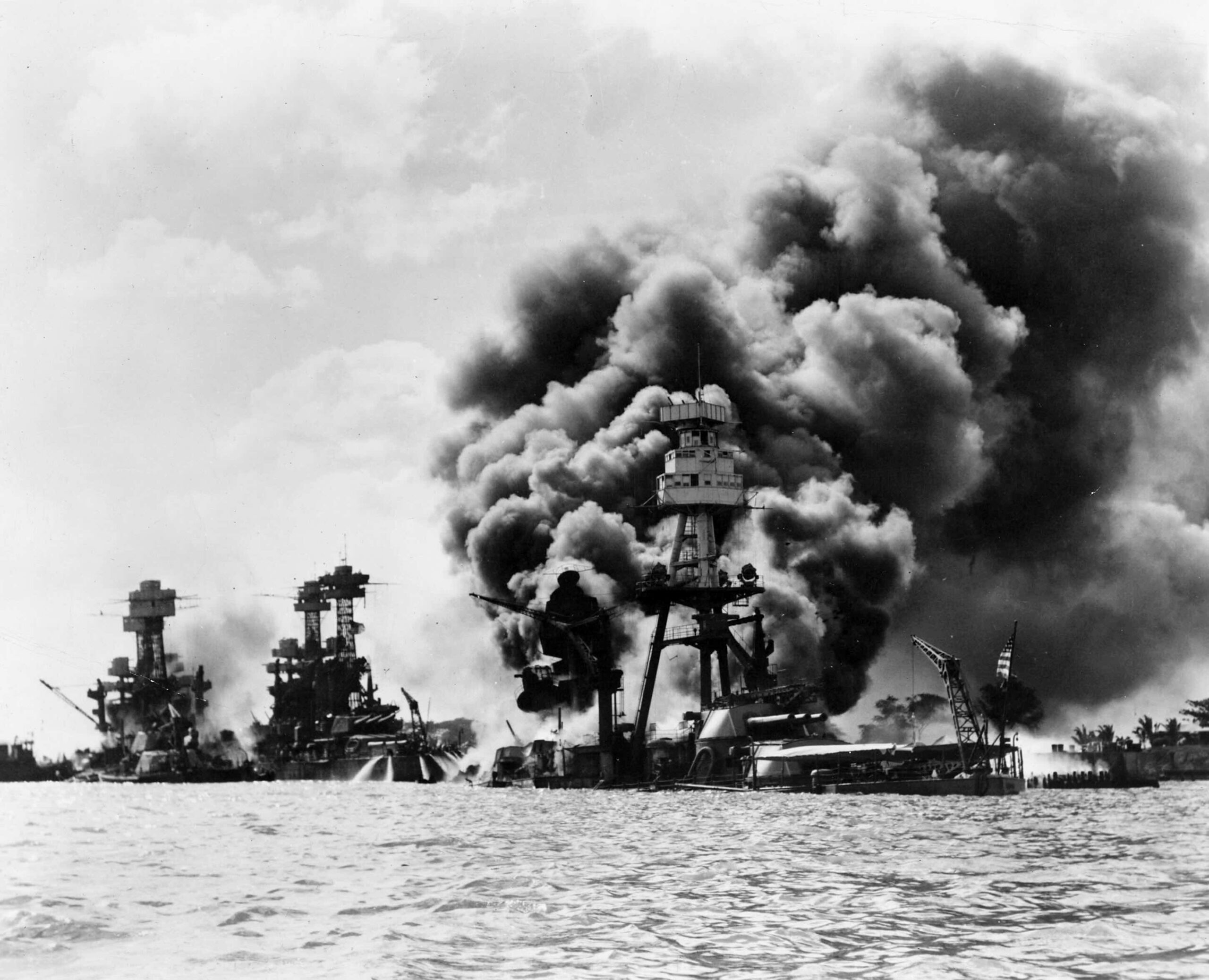
On the morning of December 7, 1941, the Imperial Japanese Navy launched a surprise attack on Pearl Harbor. Admiral Isoroku Yamamoto, the architect of the attack, hoped to deliver a knockout blow to the US Pacific Fleet, allowing Japan to secure resource-rich territories in Southeast Asia without American interference.
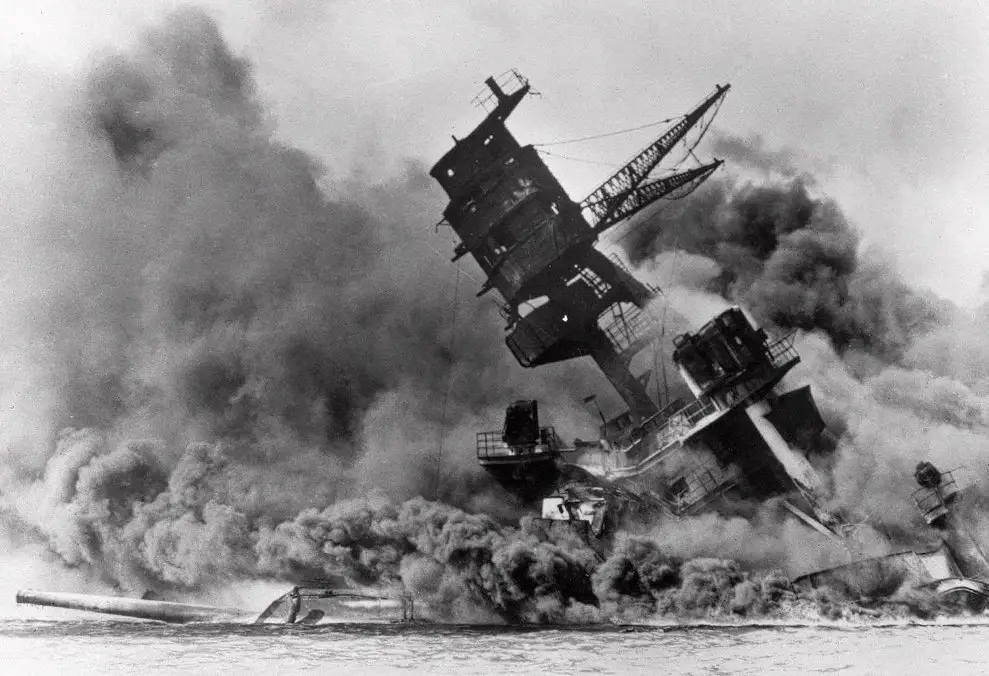
Tactically, it was a masterpiece. Six Japanese carriers (Akagi, Kaga, Soryu, Hiryu, Shokaku, Zuikaku) launched two waves of aircraft that crippled the US battleship force. The USS Arizona exploded, the Oklahoma capsized, and the “Battleship Row” was decimated.
However, strategically, it was a failure. The three American aircraft carriers stationed in the Pacific—Enterprise, Lexington, and Saratoga—were not in port that Sunday morning. They were out at sea delivering aircraft or on maneuvers. By destroying the battleships but missing the carriers (and the fuel oil depots), Japan forced the US Navy to rely on the very weapon that would eventually destroy the Japanese Empire: naval aviation. The battleship era had ended; the carrier era had been born out of necessity.
Beyond the Horizon – The Battle of the Coral Sea (May 1942)
By early 1942, Japan was expanding aggressively toward Australia. To stop them, the US Navy intercepted a Japanese invasion force headed for Port Moresby, New Guinea.
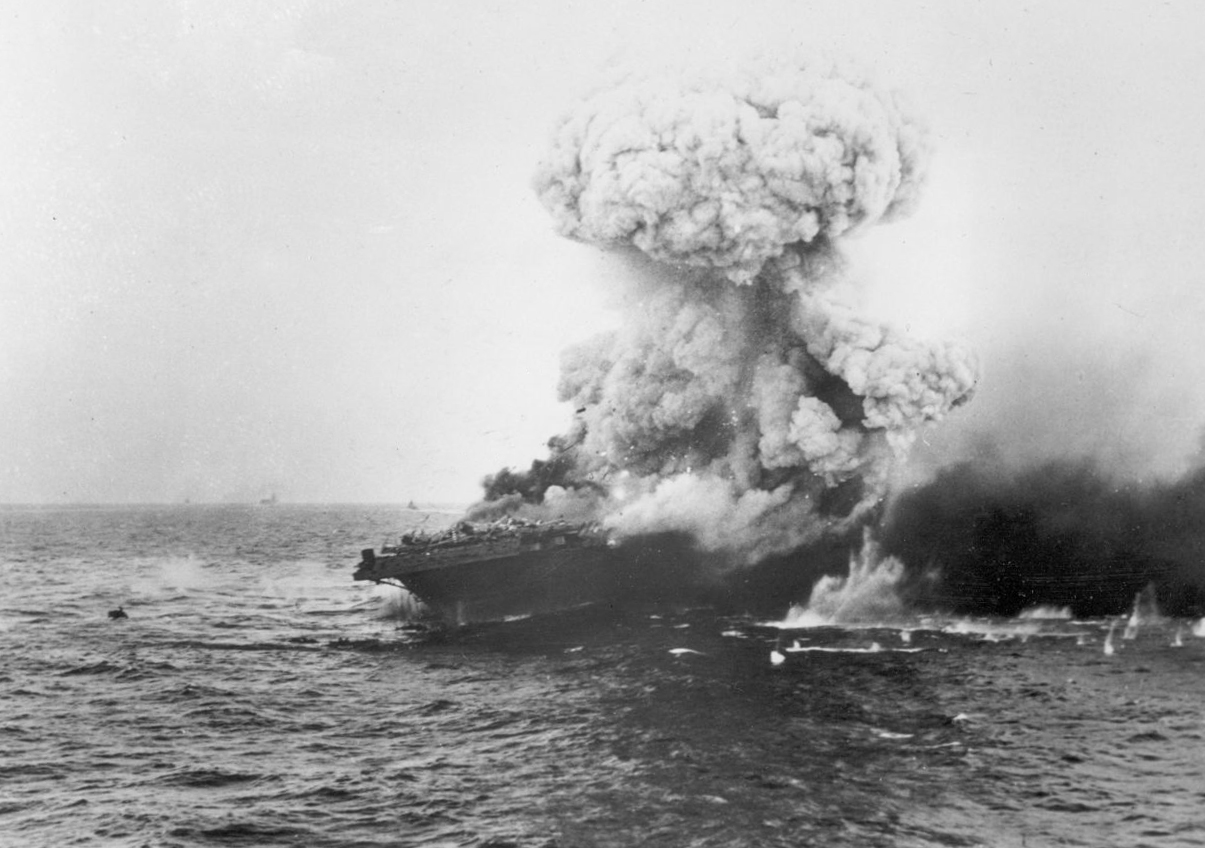
The resulting Battle of the Coral Sea (May 4–8, 1942) was a historic anomaly. For the first time in history, two naval fleets fought a battle in which surface ships never fired a shot at one another. In fact, the opposing ships never even saw each other. The entire battle was conducted by aircraft launched from carriers over huge distances.
The outcome was mixed. The US lost the carrier USS Lexington (“Lady Lex”) and the USS Yorktownwas heavily damaged. Japan lost the light carrier Shoho, and the heavy carrier Shokaku was damaged. Tactically, the Japanese won by sinking more tonnage. But strategically, it was an American victory: the invasion of Port Moresby was turned back. For the first time, the Japanese juggernaut had been checked.
The Miracle at Midway (June 1942)
Yamamoto wanted to draw the remaining American carriers into a trap to finish what he started at Pearl Harbor. His target was the tiny atoll of Midway.
However, the Americans had an ace up their sleeve: Magic. US Navy cryptanalysts, led by Commander Joseph Rochefort, had broken the Japanese naval code (JN-25). Admiral Chester Nimitz knew exactly where and when the Japanese would strike.
The Fatal Five Minutes
On June 4, 1942, the two fleets clashed. Initial American attacks were uncoordinated and disastrous; entire squadrons of Torpedo bombers were slaughtered without scoring a hit. But their sacrifice drew the Japanese combat air patrol (Zero fighters) down to sea level.
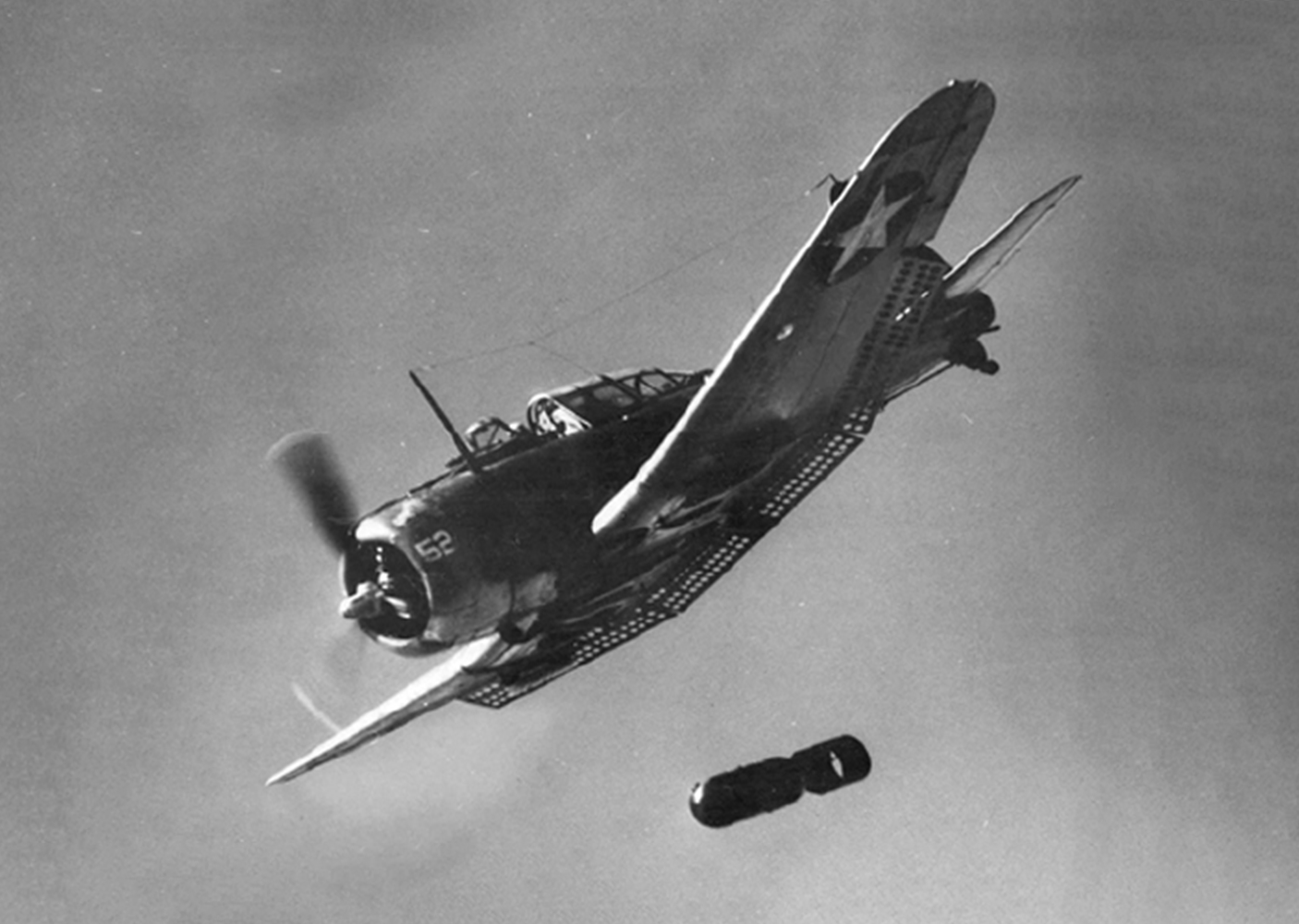
At that precise moment, American SBD Dauntless dive bombers from the Enterprise and Yorktown arrived at high altitude. They looked down to see the Japanese carriers Akagi, Kaga, and Soryu decks cluttered with refueling aircraft and exposed munitions. In five minutes of screaming dives, three Japanese carriers were turned into infernos. A fourth, Hiryu, was sunk later that day.
In one afternoon, the heart of the Japanese carrier fleet was ripped out. The initiative shifted to the Americans, never to return.
The Green Hell – Guadalcanal (August 1942 – February 1943)
With the Japanese stopped at sea, the Allies went on the offensive. The target was Guadalcanal in the Solomon Islands. This campaign marked the beginning of a brutal war of attrition.
While Marines fought in the steaming jungles to hold a crucial airstrip named Henderson Field, the navies clashed in the waters nearby. The slot of water north of the island became known as “Ironbottom Sound” due to the sheer number of ships sunk there.
This was a combined arms campaign. American aircraft operating from the “unsinkable aircraft carrier” of Henderson Field strangled Japanese supply lines. The Japanese attempted to run reinforcements down the slot at night (the “Tokyo Express”), but they could not sustain the losses. After six months of grinding combat, the Japanese evacuated. The myth of the invincible Japanese soldier was broken.
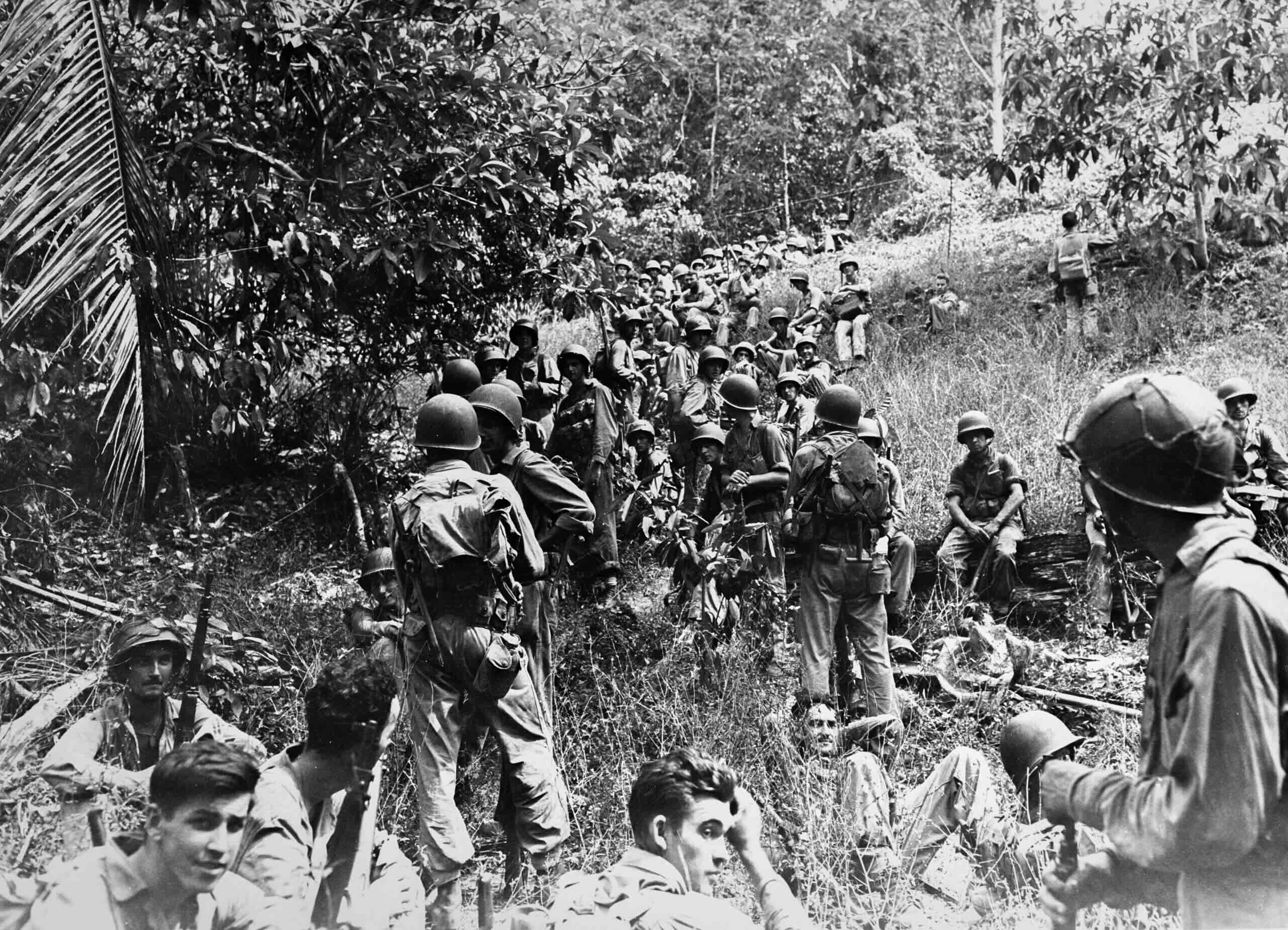
The US strategy for reaching Tokyo was known as “Island Hopping” (or Leapfrogging). Instead of capturing every Japanese-held island, the Allies would capture key strategic targets and bypass heavily fortified strongholds (like Rabaul), leaving them isolated and to “wither on the vine.”
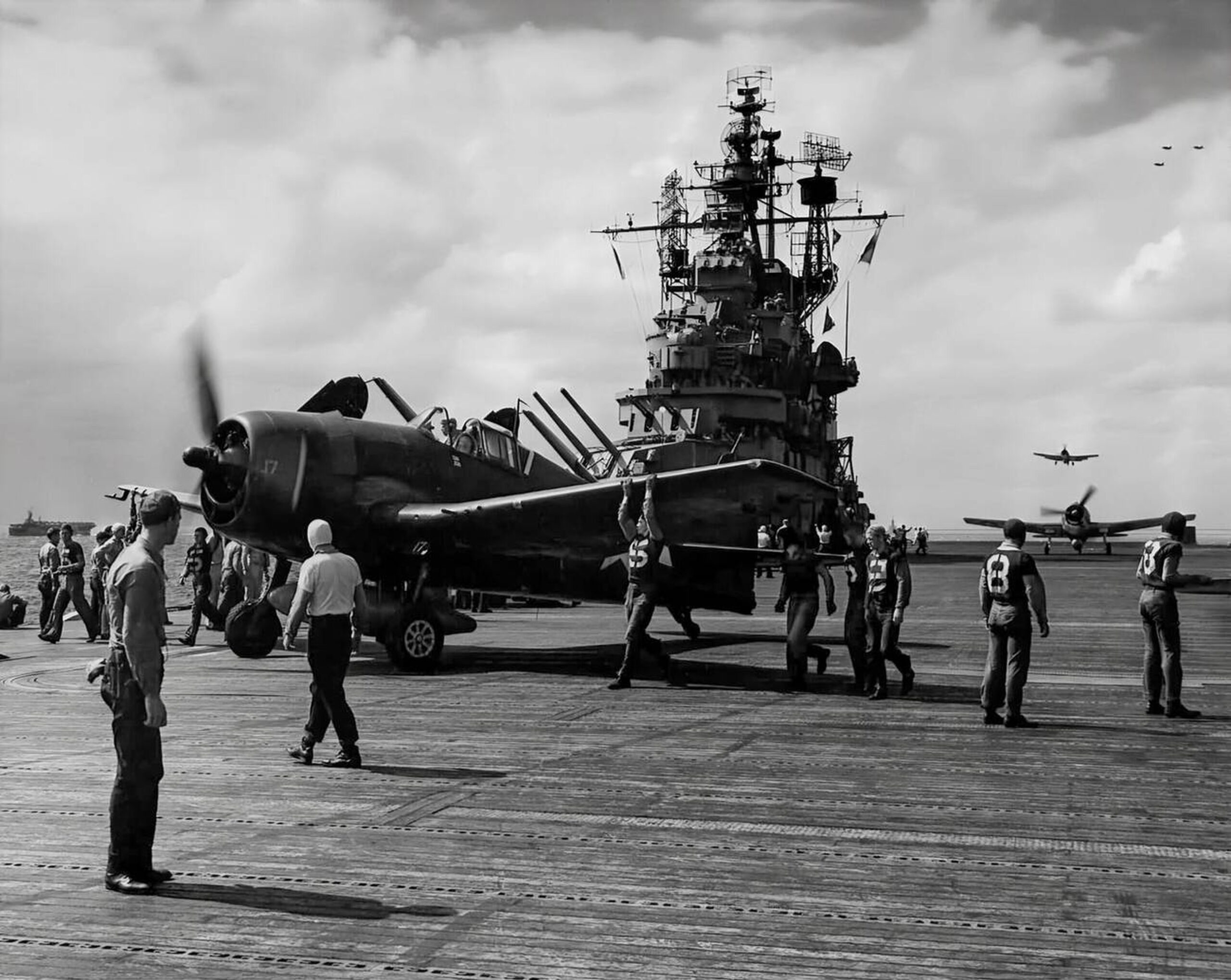
By 1944, American industrial might was fully mobilized. The US Navy was receiving new Essex-class fleet carriers and Independence-class light carriers at a rate Japan could not dream of matching.
The Battle of the Philippine Sea (June 1944)
During the invasion of Saipan, the Japanese navy emerged to challenge the US 5th Fleet. The result was one of the most lopsided air battles in history. American pilots, better trained and flying the new F6F Hellcat fighters, decimated the inexperienced Japanese air groups.
The US shot down over 300 Japanese planes with minimal losses. One American pilot famously radioed, “Hell, this is like an old-time turkey shoot!” The battle effectively ended the Japanese Navy’s ability to conduct large-scale carrier air operations.
The Largest Naval Battle in History – Leyte Gulf (October 1944)
Desperate to stop the American liberation of the Philippines, Japan threw everything it had left into the Battle of Leyte Gulf. This was the largest naval battle in history by tonnage involved.
It was a complex engagement involving four separate battles. It featured the last battleship-vs-battleship engagement in history (at Surigao Strait). It also saw the main Japanese decoy force successfully lure Admiral Halsey’s carriers away, leaving the landing force vulnerable.
The Stand of the “Taffy 3”
A small group of escort carriers and destroyers (call sign “Taffy 3”), armed only for ground support and anti-submarine warfare, suddenly found themselves facing the main Japanese surface fleet, including the super-battleship Yamato. In a display of suicidal bravery, the American destroyers charged the battleships. Their ferocity convinced the Japanese commander he was facing a much larger force, and he retreated.
The Divine Wind
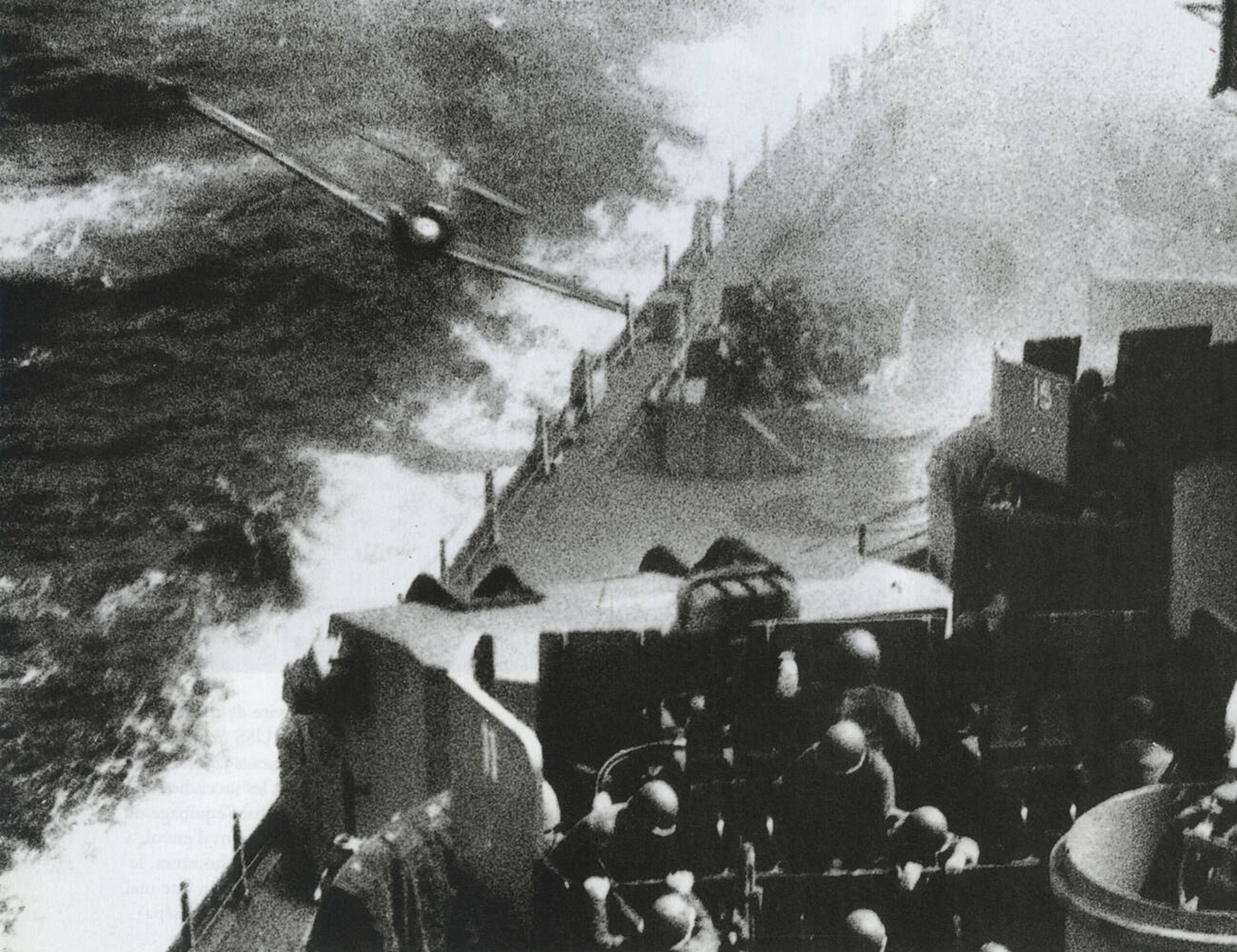
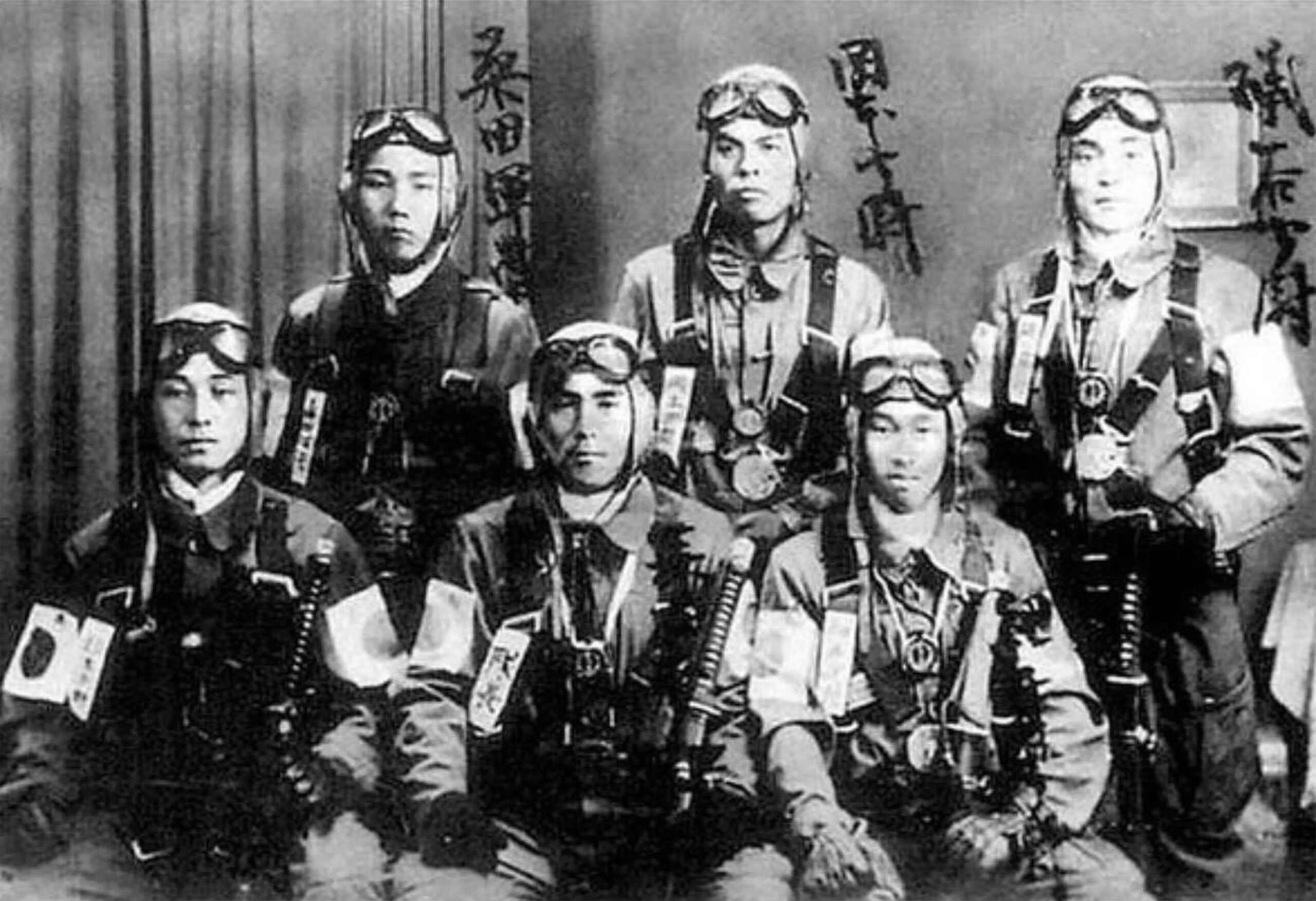
Leyte Gulf also saw the debut of a terrifying new tactic: the Kamikaze (“Divine Wind”). Japanese pilots, realizing they could no longer match US technology or skill, began deliberately crashing their planes into Allied ships. It was a grim foreshadowing of the defense of the Japanese home islands.
Iwo Jima, Okinawa, and the Atomic Bomb (1945)
As the “Island Hopping” campaign closed in on Japan, the fighting became more savage. At Iwo Jima (February 1945), Marines fought for a volcanic rock to provide emergency landing strips for B-29 bombers. It was the only battle where US casualties (dead and wounded) exceeded Japanese casualties.
At Okinawa (April–June 1945), the “Typhoon of Steel” unleashed the full fury of Kamikaze attacks against the US fleet. The US Navy suffered its highest casualties of the war, with 36 ships sunk and 368 damaged.
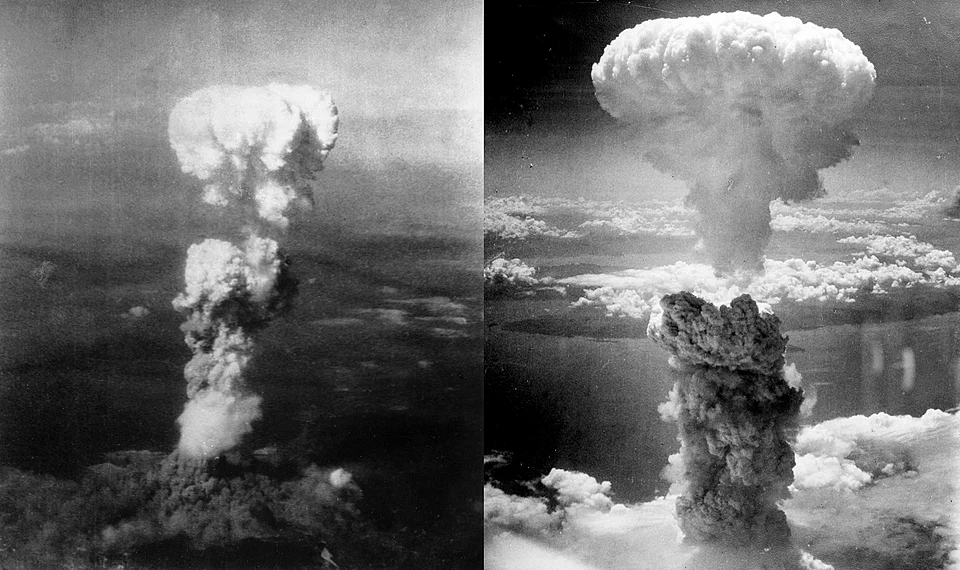
The fanatical defense of these islands convinced President Harry S. Truman that an invasion of mainland Japan (Operation Downfall) would cost millions of lives. Instead, the B-29 bomber Enola Gay dropped the first atomic bomb on Hiroshima on August 6, 1945. A second bomb fell on Nagasaki on August 9.
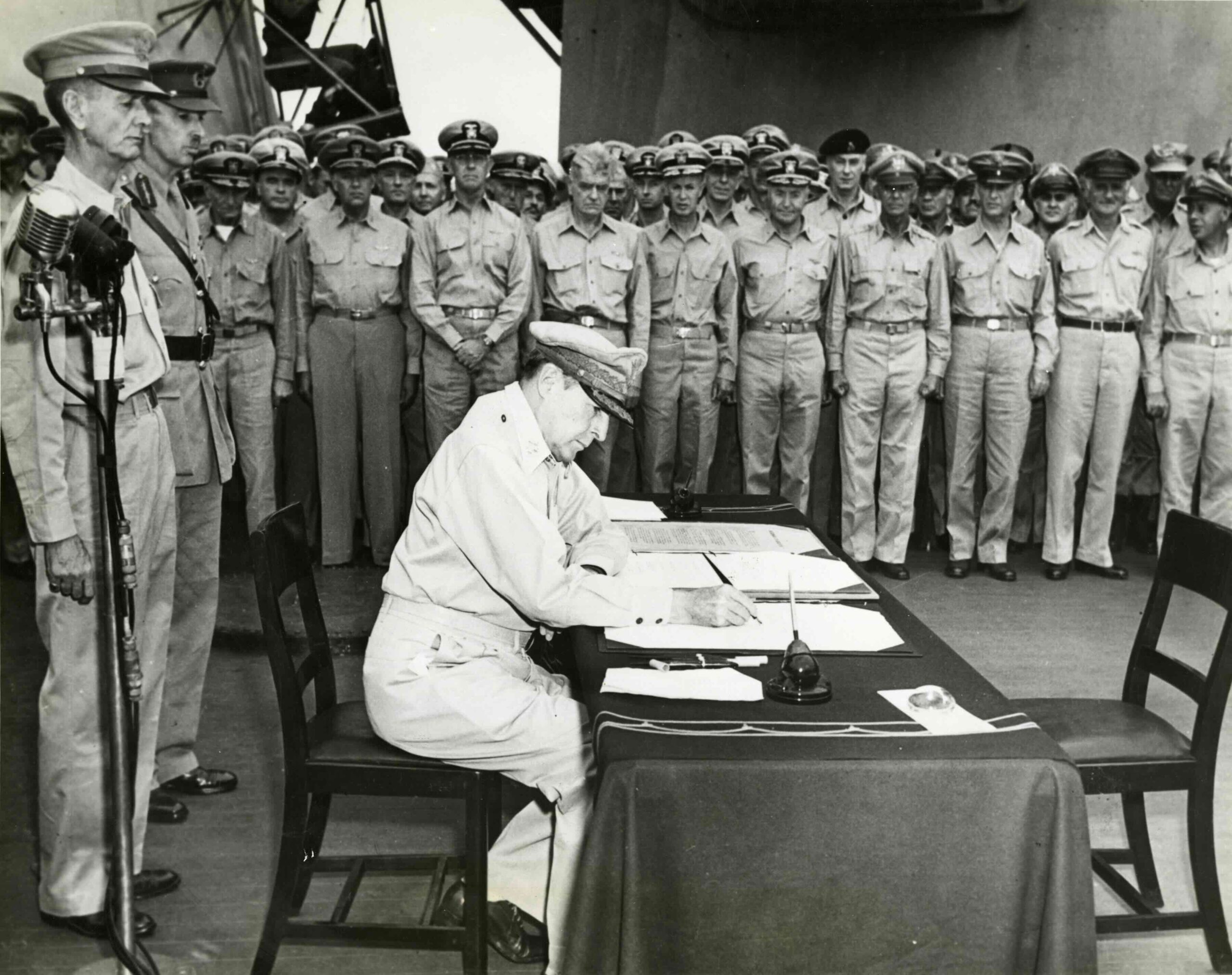
On August 15, Japan announced its surrender. The official instrument of surrender was signed on September 2, 1945, aboard the battleship USS Missouri in Tokyo Bay.
Conclusion: The Legacy of the Pacific
The Pacific War fundamentally changed the world. It ended the era of colonialism in Asia and marked the rise of the United States as a global superpower.
Navally, the transformation was absolute. The aircraft carrier replaced the battleship as the capital ship of the fleet—a status it holds to this day. The battles of Midway and the Coral Sea proved that control of the air was a prerequisite for control of the sea.
The “Age of Carriers” was a brief, intense window of history where technology, courage, and industrial might collided on the largest stage imaginable.
References and Recommended Sources
-
Toll, Ian W. Pacific Crucible: War at Sea in the Pacific, 1941–1942 (The Pacific War Trilogy, Vol. 1). W. W. Norton & Company, 2011. (A masterful narrative of the early carrier battles).
-
Parshall, Jonathan & Tully, Anthony. Shattered Sword: The Untold Story of the Battle of Midway. Potomac Books, 2005. (The definitive modern account of Midway from the Japanese perspective).
-
Hornfischer, James D. The Last Stand of the Tin Can Sailors: The Extraordinary World War II Story of the U.S. Navy’s Finest Hour. Bantam, 2004. (A gripping account of the Battle off Samar/Leyte Gulf).
-
Prange, Gordon W. At Dawn We Slept: The Untold Story of Pearl Harbor. Penguin Books, 1981. (The classic, exhaustive history of the Pearl Harbor attack).
-
Sledge, E.B. With the Old Breed: At Peleliu and Okinawa. Presidio Press, 1981. (One of the most visceral memoirs of ground combat in the Pacific).
-
Naval History and Heritage Command. “World War II: 1941-1945”. (Official US Navy records and photo archives).