
Operation Olive Oil Part II: Allied Air–Sea Interdiction and the Systematic Collapse of Axis Mediterranean Logistics (1944)
Operation Olive Oil Part II was a coordinated Allied air–sea interdiction campaign conducted in the Mediterranean during the summer of 1944, aimed at crippling Axis maritime logistics connecting Italy, the Balkans, and the Aegean. While rarely highlighted in mainstream World War II narratives, the operation represents a mature expression of Allied logistical warfare doctrine, combining air superiority, naval interdiction, intelligence fusion, and command integration. This article situates Olive Oil Part II within the broader strategic transformation of the Mediterranean theater, examining its operational design, execution, intelligence architecture, Axis countermeasures, and long-term strategic consequences. It argues that the campaign significantly contributed to Axis operational paralysis in Southern Europe and exemplified the decisive role of logistics denial in modern warfare.
1. Introduction: Logistics as the Center of Gravity in Late World War II
By 1944, the Second World War had evolved into a conflict where victory was increasingly determined not by battlefield heroics or tactical brilliance alone, but by the ability to sustain operations through complex logistical systems. Armies could no longer maneuver, air forces could not fly, and navies could not operate without continuous flows of fuel, ammunition, spare parts, and food. In this context, logistics became the true center of gravity of modern industrial warfare.
The Mediterranean theater, often overshadowed by the Eastern Front and the Normandy campaign, played a crucial role in this transformation. After the collapse of Italian Fascism and the Allied landings in Italy, the region became a contested logistical crossroads linking Axis forces in Northern Italy, the Balkans, and the Aegean islands. It was within this environment that Operation Olive Oil Part II emerged as a systematic effort to deny the Axis the logistical means to sustain resistance.
2. Strategic Background: The Mediterranean Theater in 1944
The strategic landscape of the Mediterranean in 1944 was defined by asymmetry. The Allies possessed overwhelming industrial capacity, naval strength, and growing air superiority. The Axis, by contrast, relied on shrinking resources and increasingly vulnerable supply routes. Despite these disadvantages, German forces demonstrated considerable resilience, maintaining defensive positions in Italy and sustaining garrisons across Southeastern Europe.
Maritime logistics were central to this resilience. Rail networks in the Balkans were frequently disrupted by partisan activity, while road transport suffered from fuel shortages and Allied air attacks. Consequently, sea transport—particularly coastal convoys—became essential for moving supplies between ports such as Trieste, Piraeus, Salonika, and smaller Aegean harbors.
Image Suggestion
- Strategic map of the Mediterranean, 1944, showing Axis and Allied control zones
- Logistical routes connecting Italy, the Balkans, and the Aegean
3. The Concept of Operation Olive Oil
Operation Olive Oil was not a single battle or discrete engagement, but a codename encompassing a series of Allied interdiction actions directed against Axis maritime logistics. The operation was divided into two principal phases:
- Olive Oil Part I: Early June 1944, characterized by reconnaissance-led strikes against identified convoys and port facilities.
- Olive Oil Part II: Mid-June through July 1944, representing an escalation in scale, coordination, and operational tempo.
Part II was designed to transform episodic attacks into a sustained campaign of denial. Rather than merely inflicting losses, the objective was to render Axis maritime logistics unreliable, unpredictable, and ultimately untenable.
4. Operational Objectives of Olive Oil Part II
The Allied planners defined several interrelated objectives for Olive Oil Part II:
- Disrupt fuel shipments, particularly petroleum products essential for armored formations and air operations.
- Destroy or disperse Axis convoys, forcing reliance on inefficient and dangerous alternatives.
- Isolate Axis garrisons in Greece, the Aegean islands, and the Balkans.
- Support ongoing ground operations in Italy by preventing German redeployment and reinforcement.
- Demonstrate Allied maritime dominance, reinforcing strategic pressure across Southern Europe.
These objectives reflected a shift from tactical engagement to systemic disruption—an approach increasingly favored by Allied strategists in 1944.
5. Air Power and the Architecture of Interdiction
Air power constituted the primary striking arm of Olive Oil Part II. Allied aircraft operated from bases in Southern Italy, Corsica, and North Africa, providing extensive coverage of maritime routes. The campaign relied on a mix of aircraft optimized for anti-shipping operations.
Key aircraft types included:
- Bristol Beaufighter: Equipped with rockets and heavy cannon, ideal for low-level strikes.
- Martin Baltimore: Used for medium-altitude bombing and reconnaissance.
- B-26 Marauder: Employed against port facilities and larger convoys.
- P-51 Mustang and Spitfire: Provided escort and air superiority.
Image Suggestion
- RAF Beaufighter conducting a low-level anti-shipping attack
- B-26 Marauder over the Mediterranean Sea
- Allied airfields in Southern Italy, 1944
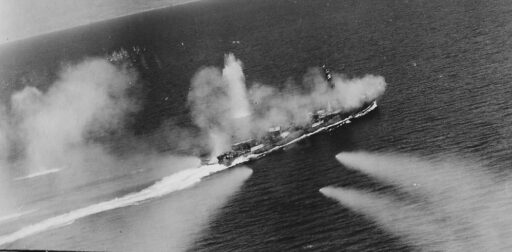
Low-altitude attacks proved particularly effective, exploiting the limited anti-aircraft defenses of Axis convoys. These strikes often occurred at dawn or dusk, maximizing surprise and minimizing exposure to enemy fighters.
6. Naval Forces and the Denial of Sea Control
Although air power dominated the campaign, naval forces played an indispensable supporting role. Allied destroyers, cruisers, and submarines conducted patrols along known convoy routes, often coordinating directly with air units.
Mine warfare was especially significant. By laying mines in harbor approaches and narrow sea lanes, the Allies forced Axis shipping into predictable routes, increasing vulnerability to air attack. This integration of naval and aerial operations reflected the advanced state of Allied joint doctrine by 1944.
Image Suggestion
- Allied destroyer on Mediterranean patrol
- Naval mine deployment diagram
- Allied submarine operating in the Aegean
7. Intelligence, Surveillance, and C3I Integration
One of the defining features of Olive Oil Part II was its reliance on integrated intelligence systems. Signals intelligence (SIGINT), radar surveillance, and photographic reconnaissance were fused into a continuous targeting cycle.
Convoy movements were often detected before departure, allowing Allied forces to plan intercepts with remarkable precision. This intelligence-driven approach minimized wasted sorties and maximized operational efficiency.
The operation thus represents a practical application of advanced C3I (Command, Control, Communications, and Intelligence) principles, demonstrating how information dominance could translate directly into operational success.
Image Suggestion
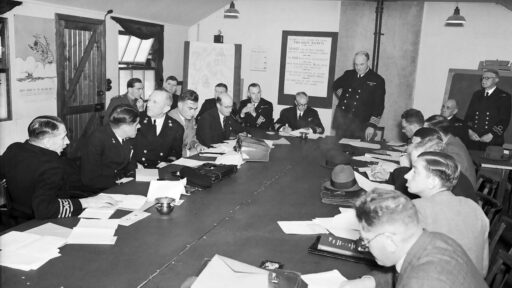
- Allied operations room with plotting maps
- Aerial reconnaissance photograph of an Axis port
- Radar station used for maritime surveillance
8. Axis Defensive Measures and Structural Weaknesses
The Axis response to Olive Oil Part II was constrained by material shortages and strategic overstretch. Defensive measures included:
- Increased reliance on night convoys
- Deployment of flak ships and coastal artillery
- Use of smaller, less conspicuous vessels
However, these measures were largely ineffective. Fuel shortages limited escort operations, while Allied air superiority increasingly rendered night operations hazardous. Each loss further reduced the Axis ability to protect remaining shipping, creating a downward spiral of logistical degradation.
9. Operational Results and Measured Impact
While precise tonnage figures remain debated, Allied assessments indicate that Olive Oil Part II significantly reduced Axis maritime traffic in the Mediterranean. The cumulative effect was not immediate collapse, but strategic paralysis.
German units in Greece and the Balkans reported chronic shortages of fuel and ammunition, limiting their operational mobility. In Italy, the inability to redeploy forces efficiently contributed to the stagnation of German defensive efforts.
Image Suggestion
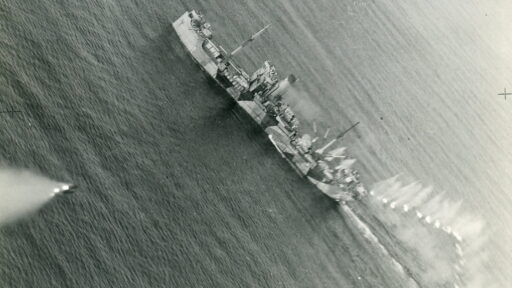
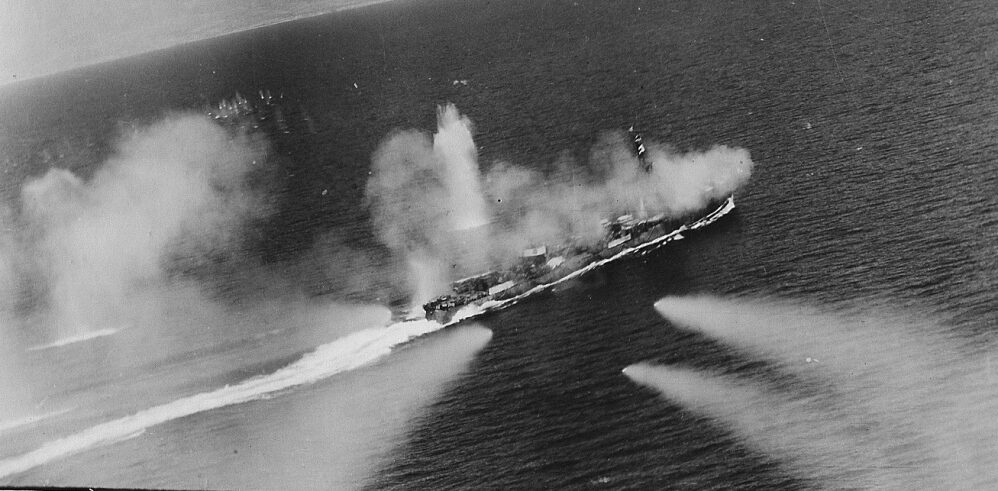
- Damaged Axis supply ship after air attack
- Destroyed port infrastructure in the Aegean
- Aerial photograph of sunken transport vessels
10. Relationship to Broader Allied Strategy
Operation Olive Oil Part II complemented larger Allied offensives by shaping the operational environment. By denying the Axis logistical flexibility, the operation reduced the need for direct confrontation and magnified the impact of ground offensives.
This approach mirrored Allied strategies elsewhere, including the bombing of German synthetic fuel plants and the Battle of the Atlantic. In each case, the objective was not merely to destroy enemy forces, but to deny them the means to fight.
11. Historiographical Assessment
Despite its significance, Olive Oil Part II occupies a marginal position in mainstream World War II historiography. This neglect reflects a broader tendency to prioritize dramatic land battles over sustained logistical campaigns.
Recent scholarship, however, increasingly recognizes that wars are won not only on battlefields but within supply chains. From this perspective, Olive Oil Part II emerges as a critical example of how logistical warfare shaped the Allied victory in Europe.
12. Conclusion
Operation Olive Oil Part II exemplifies the transformation of warfare in the mid-twentieth century. Through integrated air–sea operations, intelligence fusion, and sustained interdiction, the Allies systematically undermined the Axis ability to sustain resistance in the Mediterranean.
Although lacking the dramatic visibility of major amphibious landings, the operation played a vital role in the strategic exhaustion of Axis forces. Its legacy lies in demonstrating that control of logistics—rather than territory alone—can determine the outcome of war.
References
- https://ww2stories.org/2024/11/25/operation-olive-oil-pt-ii/
- https://ww2stories.org/2024/11/25/operation-olive-oil-pt-i/
- https://www.iwm.org.uk/history/the-war-in-the-mediterranean
- https://www.nationalarchives.gov.uk/help-with-your-research/research-guides/second-world-war/
- https://www.rafmuseum.org.uk/research/online-exhibitions/
- https://www.naval-history.net/WW2CampaignsMed.htm
- https://www.jstor.org/stable/260707
- https://www.ibiblio.org/hyperwar/AAF/
- https://www.airuniversity.af.edu/Portals/10/AUPress/Books/
- https://www.historynet.com/allied-interdiction-mediterranean-1944/