Operation Olive Oil Part I: Allied Reconnaissance, Early Interdiction, and the Foundations of Mediterranean Logistical Warfare (June 1944)
Operation Olive Oil Part I constituted the initial phase of an Allied interdiction campaign in the Mediterranean during early June 1944, aimed at disrupting Axis maritime logistics prior to the campaign’s expansion into a sustained air–sea denial effort. Unlike the later and more destructive Part II, Olive Oil Part I focused on reconnaissance-led strikes, intelligence validation, and the testing of Axis defensive reactions along critical supply routes connecting Italy, the Balkans, and the Aegean. This article examines Olive Oil Part I as a formative operational stage, arguing that its primary significance lay not in immediate material destruction but in establishing the tactical, intelligence, and command foundations that enabled the success of subsequent Allied logistical warfare in the Mediterranean.
1. Introduction: The Opening Phase of Logistical Interdiction
In modern warfare, large-scale operational success is rarely achieved without an initial phase of reconnaissance, probing, and doctrinal calibration. Operation Olive Oil Part I represents precisely such a phase within the broader Allied effort to neutralize Axis logistics in the Mediterranean during 1944. Conducted in early June, this phase preceded the more aggressive and destructive interdiction campaign known as Olive Oil Part II.
While Part II aimed to systematically paralyze Axis maritime supply lines, Part I served as an essential preparatory stage. It allowed Allied commanders to identify vulnerabilities, evaluate intelligence accuracy, assess enemy responses, and refine joint air–sea coordination. Understanding Olive Oil Part I is therefore critical to appreciating how Allied logistical warfare evolved from experimental strikes into a coherent operational doctrine.
2. Strategic Environment: The Mediterranean Before June 1944
By mid-1944, the Mediterranean theater had undergone significant transformation. The Axis had lost North Africa and Sicily, and Italy had formally surrendered in September 1943. However, German forces continued to resist in Northern Italy while maintaining substantial garrisons across Greece, Yugoslavia, and the Aegean islands.
These forces depended heavily on maritime supply routes. Rail networks were frequently disrupted by partisan activity, and overland transport suffered from chronic fuel shortages. As a result, Axis logistics increasingly relied on small convoys operating along coastal routes under the cover of darkness.
Image Suggestion
- Mediterranean strategic map, early 1944
- Axis-controlled ports and supply routes in the Aegean and Adriatic
3. Conceptual Origins of Operation Olive Oil
Operation Olive Oil emerged from Allied recognition that Mediterranean logistics represented a critical Axis vulnerability. Allied planners understood that the destruction of convoys alone would not suffice; instead, a sustained campaign was required to render maritime supply unreliable.
Olive Oil was therefore structured as a phased operation:
- Part I: Intelligence validation, reconnaissance, and limited interdiction
- Part II: Full-scale air–sea denial and logistical paralysis
Part I’s purpose was not decisive destruction, but preparation—a distinction often overlooked in traditional battle-centric histories.
4. Operational Objectives of Olive Oil Part I
The objectives of Olive Oil Part I were deliberately limited and exploratory:
- Identify Axis convoy routes and operational patterns
- Test Axis air and naval defenses
- Validate intelligence sources, including SIGINT and aerial reconnaissance
- Refine Allied joint coordination between air and naval forces
- Assess weather, terrain, and operational constraints
These objectives reflected a cautious but methodical approach, emphasizing information gain over immediate results.
5. Reconnaissance and Intelligence Collection
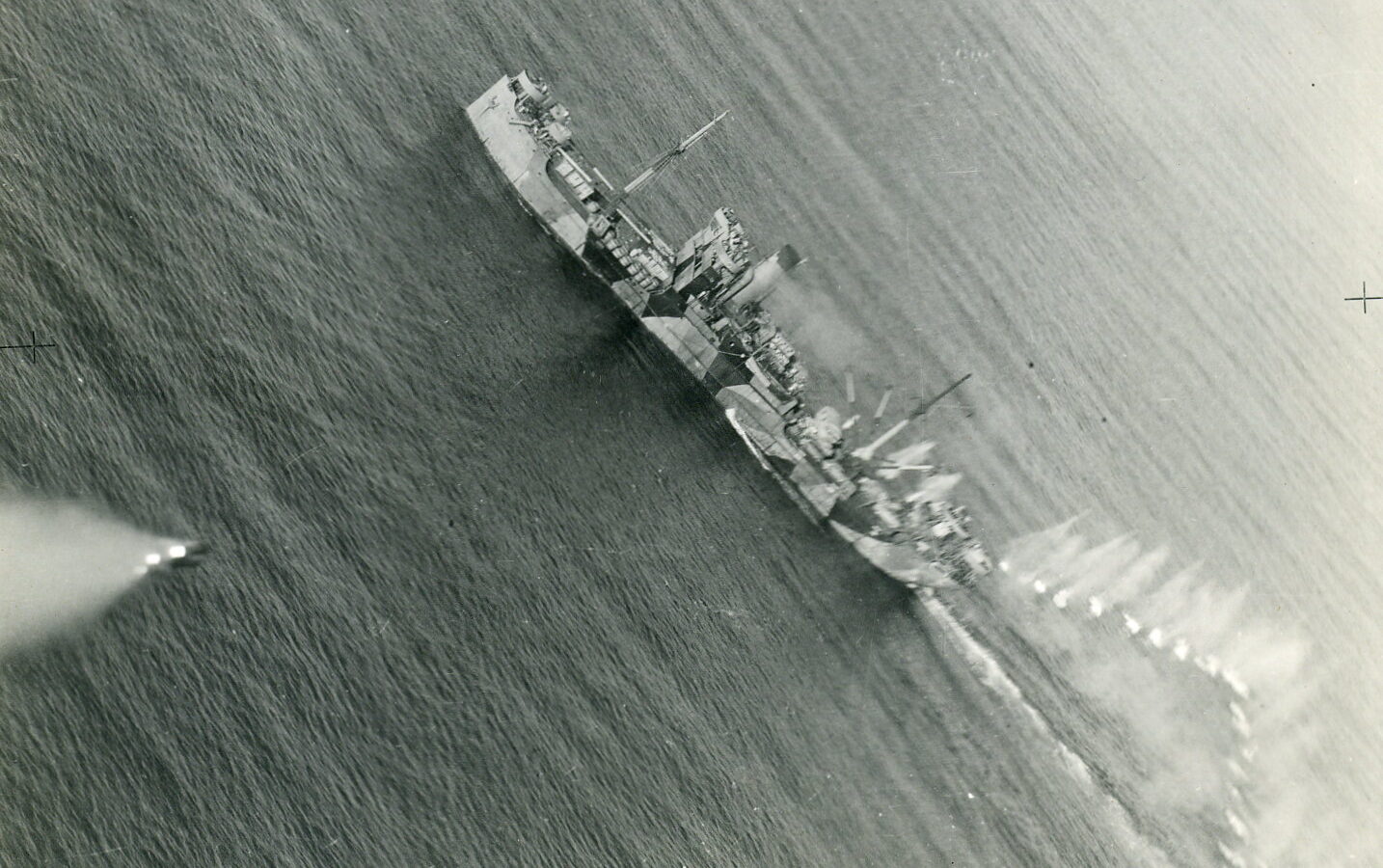
Reconnaissance was the central pillar of Olive Oil Part I. Allied aircraft conducted extensive patrols over suspected convoy routes, ports, and anchorages. Photographic reconnaissance played a particularly important role in mapping harbor facilities and identifying defensive installations.
Signals intelligence further enhanced situational awareness. Intercepted communications provided insights into convoy schedules, escort strength, and Axis logistical priorities.
Image Suggestion
- Aerial reconnaissance photograph of an Axis port
- Allied intelligence officers analyzing reconnaissance imagery
- Radar coverage map of the central Mediterranean
6. Initial Air Interdiction Efforts
Although reconnaissance dominated Part I, limited interdiction strikes were conducted to test tactics and enemy responses. These attacks typically involved small numbers of aircraft targeting lightly escorted convoys or isolated vessels.
Aircraft employed included:
- Bristol Beaufighter strike aircraft
- Martin Baltimore bombers
- Fighter escorts for protection and interception
These early attacks revealed weaknesses in Axis convoy defenses, particularly their vulnerability to low-level attacks.
Image Suggestion
- RAF Beaufighter in anti-shipping configuration
- Low-level attack on a coastal convoy
- Allied aircraft returning from a Mediterranean sortie
7. Naval Participation and Maritime Surveillance
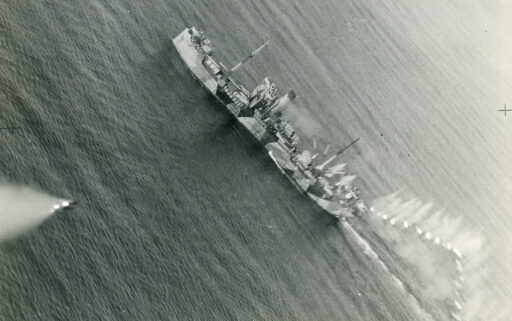
Naval forces supported Olive Oil Part I primarily through surveillance and limited engagement. Allied destroyers and submarines monitored convoy routes and reported sightings, contributing to the growing intelligence picture.
Mine warfare was considered but used sparingly during Part I, as planners sought to avoid prematurely alerting the Axis to the scale of Allied intentions.
Image Suggestion
- Allied destroyer conducting reconnaissance patrols
- Submarine periscope view of a convoy
- Mediterranean naval patrol routes
8. Axis Defensive Reactions
Axis responses to Olive Oil Part I were cautious but adaptive. Increased use of night movements, dispersion of convoys, and reinforcement of coastal defenses were observed. However, these measures also revealed structural weaknesses, including limited escort availability and inadequate radar coverage.
The Axis tendency to rely on predictable coastal routes ultimately worked to the Allies’ advantage, providing a clearer picture of logistical behavior.
9. Command, Control, and Early C3I Integration
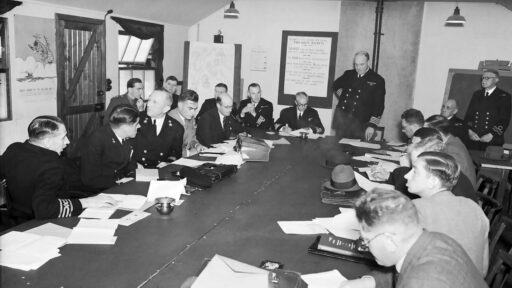
Olive Oil Part I marked an important step in the integration of Allied C3I systems. Information from reconnaissance flights, naval patrols, and intelligence intercepts was increasingly centralized, enabling faster decision-making.
While still imperfect, this early integration laid the groundwork for the highly efficient command architecture employed during Part II.
Image Suggestion
- Allied operations room with early plotting systems
- Command staff reviewing Mediterranean charts
- Communication equipment used in joint operations
10. Operational Outcomes and Lessons Learned
The tangible destruction achieved during Olive Oil Part I was limited. However, its true value lay in the lessons learned:
- Confirmation of Axis reliance on maritime logistics
- Identification of optimal attack windows and routes
- Validation of low-level air attack tactics
- Improved coordination between air and naval forces
These insights directly informed the planning and execution of Olive Oil Part II.
11. Strategic Significance of the Preparatory Phase
From a strategic perspective, Olive Oil Part I exemplifies the importance of preparatory operations in modern warfare. Rather than seeking immediate decisive results, the Allies prioritized information dominance and doctrinal refinement.
This approach minimized risk and maximized the effectiveness of subsequent operations, demonstrating a mature understanding of operational art.
12. Historiographical Perspective
Like many reconnaissance and preparatory operations, Olive Oil Part I has received limited attention in historical literature. Its lack of dramatic engagements has contributed to its marginalization.
Nevertheless, when viewed through the lens of logistical warfare, Part I emerges as a critical enabler of Allied success in the Mediterranean.
13. Conclusion
Operation Olive Oil Part I was not a battle for territory, nor a campaign of mass destruction. It was a deliberate, intelligence-driven effort to understand and shape the Mediterranean logistical environment. By identifying vulnerabilities, refining tactics, and integrating command structures, it laid the essential foundations for the more decisive interdiction campaign that followed.
In this sense, Olive Oil Part I demonstrates that in modern warfare, preparation is itself a form of combat—one that can determine the outcome long before decisive blows are struck.
References (10+)
- https://ww2stories.org/2024/11/25/operation-olive-oil-pt-i/
- https://ww2stories.org/2024/11/25/operation-olive-oil-pt-ii/
- https://www.iwm.org.uk/history/the-war-in-the-mediterranean
- https://www.nationalarchives.gov.uk/help-with-your-research/research-guides/second-world-war/
- https://www.rafmuseum.org.uk/research/online-exhibitions/
- https://www.naval-history.net/WW2CampaignsMed.htm
- https://www.jstor.org/stable/260707
- https://www.ibiblio.org/hyperwar/
- https://www.airuniversity.af.edu/Portals/10/AUPress/Books/
- https://www.historynet.com/mediterranean-theater-world-war-ii/