
The Instrument of Conquest
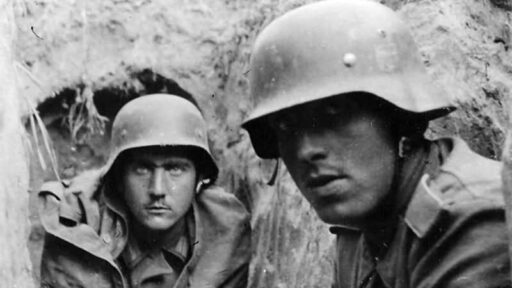
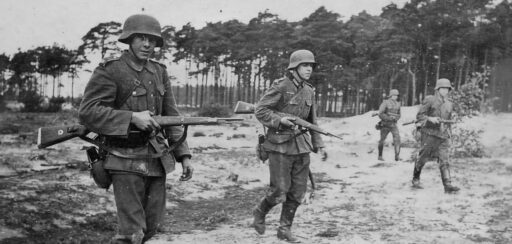
In the annals of military history, few organizations have been as scrutinized, feared, and ultimately destroyed as the German Wehrmacht during the Second World War. Emerging from the restrictions of the Treaty of Versailles, the Wehrmacht (Defensive Force) was rebuilt in the 1930s into a modern, combined-arms machine that would shatter the status quo of Europe.
Between 1939 and 1945, the German soldier (Landser) fought across a geographical expanse that defies imagination: from the scorching sands of Tobruk to the frozen forests of Karelia, and from the jagged peaks of the Caucasus to the hedgerows of Normandy. The story of this army is not merely one of grand strategy or the criminal ideology of its supreme commanders; it is also a story of operational doctrine, tactical innovation, and the extreme physical endurance of the men on the ground.
This article examines the operational reality of the Wehrmacht. It explores the unique command philosophies that allowed for early victories, the reliance on overwhelming infantry firepower, the logistical nightmares of the Eastern Front, and the tragic, chaotic disintegration of the force in the final days of the Third Reich.
The Doctrine of Command and the Frontline Leader
The stunning early successes of the German Army—in Poland (1939) and France (1940)—were often attributed by Allied observers to superior numbers or tanks. However, the true secret weapon of the Wehrmacht was its leadership philosophy: Auftragstaktik (Mission-Type Tactics).
Unlike the rigid, top-down command structures of the French or British armies of the time, German doctrine emphasized decentralized execution. A commander would give a subordinate a clear goal (e.g., “Capture that hill”), but explicitly leave the method of capturing it up to the subordinate. This allowed Junior Officers and Non-Commissioned Officers (NCOs) to make split-second decisions based on the immediate reality of the battlefield, rather than waiting for orders from a distant headquarters.
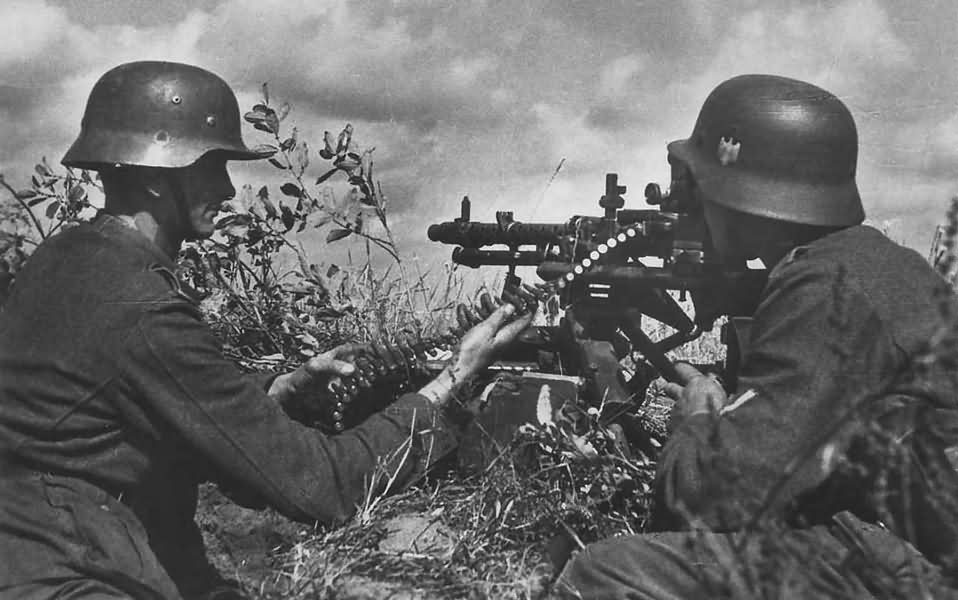
This doctrine required a specific type of leader. The German officer was expected to lead from the front, often right alongside the assault troops. Armed with the iconic MP38 or MP40 submachine gun—a weapon designed for close-quarters shock power—officers were visible, active participants in the combat. While this fostered immense loyalty and morale among the troops, it resulted in catastrophic casualty rates among the officer corps. By 1942, the pre-war stock of highly trained officers was severely depleted, forcing the Wehrmacht to rush training for replacements who lacked the tactical intuition of their predecessors.
Strategic planning was equally rigorous. Behind the front lines, the war was a constant exercise in map-reading and problem-solving. The German General Staff had a tradition of intellectual rigor, treating war as a learnable science. Officers spent hours analyzing terrain features, supply routes, and defensive lines.
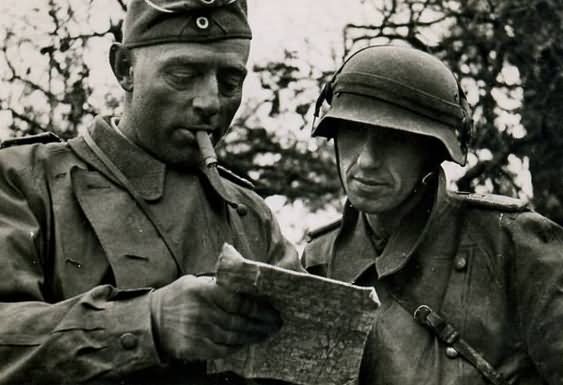
However, as the war expanded into the vastness of the Soviet Union, the tactical brilliance of the field officers began to be undermined by strategic incoherence at the highest levels. No amount of brilliant map-reading could solve the problem of conquering a country that spanned eleven time zones with an army that was rapidly running out of fuel and reserves.
The Machine Gun – The Spine of the Infantry
To understand Wehrmacht tactics, one must understand their infantry squad organization. In the US and British armies, the rifleman was the primary maneuver element, supported by a light machine gun (like the BAR or Bren). In the Wehrmacht, this was reversed: the machine gun was the primary weapon; the riflemen existed to carry ammo for it and protect its flanks.
The MG34, and its successor the MG42, were the most advanced general-purpose machine guns of the war. The MG42, with a terrifying rate of fire of 1,200 rounds per minute, was known as Hitlersäge (“Hitler’s Buzzsaw”). Its distinct ripping sound suppressed enemy infantry effectively, pinning them down so they could be flanked or destroyed by mortars.
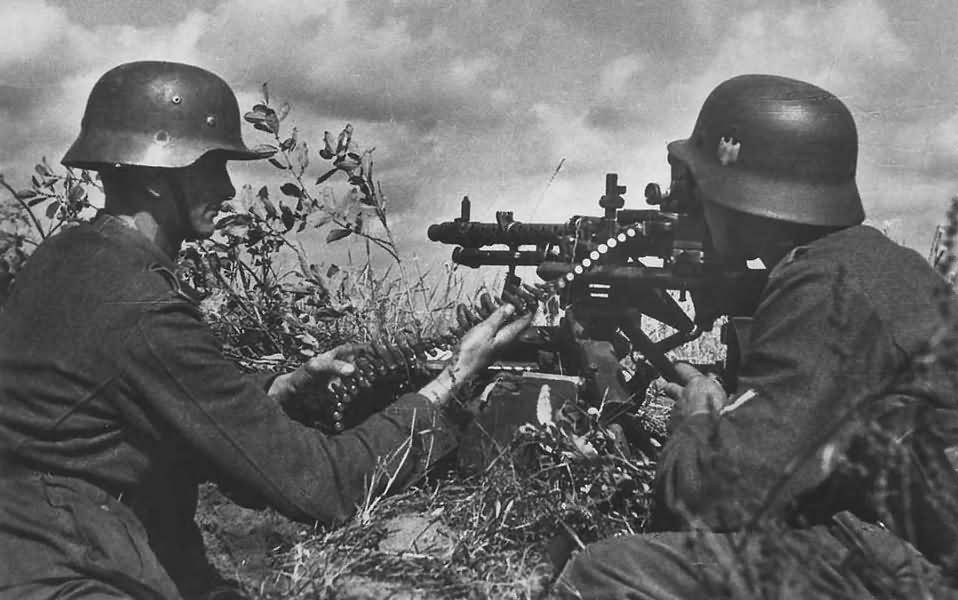
A German defensive position was always built around the machine gun. As seen in the image above, the crew operated as a cohesive unit. The gunner fired, while the loader fed the belt. This firepower superiority allowed small German units to hold off much larger Allied forces. However, it created a dependency. If the machine gun was knocked out, the squad’s combat effectiveness dropped precipitously, as the bolt-action Kar98k rifles carried by the other troops offered significantly less volume of fire than the semi-automatic M1 Garands used by the Americans.
Mobility, Engineering, and the Myth of Mechanization
Newsreels of the “Blitzkrieg” often showed endless columns of tanks and half-tracks. This created a myth of a fully mechanized Wehrmacht. The reality was that the German Army was semi-motorized at best. For every Panzer division, there were ten infantry divisions that marched on foot and relied on horses to pull their artillery and supply wagons.
This lack of motorization made natural obstacles, particularly rivers, significant tactical challenges. The war in the East was defined by great rivers: the Bug, the Dnieper, the Don, and the Volga. Crossing these required the Pioniere (Combat Engineers), who were among the most versatile troops in the army.
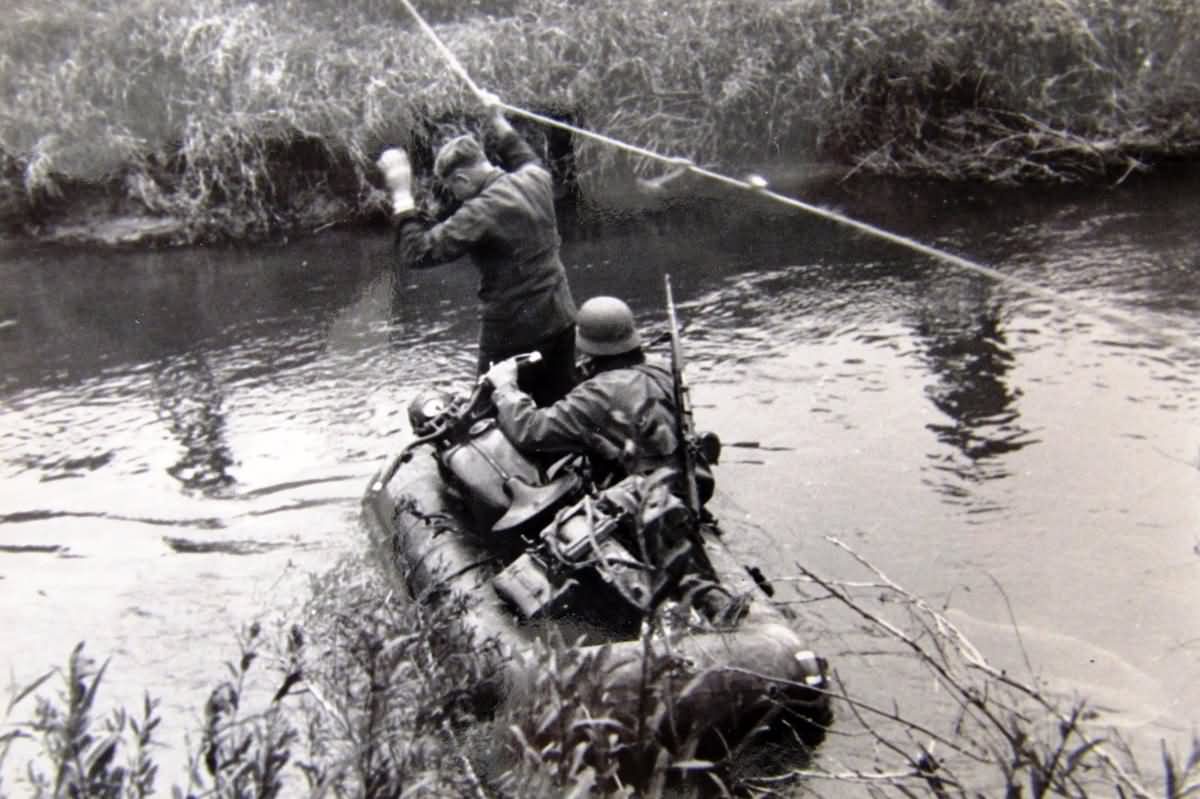
German combat doctrine emphasized aggressive river crossings. Reconnaissance units, often using motorcycles or light vehicles, would push ahead to find crossing points. When bridges were blown, makeshift rafts and rubber dinghies were utilized to ferry men and equipment across under fire. The image of soldiers balancing on a pneumatic raft, ferrying a motorcycle across a river, perfectly encapsulates the improvisation required on the Eastern Front. It was a war where high-tech weaponry met primitive logistical struggles.
General Winter and the War of Annihilation
The turning point of the Wehrmacht’s history was Operation Barbarossa, the invasion of the Soviet Union. As the German armies advanced deep into Russia in 1941, they encountered an enemy more ruthless than the terrain: the Russian Winter.
The Wehrmacht was largely unprepared for winter warfare in 1941. They lacked winter lubricants for their guns, anti-freeze for their vehicles, and proper clothing for their men. Temperatures dropped to -40°C. The “Master Race” found themselves stuffing newspapers into their jackboots to prevent frostbite.
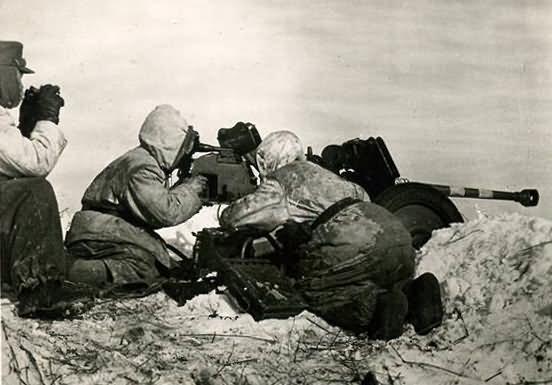
Tactics had to change. The lightning war froze into static defensive lines. Anti-tank guns, like the PaK 38 or PaK 40, became the most important assets on the front line as the Soviets launched massive armored counter-attacks. Crews had to construct snow fortifications, paint their equipment white for camouflage, and wait in freezing foxholes for the silhouette of T-34 tanks.
The psychological toll of the Eastern Front was immense. It was a war of extermination, devoid of the “chivalry” sometimes seen in the desert war against the British.
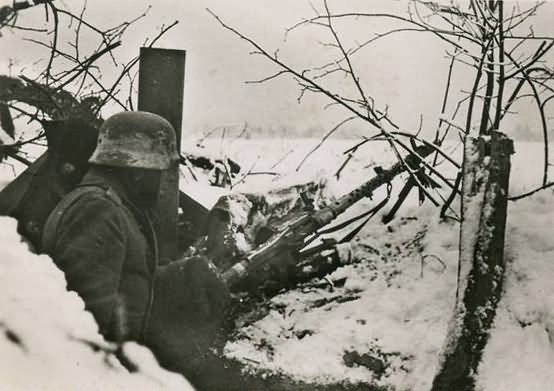
The image of the lonely sentry, manning a machine gun in a snow-covered trench, became the defining symbol of the war in the East from 1942 onward. Supply lines stretched thin, partisan activity disrupted the rear, and the sheer numerical superiority of the Red Army began to grind the Wehrmacht down. The German soldier was no longer a conqueror; he was a survivor, fighting a desperate holding action against an inevitable tide.
Elite Units and Urban Combat
As the war turned against Germany, the army increasingly relied on specialized “fire brigade” units to plug gaps in the line. The Fallschirmjäger (Paratroopers) were the most famous of these elite formations. Though they largely ceased conducting combat drops after the costly victory in Crete in 1941, they were redeployed as elite light infantry.
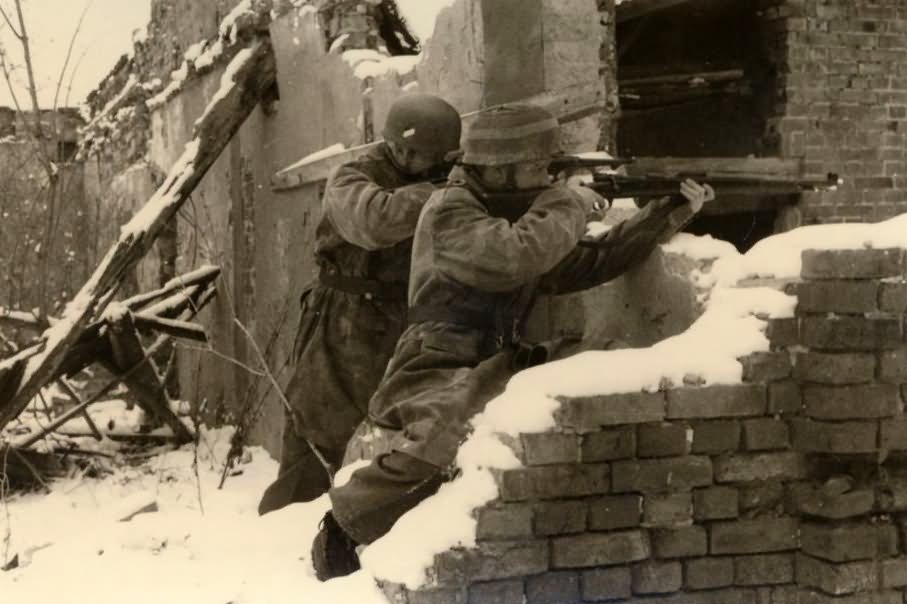
The Fallschirmjäger earned a fearsome reputation in defensive urban warfare, most notably at the Battle of Monte Cassino in Italy and in the ruins of the Eastern Front. Urban combat neutralized the Allied advantages in tanks and air power. It became a war of inches, fought in sewers, cellars, and bombed-out factories. Armed with specialized weaponry and highly motivated, these paratroopers utilized the rubble to create kill zones. The image of paratroopers sighting rifles over shattered brick walls reflects the grim reality of fighting in the ruins of Europe’s cities.
The Bitter End (1945)
By 1945, the Wehrmacht was a shadow of its former self. The veteran officers were dead. The fuel reserves were empty. The Luftwaffe had vanished from the skies. The Allied armies were closing in from the East and West.
To fill the ranks, the Nazi leadership resorted to the Volkssturm (People’s Storm), a desperate militia of old men and teenage boys. However, even the regular army units were filled with fresh conscripts who had known nothing but war during their formative years.
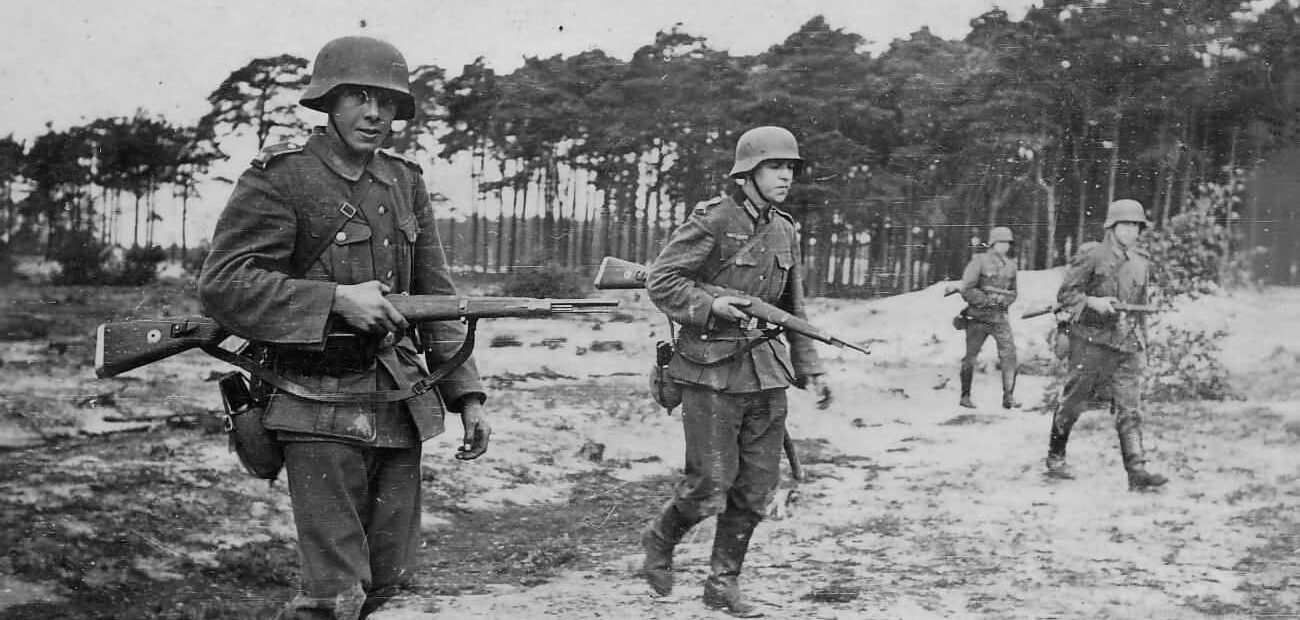
The photographs from the final months of the war are haunting. They show soldiers who are visibly too young, wearing uniforms that are often ill-fitting, marching towards fronts that had already collapsed. These “young lions” fought with a mixture of fanaticism and terror. They were handed Panzerfausts (disposable anti-tank weapons) and told to stop the Allied armor.
The discipline of the Wehrmacht held in many sectors until the very end, a testament to the strength of its NCO corps, but the machine was broken. The final days were a chaotic retreat through the forests of Germany, as soldiers sought to surrender to the Western Allies rather than face the vengeance of the Red Army.
Conclusion: A Legacy of Ruin
The Wehrmacht remains a subject of intense study for military historians. Its tactical innovations—mobile warfare, combined arms, and mission-command—revolutionized modern combat. The fighting power of the individual German unit was, man-for-man, often superior to its adversaries for much of the war.
However, this military proficiency served a regime of unparalleled evil. The Wehrmacht was not a “clean” army; it was the essential tool of a genocidal war of aggression. The tragedy of the German soldier is that his endurance and skill were exploited to prolong a conflict that destroyed his own nation and devastated Europe. The images left behind serve as a stark warning of the costs of total war and the destruction of a generation.
References and Recommended Sources
For readers interested in exploring the history of the Wehrmacht, tactics, and the personal experiences of the soldiers in greater depth, the following resources are highly recommended:
-
Evans, Richard J. The Third Reich at War. Penguin Books, 2009. Link to Book
-
One of the most comprehensive scholarly accounts of Germany during the war years, covering both the military and the home front.
-
-
Beevor, Antony. Stalingrad: The Fateful Siege: 1942-1943. Viking, 1998. Link to Book
-
A definitive narrative history that provides a visceral look at the infantry experience and the horrors of the Eastern Front.
-
-
Citino, Robert M. The German Way of War: From the Thirty Years’ War to the Third Reich. University Press of Kansas, 2005. Link to Book
-
An excellent analysis of the operational doctrine, command style, and the history of ‘Auftragstaktik’.
-
-
Fritz, Stephen G. Frontsoldaten: The German Soldier in World War II. University Press of Kentucky, 1995. Link to Book
-
Focuses specifically on the daily life, psychology, and hardships of the common soldier (Landser).
-
-
Hastings, Max. Armageddon: The Battle for Germany, 1944-1945. Alfred A. Knopf, 2004. Link to Book
-
Details the final collapse of the Wehrmacht and the experience of the late-war recruits and civilians.
-
-
Lucas, James. The Wehrmacht: The German Army in World War II. Arms and Armour, 1997. Link to Book
-
A detailed technical look at the organization, equipment, uniforms, and battles of the army.
-
-
Imperial War Museums (IWM). Conflict: WWII. Link to Website
-
Primary source photos, oral histories, and articles from the UK’s leading military museum.
-