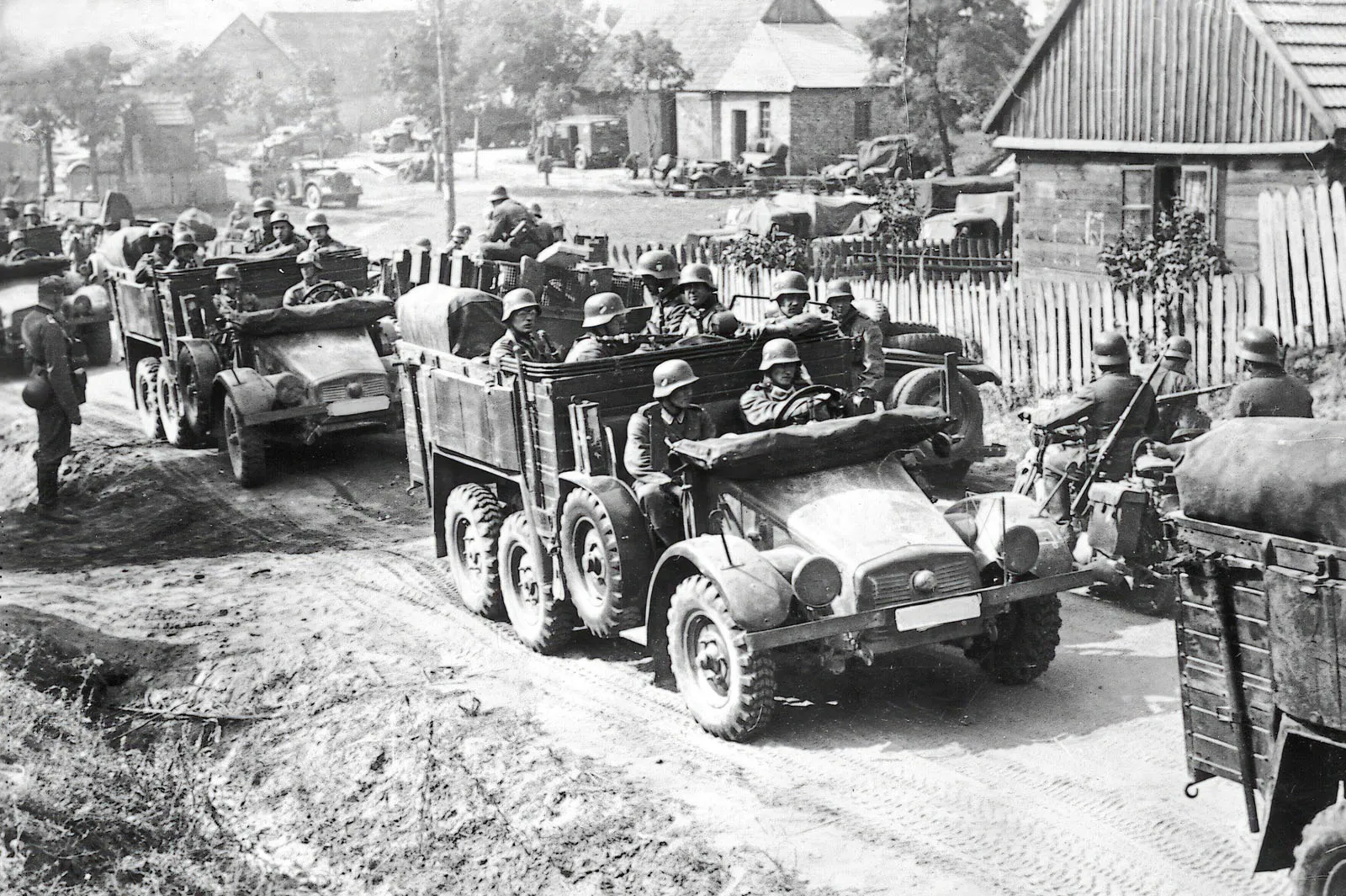

The date is September 1, 1939. As the clocks struck 04:45 AM, the skies over the heart of Europe were illuminated not by a grey dawn, but by the fires of artillery—a glow that heralded the opening chapter of the bloodiest conflict in human history. Nazi Germany’s armored divisions surged from the west, and weeks later, the Soviet Union’s armies would move in from the east. The target was a single nation: Poland.
This article is not merely a chronology of an invasion. It is a detailed historical analysis of that dark September when diplomacy collapsed, the doctrine of “Blitzkrieg” (Lightning War) revealed its terrifying potential, and heroism became inseparably intertwined with betrayal, sacrifice, and survival.
1. The Silence Before the Storm: Diplomatic Chess and the Footsteps of War
Reborn from the ashes of World War I, the Second Polish Republic emerged in 1918 after more than a century of partition. Its resurrection, however, placed it in one of the most precarious geopolitical positions in Europe. To the west stood Nazi Germany under Adolf Hitler, driven by resentment over the Treaty of Versailles and determined to revise Europe’s borders by force. To the east lay the Soviet Union under Joseph Stalin, equally ambitious and eager to reclaim territories once held by the Russian Empire.
From the moment Hitler came to power in 1933, Poland’s fate became intertwined with his ideological vision. Central to Nazi doctrine was the concept of Lebensraum—the belief that Germany required “living space” in Eastern Europe to survive and thrive. Poland, geographically unavoidable and politically independent, stood directly in the path of this ambition.
Yet an invasion of Poland carried immense risks. Britain and France had issued guarantees of Polish independence, and a German attack could trigger another general European war—something Hitler wished to delay until Germany was militarily prepared. Thus began a period of intense diplomatic maneuvering, threats, and negotiations, all designed to isolate Poland and neutralize potential opposition.
The Molotov-Ribbentrop Pact: A Dance with the Devil
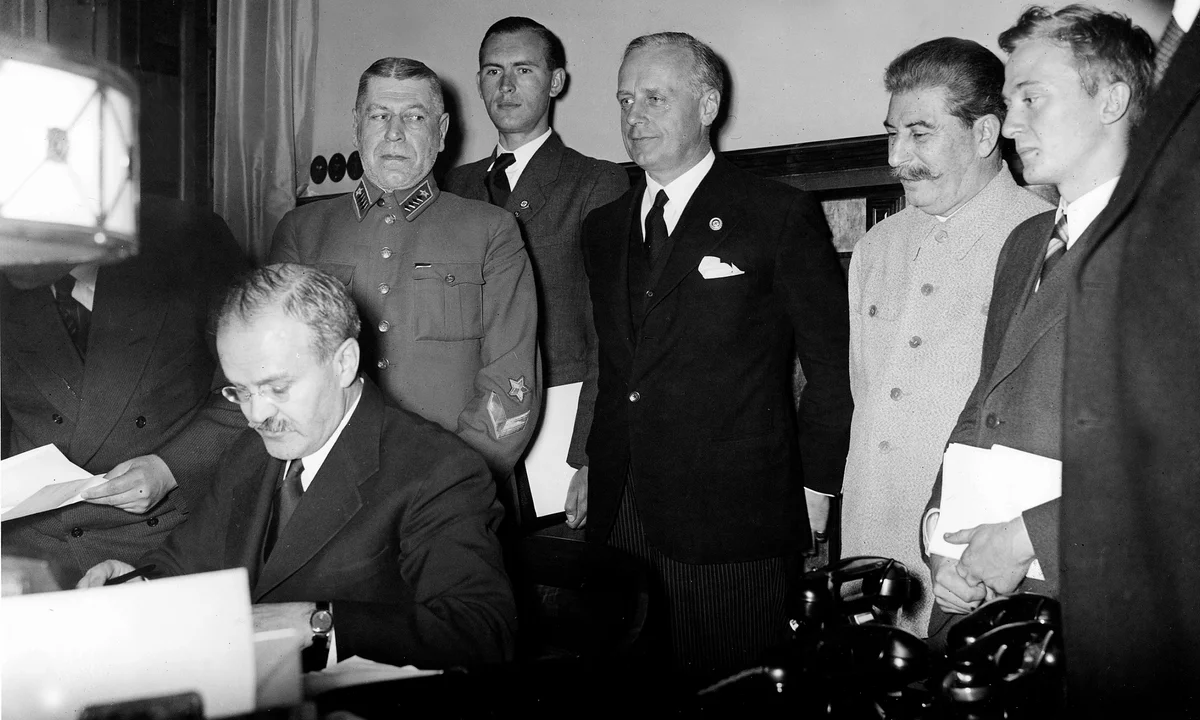
On August 23, 1939, the world was stunned by an announcement that shattered every assumption about European politics. Nazi Germany and the Soviet Union—ideological enemies representing fascism and communism—signed a Non-Aggression Pact in Moscow. Officially, both sides pledged to remain neutral if the other became involved in war. Unofficially, the agreement sealed Poland’s fate.
Hidden within the pact was a Secret Protocol that divided Eastern Europe into spheres of influence. Poland was to be partitioned along the Narew, Vistula, and San rivers. Western Poland would fall under German control; eastern Poland would be absorbed by the Soviet Union. The Baltic states and parts of Romania were similarly apportioned. Poland’s death warrant had been signed before a single shot was fired.
2. The Gleiwitz Incident: Manufacturing a Lie for War
Despite careful planning, Hitler still needed a justification to present Germany as the victim rather than the aggressor. This pretext came in the form of Operation Himmler, a coordinated series of false-flag attacks orchestrated by the SS.
On the night of August 31, 1939, German operatives dressed in Polish military uniforms stormed the radio station in Gleiwitz, near the German–Polish border. They broadcast a brief anti-German message in Polish, then fled the scene. Left behind were the bodies of concentration camp prisoners who had been murdered, dressed in Polish uniforms to serve as “evidence” of an attack.
The following morning, German newspapers proclaimed that Poland had launched armed attacks against Germany. Hitler addressed the Reichstag, declaring that Germany was merely responding to Polish aggression. The invasion was now framed as an act of self-defense.
3. September 1, 1939: The Gates of Hell Open
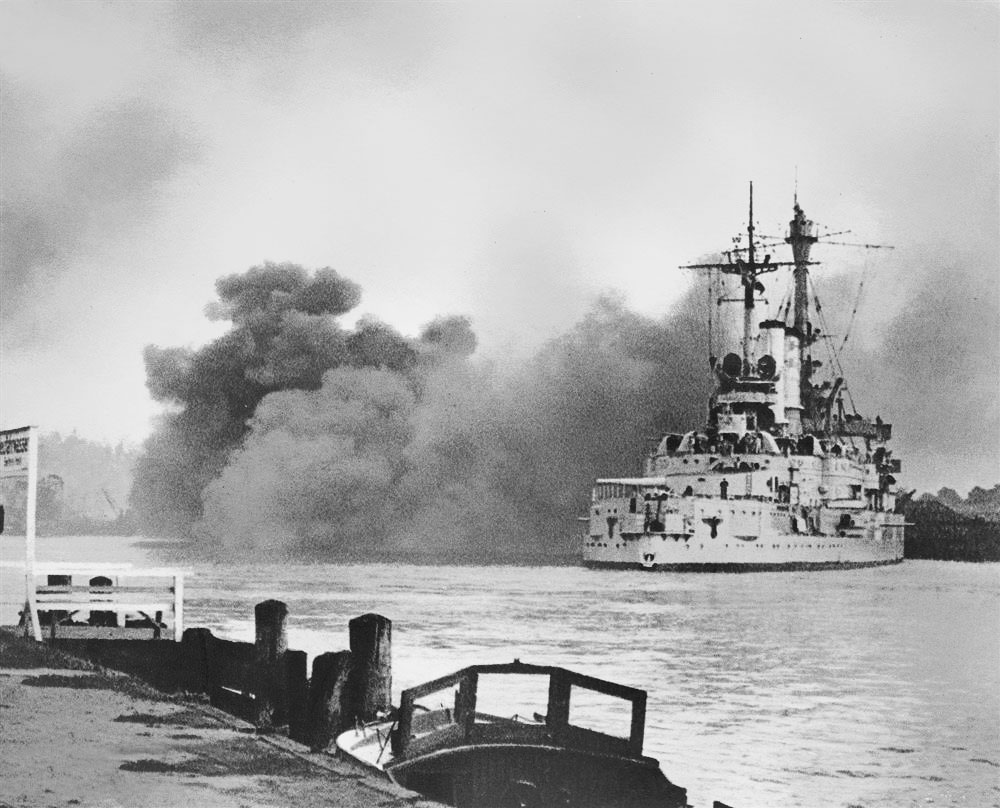
At exactly 04:45 AM on September 1, 1939, the German battleship SMS Schleswig-Holstein, anchored in the harbor of the Free City of Danzig, opened fire on the Polish military transit depot at Westerplatte. These salvos are widely regarded as the first shots of World War II.
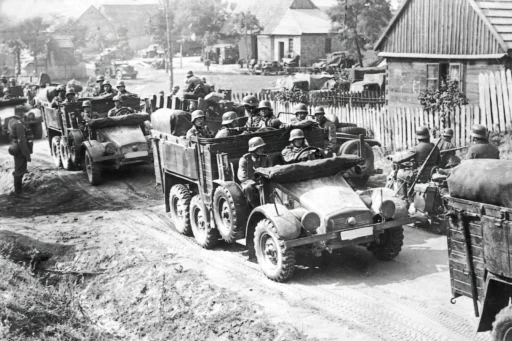
The invasion, codenamed Fall Weiss (Case White), began without a formal declaration of war. German forces attacked along the entire length of Poland’s borders—from East Prussia in the north, through Pomerania and Silesia in the west, to Slovakia in the south. Poland was assaulted by land, air, and sea simultaneously.
Westerplatte: The Polish Thermopylae
German planners believed that the small Polish garrison at Westerplatte—just 182 soldiers—would surrender within hours. Instead, under the command of Major Henryk Sucharski, the defenders held out for seven days against overwhelming odds. Subjected to naval shelling, artillery fire, and relentless air attacks, the garrison refused to yield.
Westerplatte became an enduring symbol of Polish resistance, comparable to the ancient defense of Thermopylae. Though ultimately forced to surrender, the defenders demonstrated that Polish morale and determination far exceeded German expectations.
The Bombing of Wieluń: War Against Civilians
While Westerplatte resisted, the Luftwaffe unleashed terror on the civilian population. The town of Wieluń, which possessed no significant military value, was bombed in the early hours of September 1. Hospitals, schools, and residential districts were deliberately targeted.
Approximately 1,200 civilians were killed. Wieluń became one of the first examples of terror bombing—a grim preview of the total war that would engulf Europe in the years to come.
4. The Balance of Power: Cavalry Against Tanks?
A persistent myth claims that Polish cavalry charged German tanks with sabers. This story, born of Nazi propaganda and later sensationalized, distorts the reality of the Polish armed forces in 1939.
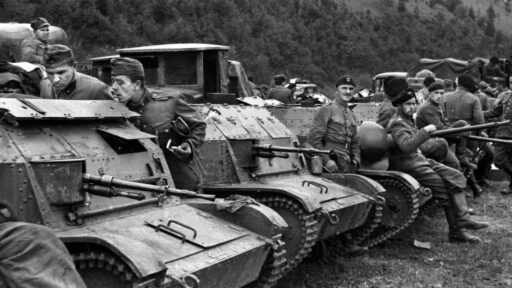
Poland possessed a large but partially modernized army. Its cavalry units were mounted infantry, using horses for mobility but fighting primarily on foot with rifles, machine guns, and anti-tank weapons. In isolated engagements, cavalry successfully attacked German infantry, but they were ultimately vulnerable to mechanized warfare.
Forces at a Glance
- Wehrmacht: Approximately 1.5 million soldiers, 2,700 tanks (mostly Panzer I and II), 2,300 aircraft
- Polish Army: Roughly 1 million soldiers (mobilization incomplete), 880 tanks and tankettes, 400 aircraft
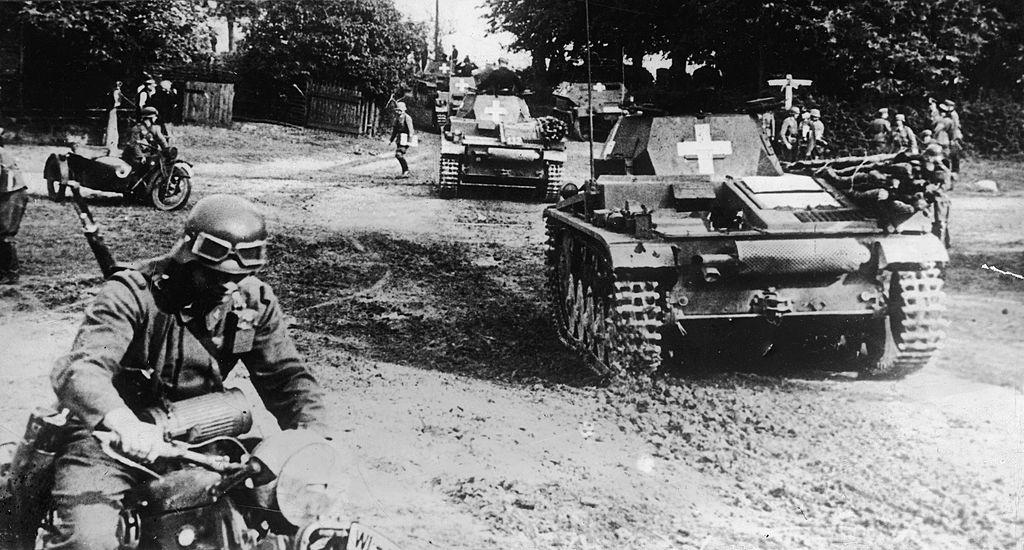
Germany’s decisive advantage lay not only in numbers, but in doctrine. The coordinated use of tanks, aircraft, and radio communication allowed German units to penetrate deep into Polish territory, encircle enemy formations, and disrupt command structures.
5. Collapse of the Fronts and the Siege of Warsaw
During the first week of the war, Poland’s forward border defenses collapsed under the weight of coordinated German attacks. Wehrmacht forces advanced rapidly toward Warsaw in a classic pincer movement—one arm driving south from East Prussia, the other pushing north from Silesia and Slovakia.
By September 8, 1939, German armored units had reached the western outskirts of Warsaw. Contrary to German expectations, the capital did not fall immediately. Under the leadership of Mayor Stefan Starzyński, Warsaw transformed into a city of resistance. Through daily radio broadcasts, Starzyński rallied civilians and soldiers alike, urging them to defend the capital at all costs.
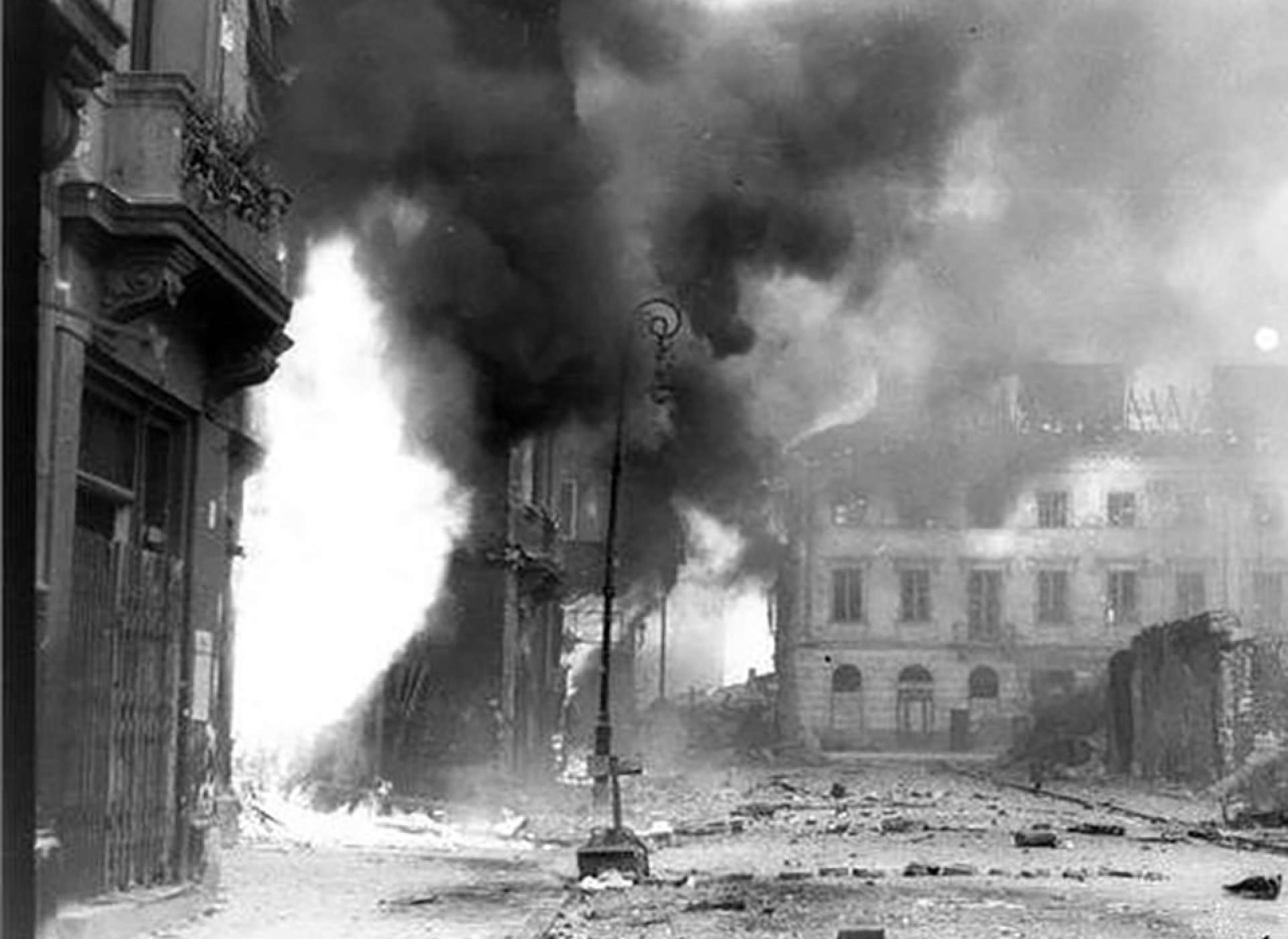
Civilians dug anti-tank trenches, erected barricades, and assisted military units. Despite relentless artillery fire and continuous Luftwaffe bombing, Warsaw endured for nearly three weeks. The siege marked one of the earliest examples of a modern city subjected to sustained aerial bombardment, foreshadowing the urban warfare that would define much of World War II.
6. The Phoney War: The Betrayal of the Allies
One of the most tragic elements of Poland’s defeat was the failure of its Western allies to act decisively. On September 3, 1939, Britain and France formally declared war on Germany. Across Poland, the announcement sparked hope and relief. Many believed a major Allied offensive in the west would force Germany to divert troops and ease pressure on the Polish front.
That offensive never materialized.
French forces advanced only cautiously into the Saar region before halting in front of the German Siegfried Line. British forces limited their actions to naval operations and the dropping of propaganda leaflets over Germany. This period of inactivity became known as the “Phoney War” (Drôle de Guerre or Sitzkrieg).
While the Western Front remained eerily quiet, Poland bore the full weight of German military power alone. The sense of abandonment would leave a lasting scar on Polish collective memory.
7. September 17, 1939: The Stab in the Back and Soviet Invasion
Just as Polish forces attempted a final reorganization—launching counterattacks along the Bzura River and preparing to withdraw southeast toward the so-called “Romanian Bridgehead”—disastrous news arrived from the east.
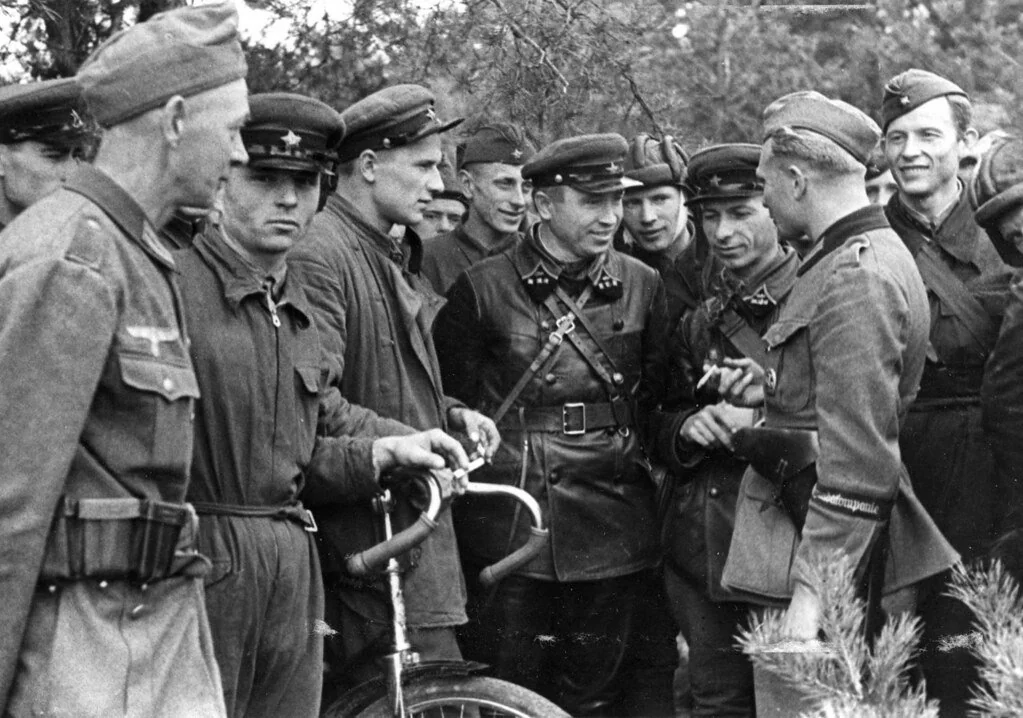
On September 17, 1939, the Red Army crossed Poland’s eastern border.
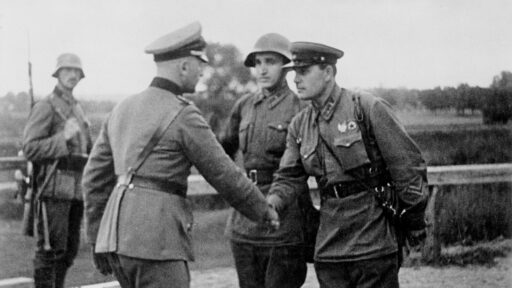
Citing the collapse of the Polish state and claiming to protect Ukrainian and Belarusian minorities, the Soviet Union invaded in accordance with the secret clauses of the Molotov–Ribbentrop Pact. Poland now faced two invading superpowers simultaneously.
Polish Commander-in-Chief Edward Rydz-Śmigły issued one of the most tragic orders of the war: Polish units were instructed not to engage Soviet forces unless attacked, and instead to withdraw toward Romania or Hungary. Any remaining hope of organized national defense was extinguished.
Caught between two totalitarian regimes, Poland’s defeat became inevitable.
8. The End of the Campaign and the Underground Resistance
Warsaw continued to resist until September 27, 1939. By then, the city faced catastrophic shortages of food, water, and ammunition. With civilian casualties mounting and no relief in sight, the Polish command surrendered the capital to prevent total destruction.
The final battle of regular Polish forces occurred at Kock (October 2–5), where General Franciszek Kleeberg’s Independent Operational Group fought until supplies were exhausted. This engagement marked the end of organized conventional resistance.
On October 6, 1939, Germany and the Soviet Union declared the conquest of Poland complete. Yet Poland never formally surrendered. The government escaped via Romania to France, and later to London, forming the Polish Government-in-Exile.
Thousands of soldiers disappeared into forests and cities, laying the groundwork for the Armia Krajowa (Home Army)—which would become the largest underground resistance movement in occupied Europe.
9. The Horrifying Toll: The Reign of Terror Begins
The occupation of Poland marked not merely a military defeat, but the beginning of a calculated campaign to destroy the nation’s social, cultural, and political foundations.
German-Occupied Zone:
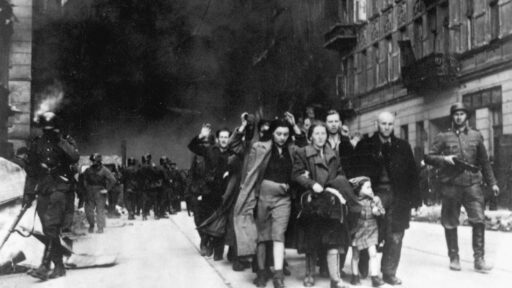
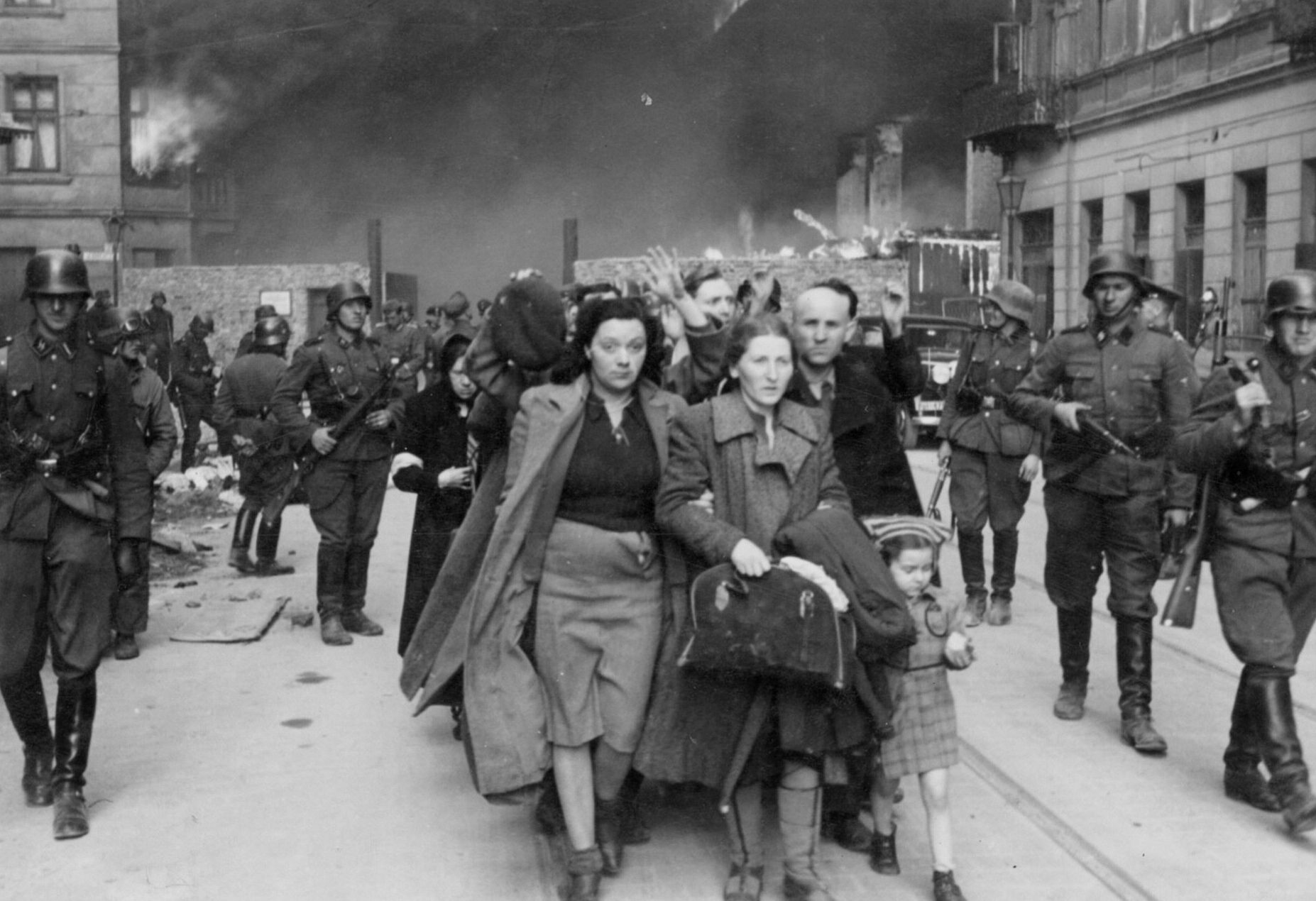
The Nazis launched Intelligenzaktion, targeting Poland’s intellectual and leadership classes—teachers, priests, doctors, and community leaders. Jewish populations were systematically forced into ghettos, and the infrastructure for extermination camps such as Auschwitz was established.
Soviet-Occupied Zone:
The NKVD arrested Polish officers, police, landowners, and intellectuals. These mass arrests culminated in the Katyn Massacre (1940), where approximately 22,000 Polish officers were executed with a bullet to the back of the head.
10. Conclusion: The Legacy of Poland
The invasion of Poland was the laboratory of World War II. Blitzkrieg tactics, terror bombing, mass occupation, and systematic repression were all tested on Polish soil. Though defeated militarily in weeks, Poland’s spirit endured throughout the war—from the skies of Britain to the ruins of Monte Cassino and the streets of Warsaw in 1944.
September 1, 1939, stands as a stark reminder of how quickly diplomacy can fail and how devastating the ambitions of totalitarian regimes can be. Poland’s tragedy remains a warning etched into the history of the modern world.
Reference Links
For the preparation of this content and for those wishing to read further, the following reliable sources were used:
-
United States Holocaust Memorial Museum (USHMM): Invasion of Poland, Fall 1939
-
Encyclopædia Britannica: Invasion of Poland | Campaign, Combatants, & Casualties
-
Imperial War Museum (IWM): The German Invasion of Poland
-
BBC History: World War Two: Summary Outline of Key Events
-
History.com: Germany invades Poland
-
The National WWII Museum New Orleans: The Invasion of Poland
-
Wikipedia (Detailed Timeline): Invasion of Poland
-
Polish History Museum: September 1939
-
Yale Law School – Avalon Project: Documents on the Invasion of Poland
-
Roger Moorhouse (Historian – Author of “First to Fight”): The Polish Campaign 1939