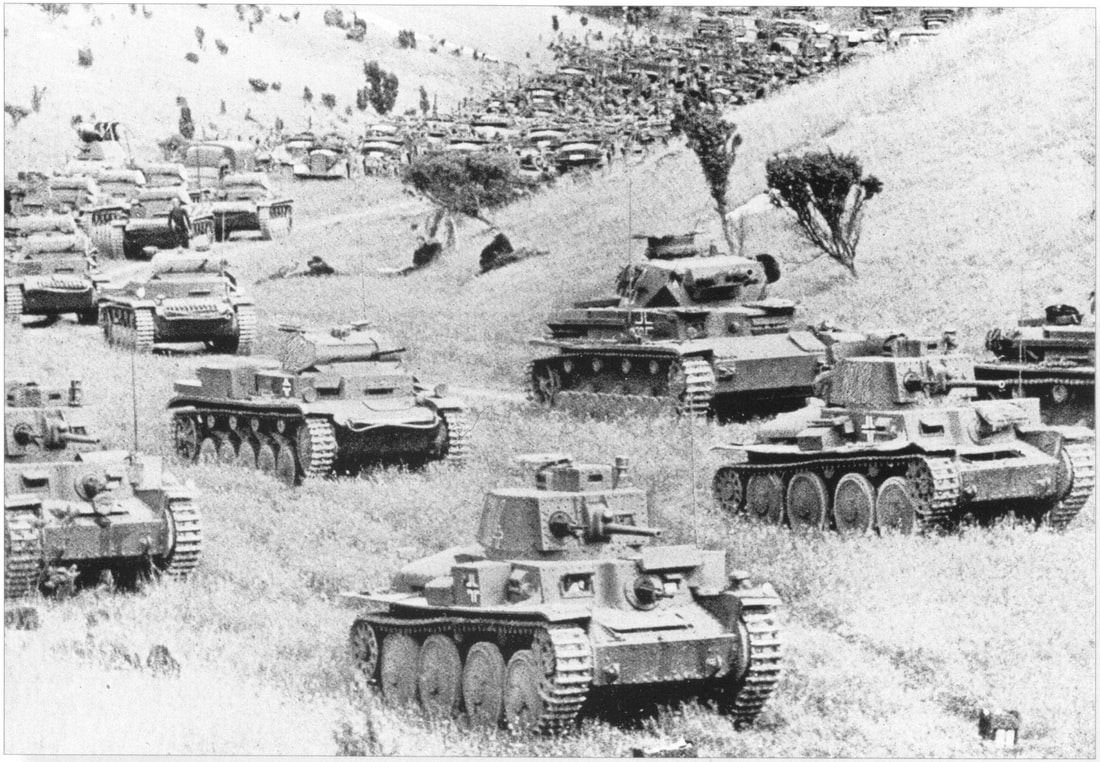

The German Blitzkrieg campaign of 1940 remains one of the most remarkable demonstrations of military strategy in modern warfare. Within a matter of weeks, the German Wehrmacht defeated France, Belgium, and the Netherlands, shattering expectations and fundamentally altering the balance of power in Western Europe. This blog explores the planning, execution, and consequences of Germany’s rapid invasion, highlighting the strategies, key battles, and impact on the region.
Suggested Visual:
- Map showing German advances through France, Belgium, and the Netherlands (May–June 1940)
Strategy of Rapid Warfare
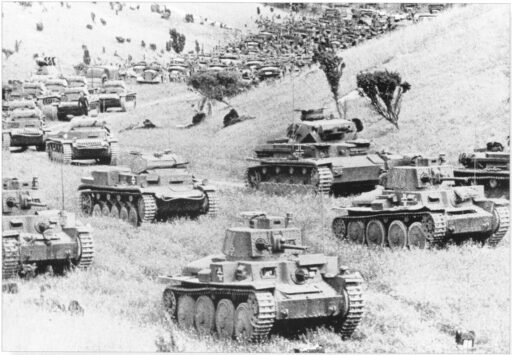
Blitzkrieg, meaning “lightning war,” was a revolutionary military tactic developed by Germany in the interwar period. Unlike traditional warfare, which emphasized static defense and prolonged engagements, Blitzkrieg relied on speed, surprise, and coordination between different branches of the military. Tanks, mechanized infantry, and air support worked in unison to break through enemy lines, encircle forces, and prevent organized resistance.
Suggested Visuals:
- German Panzer division moving through French countryside
- Stuka dive bombers attacking fortified positions
At the heart of Blitzkrieg was the concept of concentrated force at decisive points. Instead of spreading troops evenly across the front, the Germans concentrated armored divisions at weak points in enemy defenses. Airplanes, especially dive bombers like the Ju 87 Stuka, targeted fortifications, rail lines, and communication hubs to paralyze command structures. This integration of mobility and firepower created a shock effect, overwhelming opponents before they could effectively respond.
German Planning and Objectives
Germany’s military leadership, particularly Adolf Hitler and his generals, aimed to neutralize France quickly, preventing a prolonged two-front war with Britain and the Soviet Union looming in the east. The plan, known as Fall Gelb (Case Yellow), involved invading the Low Countries to draw Allied forces north, away from the Ardennes—a heavily forested and lightly defended region in southern Belgium and Luxembourg.
Suggested Visuals:
- Strategic map of Fall Gelb plan
- German generals planning operations
The strategy was deceptive. The Allies expected a repeat of World War I tactics, assuming German attacks would come through Belgium’s open plains. Hitler, however, used the Ardennes as a main route for armored divisions, catching Allied forces off guard. The German objective was clear: penetrate France rapidly, encircle Allied armies, and force a quick surrender before reinforcements could stabilize the front.
Invasion of the Low Countries
The invasion began on May 10, 1940, with Germany attacking Belgium, the Netherlands, and Luxembourg simultaneously. German paratroopers and airborne units played a critical role in capturing key bridges and towns, preventing the Allies from organizing a cohesive defense.
Suggested Visuals:
- German paratroopers landing in the Netherlands
- Bombing damage in Rotterdam
Dutch forces resisted valiantly, but within days, the Netherlands was overwhelmed, culminating in the surrender of Amsterdam and Rotterdam after devastating bombings that destroyed infrastructure and morale. Belgium experienced a more prolonged resistance. Belgian forces fought to delay the German advance, buying time for the French and British Expeditionary Force (BEF) to mobilize.
The Ardennes and the French Collapse
While the Allies focused on defending the northern plains, German forces executing the Sichelschnitt (sickle cut) plan moved through the Ardennes. The region’s dense forests and rough terrain were deemed impassable by the French high command—a critical miscalculation.
Suggested Visuals:
- German tanks moving through Ardennes forests
- French defensive positions being bypassed
German panzer divisions surged through the Ardennes with unprecedented speed, cutting through French defenses and advancing toward the English Channel. The French command was paralyzed by the unexpected maneuver. Communications broke down, reinforcements could not be deployed effectively, and panic spread among troops and civilians. The rapid German advance created a massive encirclement, trapping Allied forces in northern France and Belgium.
Dunkirk and the Miracle Evacuation
One of the most dramatic episodes of the Blitzkrieg campaign was the Dunkirk evacuation, codenamed Operation Dynamo. Between May 26 and June 4, 1940, over 330,000 Allied soldiers were evacuated across the English Channel to Britain.
Suggested Visuals:
- Allied soldiers boarding boats at Dunkirk
- Civilian vessels aiding in the evacuation
Though equipment and vehicles were abandoned, the survival of a significant portion of the British Expeditionary Force preserved the core of Britain’s army for future campaigns. The evacuation showcased the limits of Blitzkrieg, revealing that even rapid assaults could be mitigated by effective naval operations and civilian cooperation.
Key Battles of the Campaign
Several battles defined the Blitzkrieg’s success:
- Sedan (May 12–15, 1940): German forces crossed the Meuse River, breaking through French lines.
Visual: Panzer divisions crossing the Meuse River - Rotterdam (May 14–15, 1940): German bombing forced the Netherlands to surrender.
Visual: Rotterdam in flames - Arras Counterattack (May 21, 1940): British and French forces attempted a counterattack near Arras.
Visual: Allied tanks advancing during Arras counterattack - Boulogne, Calais, and Dunkirk (Late May 1940): Coastal towns fell, enabling German forces to encircle Allied troops.
Visual: Coastal defenses being overcome by German forces
Air Superiority and the Role of the Luftwaffe
The Luftwaffe dominated the skies, targeting airfields, railways, and troop concentrations. The psychological effect of constant air raids demoralized both soldiers and civilians, contributing to rapid German victories.
Suggested Visuals:
- Ju 87 Stuka dive bombers over cities
- Luftwaffe fighters engaging RAF planes
The Maginot Line and Allied Miscalculations
France’s Maginot Line proved ineffective against the mobile German assault, as German forces bypassed it entirely through Belgium and the Ardennes. Allied misjudgments, rigid command structures, and communication breakdowns allowed Blitzkrieg to maintain momentum.
Suggested Visuals:
- Maginot Line fortifications
- German troops bypassing the fortifications
Consequences for Western Europe
The rapid German conquest had profound consequences:
- Political: Fall of France, Vichy government, German occupation of Belgium and the Netherlands
- Military: Allied losses of troops and equipment, forced retreat to defensive positions
- Psychological: Fear spread throughout Western Europe, undermining confidence in static defenses
Suggested Visuals:
- Crowds in occupied cities
- Vichy officials and German troops
Lessons from the Blitzkrieg
Blitzkrieg emphasized speed, coordination, and psychological warfare. Lessons included:
- Concentration of force at decisive points
- Integration of air, armor, and infantry units
- Use of deception to exploit enemy assumptions
- Importance of civilian morale and infrastructure
Suggested Visuals:
- Diagram of Blitzkrieg combined-arms strategy
- Soldiers coordinating tank and infantry movements
Conclusion
The 1940 Blitzkrieg campaign demonstrated the revolutionary nature of modern mechanized warfare. Germany’s rapid advance over France, Belgium, and the Netherlands reshaped the political, military, and psychological landscape of Western Europe. Blitzkrieg remains a study in speed, coordination, and innovation—its lessons echoing in military doctrine to this day.
Suggested Visuals:
- Timeline map of the 1940 campaign
- German Panzer divisions advancing toward the Channel
- Allied soldiers retreating toward Dunkirk
References
- BBC History – Germany’s 1940 Blitzkrieg
- History.com – Fall of France
- Imperial War Museums – Dunkirk Evacuation
- National WWII Museum – Blitzkrieg Strategy
- Encyclopedia Britannica – Battle of France
- HistoryNet – German Invasion of the Low Countries
- Military History Online – Fall Gelb
- The World at War – Maps of 1940 Western Front
- U.S. Army Center of Military History – WWII European Theater
- History Learning Site – The Ardennes and the Sickle Cut